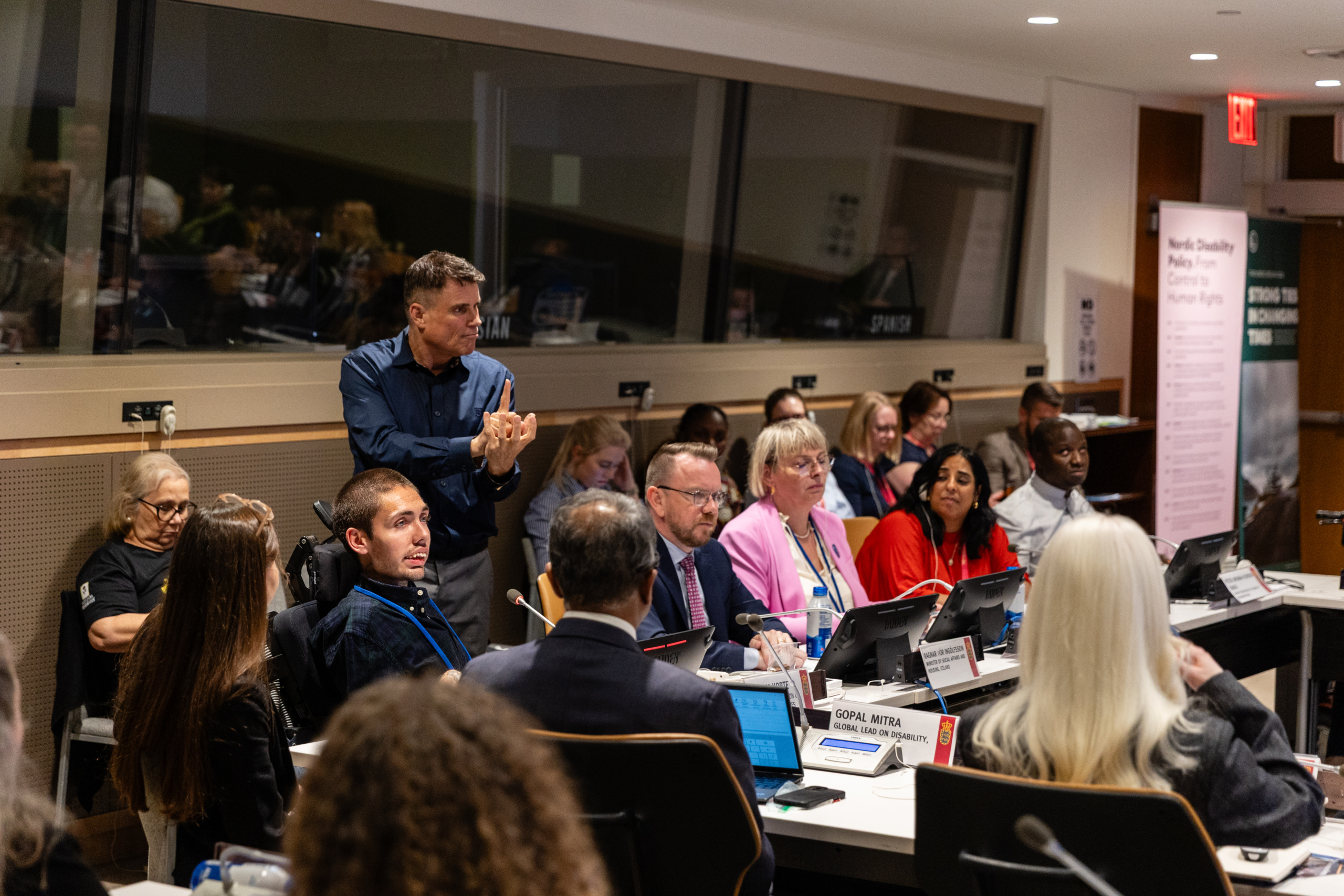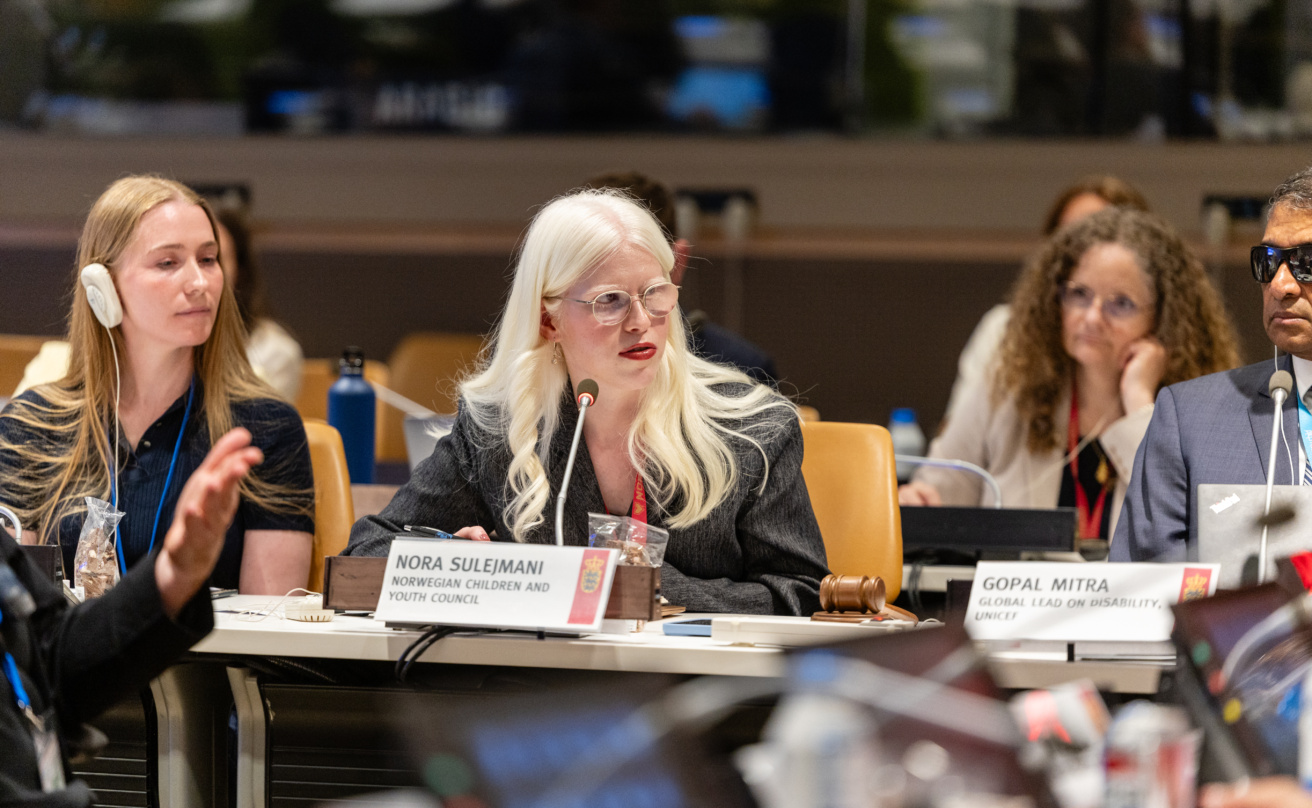
Young people with disabilities have the right to participate in civil society, public and political life, yet they often face barriers. The Nordic side event at the UN COSP19 in June highlighted the need for representation and ways of enhancing active citizenship.
Meaningful participation for young people with disabilities is essential to achieve a socially sustainable society. However, research shows that young people with disabilities are far less active than their peers in public and political forums. Reasons include, for example, lack of information, physical inaccessibility, prejudice, and limited awareness of various disabilities.
Underrepresentation in decision-making
– Active citizenship is not a privilege; it is a right. And for young people with disabilities, it is essential, says Heba Hagrass, UN Special Rapporteur on the rights of persons with disabilities.
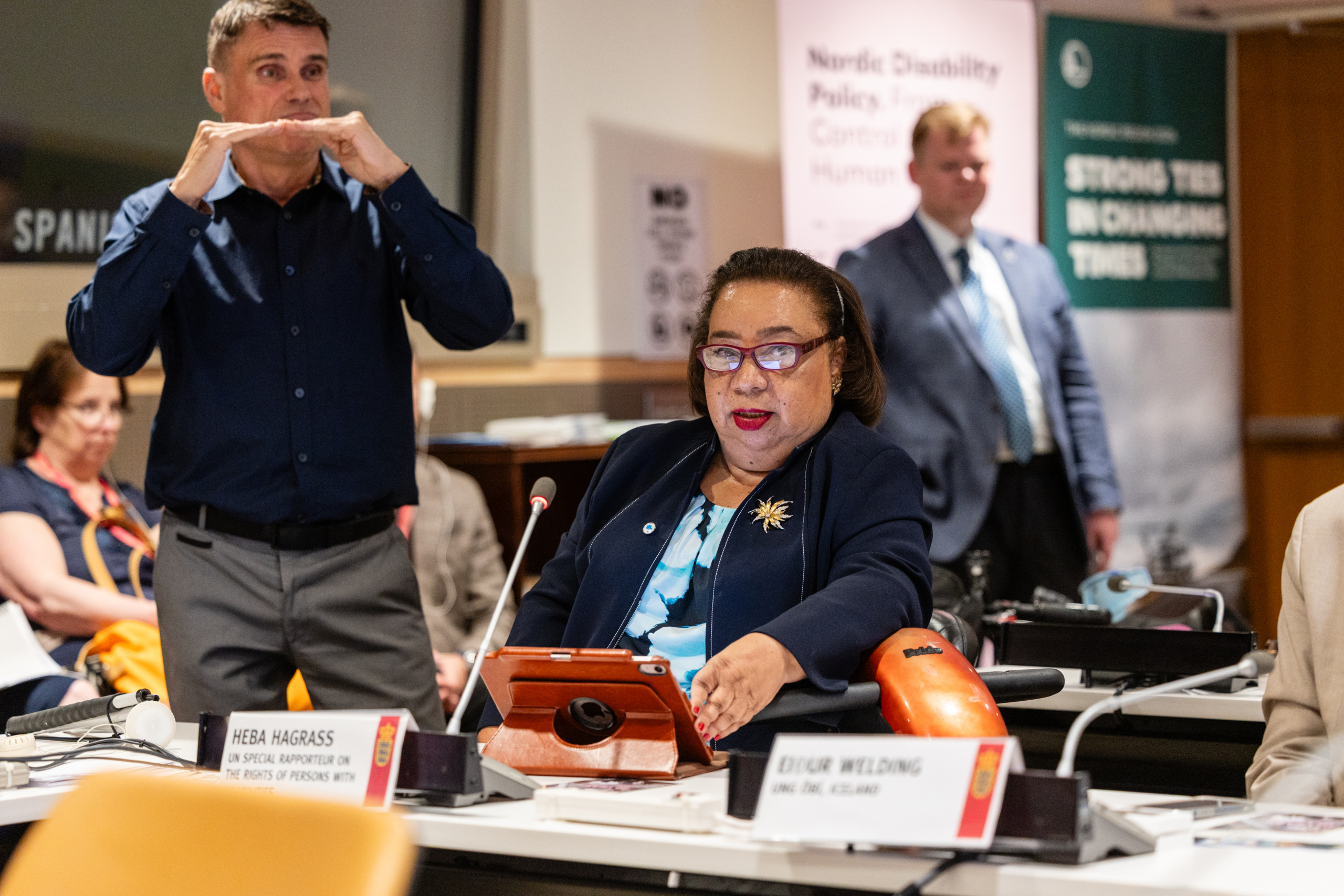
In her work, she sees a significant gap between commitments and reality.
– Young people with disabilities remain underrepresented in civil society, public debates and political decision-making. Not due to lack of capacity or interest, but because of persistent barriers.
According to Hagrass, meaningful participation requires accessible space, inclusive education, disability-inclusive policies, and sustained support for organisations of persons with disabilities.
“Participation becomes a luxury”
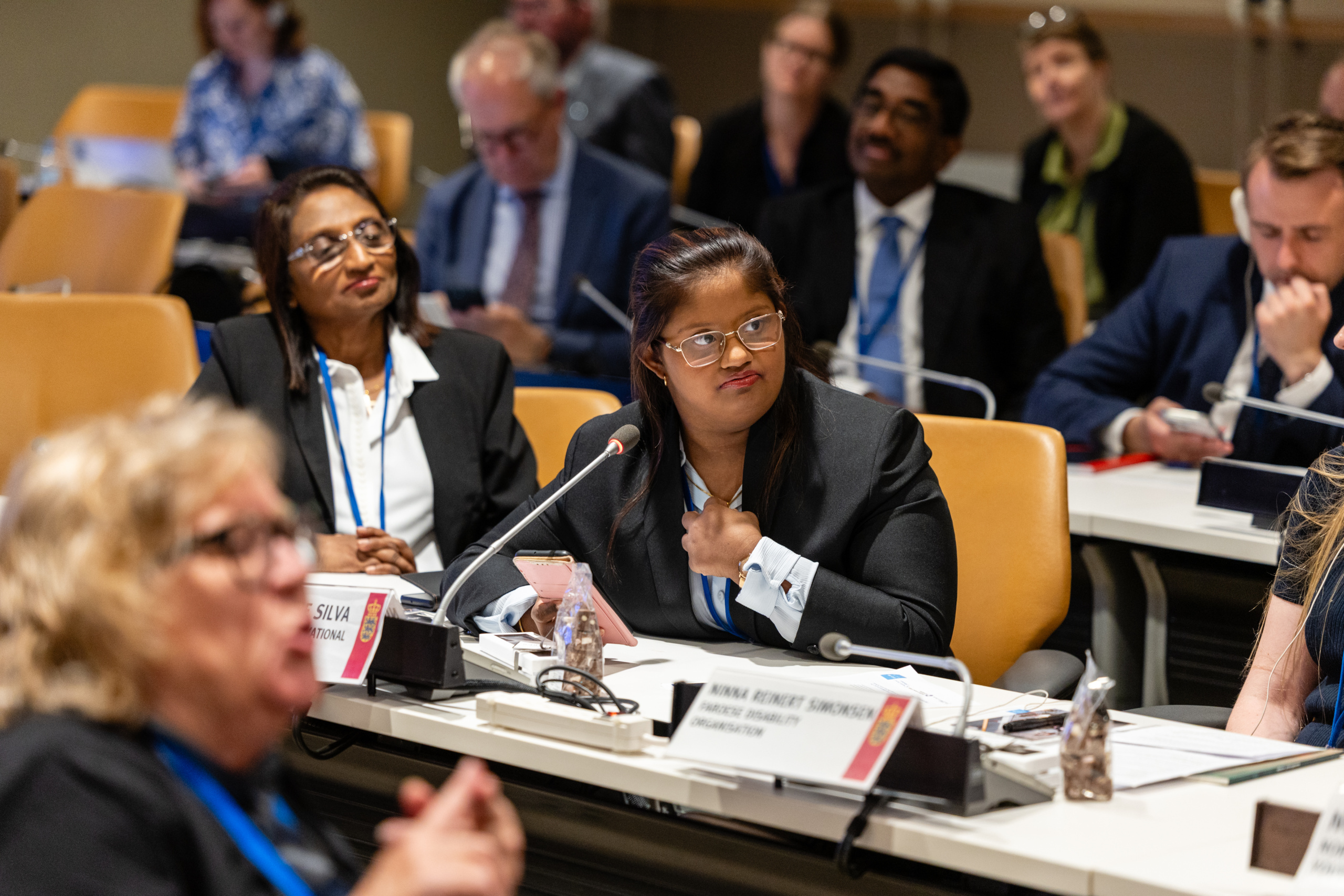
The barriers to participation – and what can be done about them – were discussed by a youth panel consisting of Eiður Welding (Iceland), Siri Espe (Norway), Nora Sulejmani (Norway), Klara Asklund (Sweden), Ninna Reinert Simonsen (Faroe Islands) and Nilshani De Silva (Sri Lanka).
Inaccessibility, stigma and systems that speak about persons with disabilities, rather than with them, were mentioned.
We are expected to maybe go to school, eat, sleep, survive, and that’s it.
Nora Sulejmani from the Norwegian Children and Youth Council (top picture) points out that low expectations can be a barrier to participation.
– We are expected to maybe go to school, eat, sleep, survive, and that’s it. Often, active participation becomes a luxury.
Siri Espe from Disabled Youth Norway described the results from a recent project examining participation in political and civil organisations.
– Our experience is that young people with invisible disabilities have a fear of not being believed when they inform about their disability or their need for accommodations. Young people with visible disabilities experience that others underestimate their abilities, Siri Espe explains.
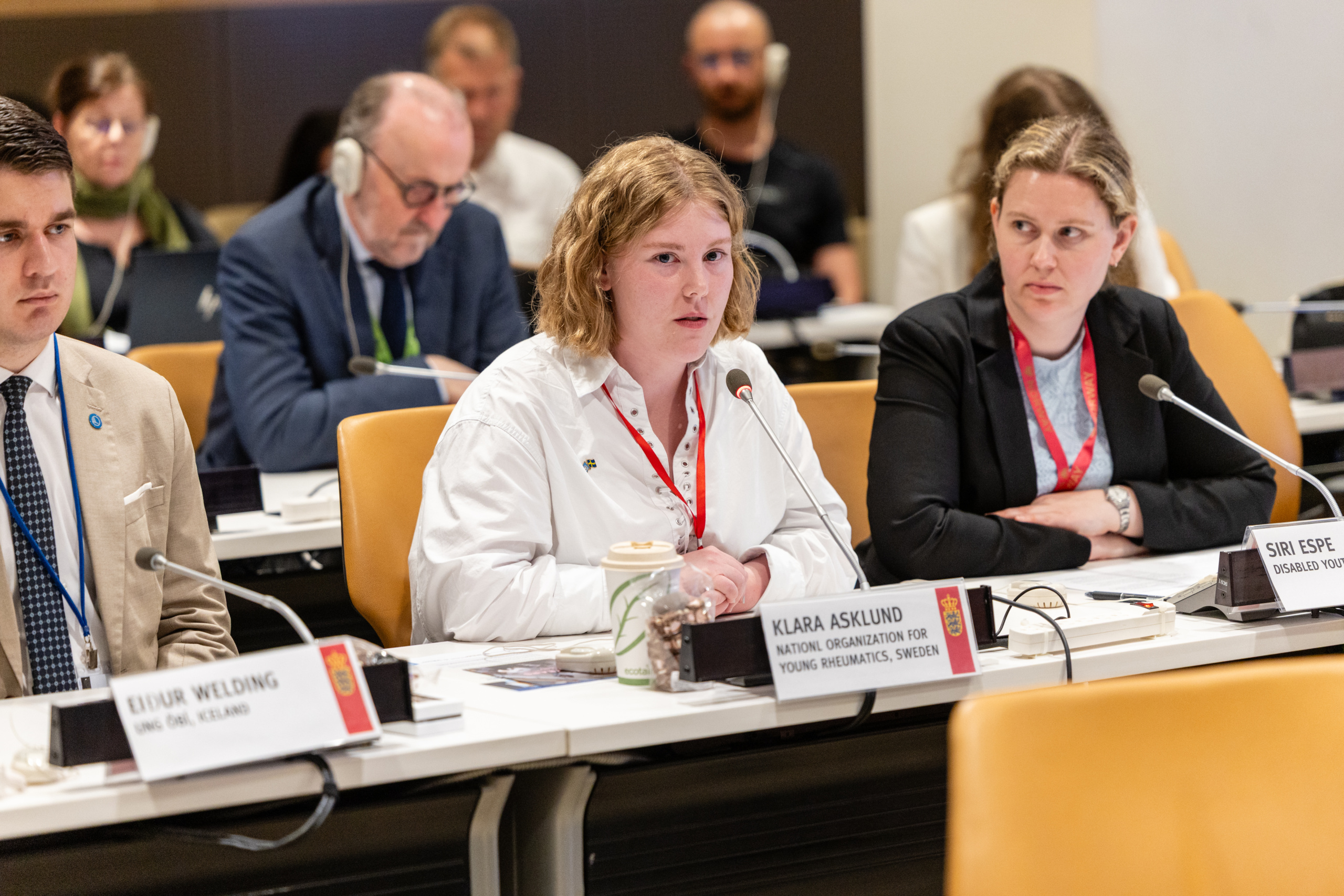
The barriers to participation can also be economic. Klara Asklund from The Swedish National Organization for Young Rheumatics mentions that young people face difficulties entering both higher education and the labour market. Economic reasons can complicate access to aid, support and accessible information.
– If you can’t enter society, how are you able to take part in it? Asklund asks.
Organisations can drive change
Youth disability organisations were mentioned as a strengthening factor. Ninna Reinert Simonsen from the Faroese Disability Organisation MEGD says that the Faroe Islands have not had a strong tradition of youth organisations – but change is underway.
– I believe that creating youth organisations or youth groups within the organization and building spaces where young people feel welcome and included is key for increasing their engagement, says Ninna Reinert Simonsen, adding that this is something that the national disability organisation is currently working on.
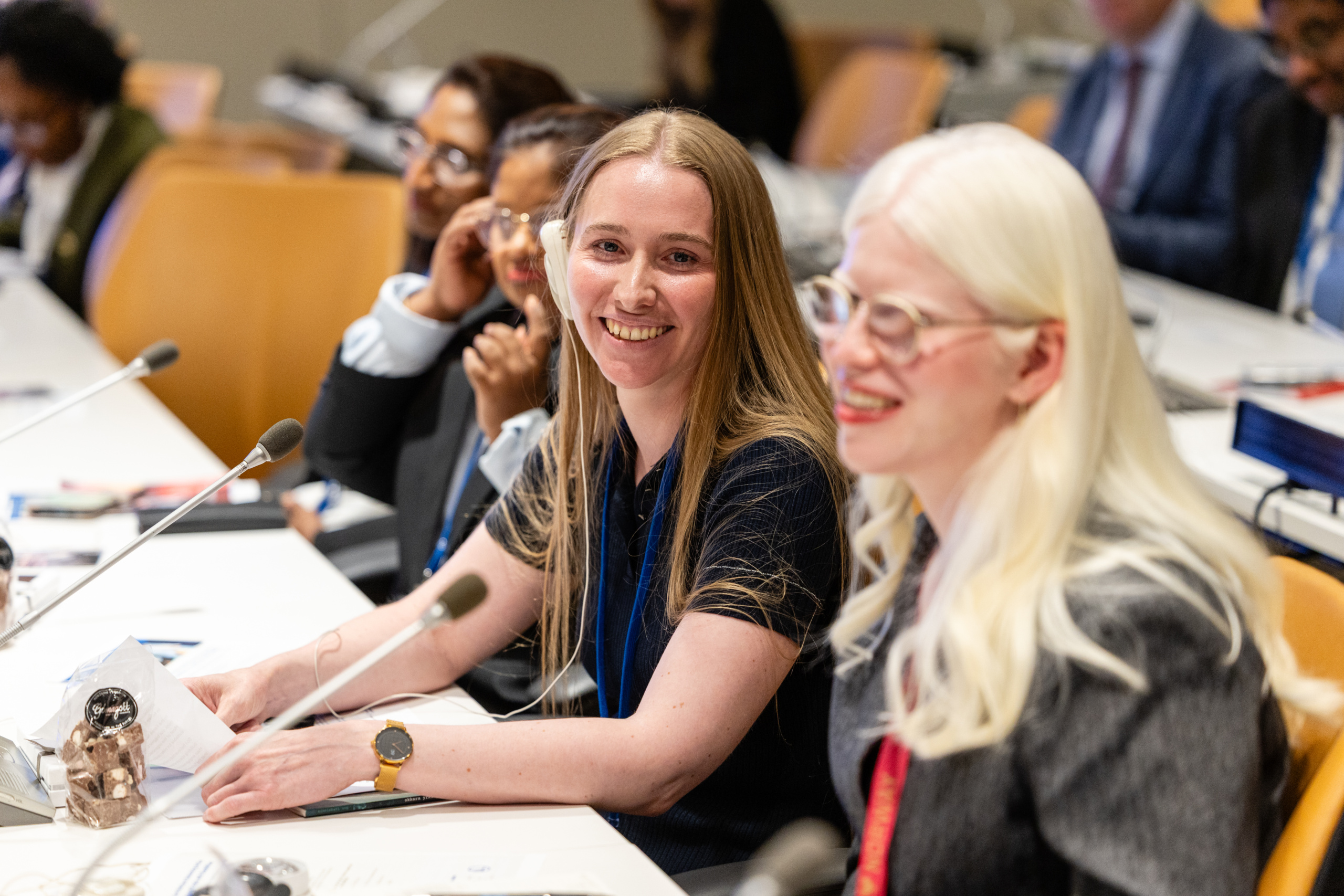
Eiður Welding from Ung ÖBI also underlines the importance of organisations and forums to let young voices be heard.
– We must take action to ensure that youth with disabilities have a safe space to express their opinions. They also need to get training in self-advocacy, says Welding.
Other participants in the side event mention leadership training, mentoring and building confidence.
Moderator William Korte from the Danish Association of Youth with Disabilities talked about his own experiences of finding a purpose when he was invited and included in a youth organisation.
– My dream is to build a world based on universal design where we see people’s potentials and where we recognise that what is needed for some is beneficial for everyone, says Korte.
– I would like the world to treat us with dignity and respect and to include us in whatever they do, give us a chance to do a job that we like to do, like the way my friends live, says Nilshani De Silva, youth representative from Sri Lanka.
Nordic examples of influence
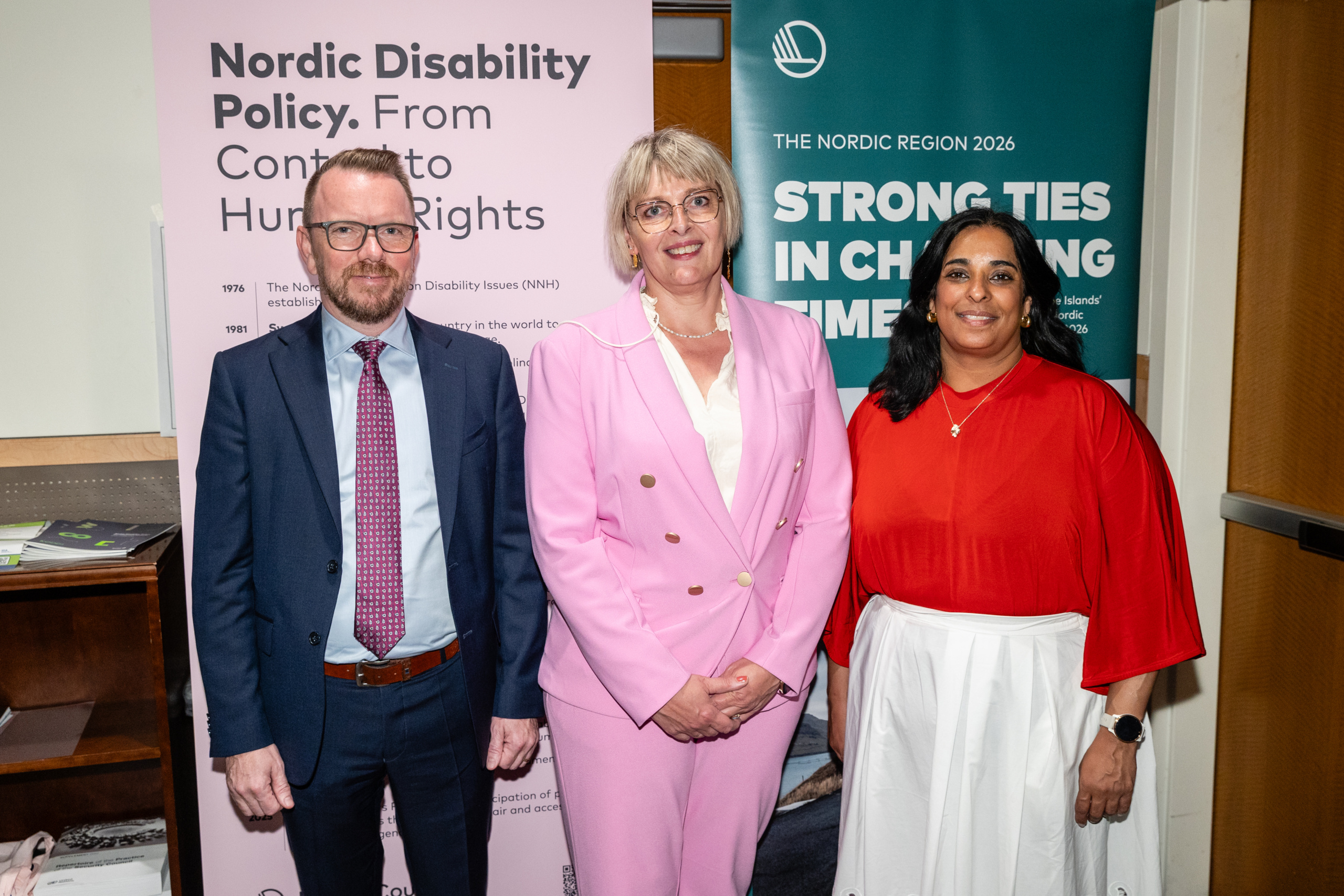
Three Nordic ministers participated in the side event: Margit Storá, Minister of Social Affairs and Housing of the Faroe Islands, Lubna Jaffery, Minister of Culture and Equality from Norway and Ragnar Þór Ingólfsson, Minister of Social Affairs and Housing from Iceland. They shared promising practices from their countries.
In Norway, councils for persons with disabilities and youth councils ensure meaningful participation and real influence at local and regional levels. In Iceland, an Act on Integrated Services aims to ensure that children and young people receive coordinated support across different systems and sectors.
In the Faroe Islands, around 700 children and young people participated in a consultation process for a new Children’s Act. To ensure that young people with disabilities could participate, the workshops were adapted, using smaller groups and more flexible forms of dialogue.
– Participation must become a more natural and systematic part of how we develop laws, services and policies from the very beginning, says Margit Storá from the Faroe Islands.
Listening to young people
– When we listen to young people, the outcomes are much better, says Gopal Mitra, UNICEF’s Global Lead on Disability.
As an example, he mentions that UNICEF has included children and young people in the work with its disability inclusion policy and strategy. UNICEF’s executive board actively engages with young people to gather their perspectives and affirm their right to be heard.
When we listen to young people, the outcomes are much better
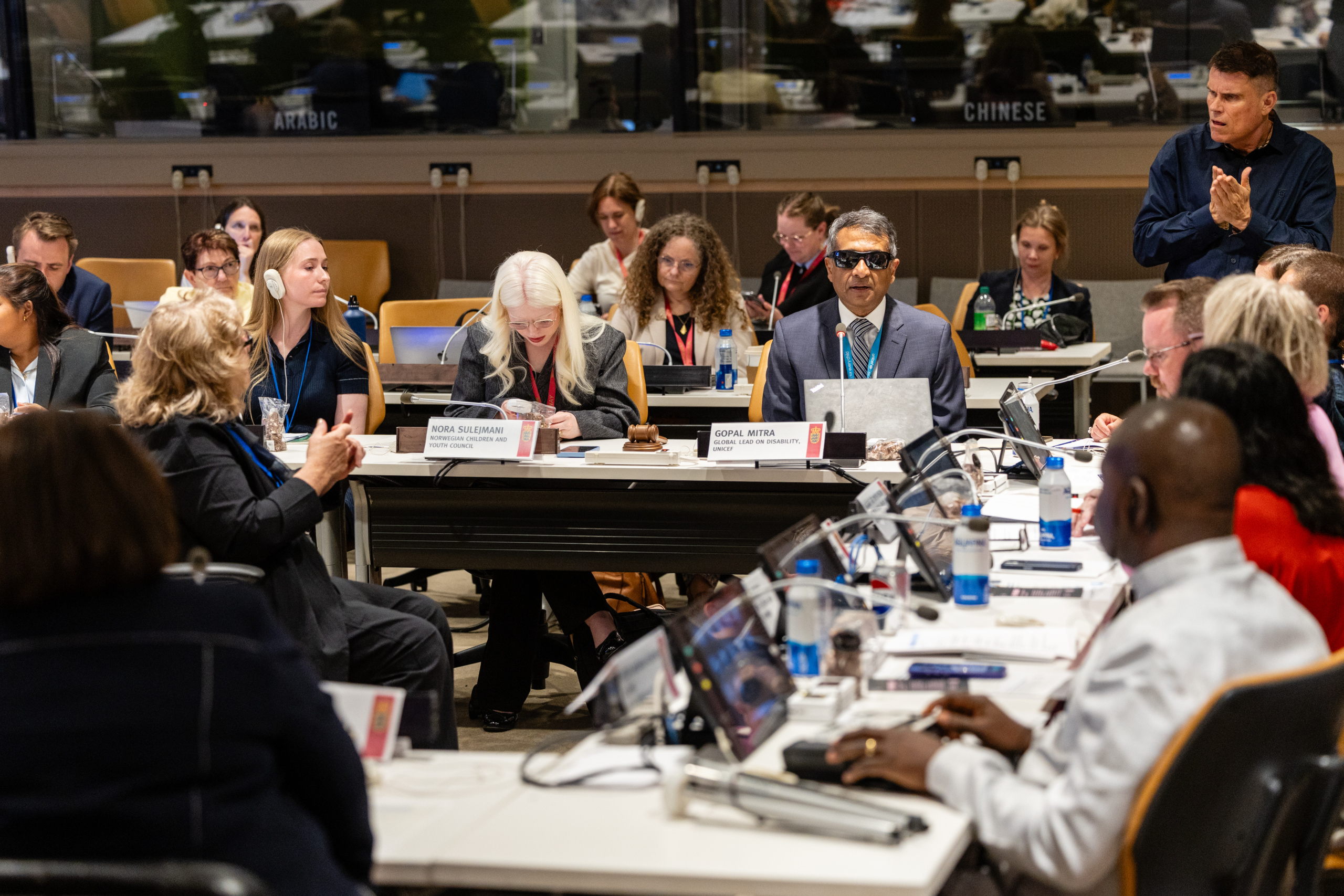
Peter Anomah-Kordieh Kwasi from the Ghana Federation of Disability Organisations emphasizes that active citizenship grows when disability inclusion is seen as everyone’s responsibility. He reminds that it is not merely a term on paper or in speeches.
– Active citizenship is not theoretical. It is personal. It is visible in the everyday experiences of young people who continue to demand space, visibility, and the right to shape their communities, Peter Anomah-Kordieh Kwasi says.