50 years of Nordic co-operation on disability
Nordic co-operation in the disability field will celebrate its 50th anniversary in 2026. Its roots go back several centuries, but it gained real momentum with the development of the Nordic welfare model. Today, the co-operation includes an active council, extensive networks across the Nordic region and a five-year co‑operation programme that guides the work.
The exchange of experience and knowledge between experts began in the 19th century, when schools and institutions for persons with disabilities started to emerge in the Nordic countries. The building of the Nordic welfare states and the integration of the Nordic region after 1945 laid the foundation for more co‑ordinated political efforts in social policy and, over time, in the disability field.
A formal start in the 1970s
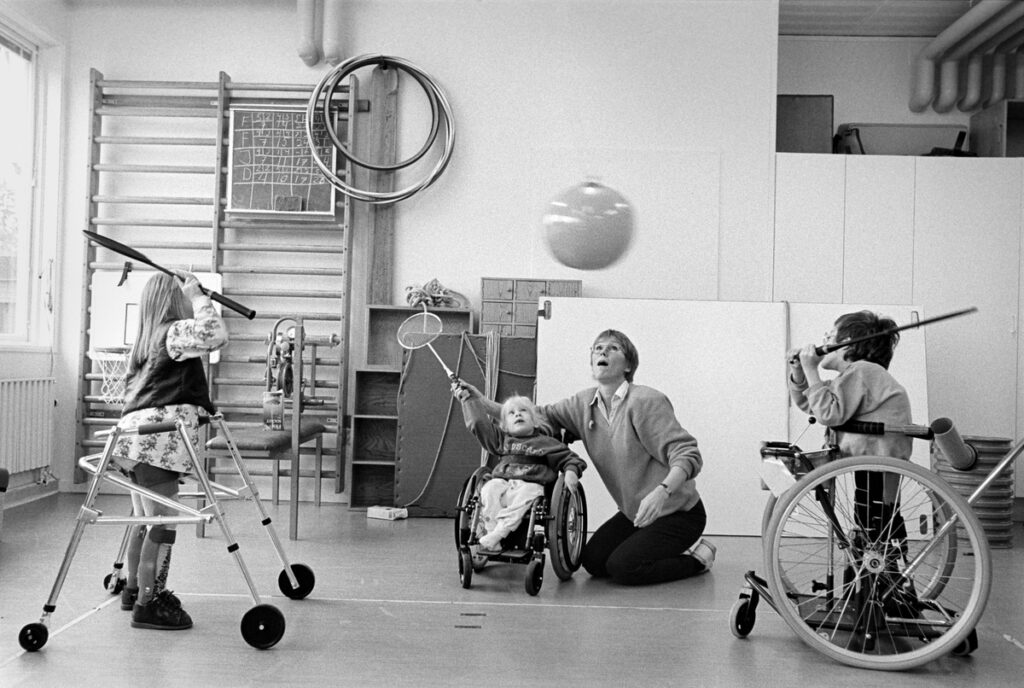
Formal Nordic co-operation in the disability field began in the 1970s, as the Nordic countries started to develop services and policies for persons with disabilities. In 1973, the Nordic Council adopted a recommendation to establish a Nordic co‑operation body in what was then referred to as disability care. In 1976, the Nordic Committee on Disability Issues was established and located in Stockholm. The committee functioned as an expert body to the Nordic Council of Ministers and worked, among other things, on research issues and assistive devices.
In 2009, several previously separate functions were brought together with the establishment of the Nordic Welfare Centre. The new institution was given the task of promoting and developing Nordic co-operation in the disability field, a mandate it still holds today.
Co-operation over time
- 1976: The Nordic Committee on Disability Issues (NNH) is established.
- 1980: NNH becomes a Nordic institution.
- 1981: The Nordic Educational Centre for Deafblind Staff is established.
- 1990: The Nordic Development Centre for Assistive Technology (NUH) is founded in Helsinki.
- 1991: Disability organisations are given the opportunity to apply for support for Nordic co-operation – what is now known as the Support Scheme.
- 1997: The Nordic Co-operation Body on Disability Issues (NSH) is established to replace NNH. The Nordic Disability Policy Council is set up as a policy‑making and advisory body for the entire Nordic Council of Ministers organisation.
- 2005: The first action programme for Nordic co-operation is adopted.
- 2009: The Nordic Welfare Centre is established and tasked with promoting and developing Nordic co-operation in the disability field.
- 2013: The Council for Nordic Co-operation on Disability is established and remains active today.
- 2023: The first meeting of leaders of Nordic youth disability organisations, the Nordic Youth Disability Summit, is held.
Broadly anchored co-operation
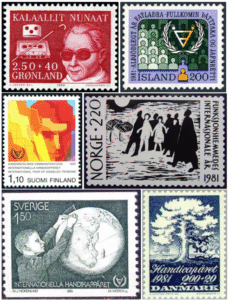
Over time, Nordic disability co-operation has developed into a broad, structured and politically anchored form of co-operation.
It has contributed to strengthened Nordic exchange of experience and knowledge, as well as closer co-operation on disability policy issues. Through joint activities, the countries have shared experience and developed knowledge in areas such as working life, education, accessibility, assistive technology and research.
The co-operation has complemented and strengthened national disability policy efforts, with a focus on participation, independence and equal living conditions for persons with disabilities.
“The status of Nordic co-operation in the disability field is that it is active, delivers Nordic added value, is part of a broader international context and contributes to sustainable societal development based on Nordic citizens’ opportunities for individual freedom and self‑realisation.”
Guðmundur Ingi Guðbrandsson, then Minister of Social Affairs and Labour of Iceland, at the Nordic Council Session at Stortinget in Norway, 2023
The Council for Nordic Co-operation on Disability has an established collaboration with the Nordic Council of Ministers’ Freedom of Movement Council.
The Nordic region and the CRPD
The UN Convention on the Rights of Persons with Disabilities (CRPD) is a central component of Nordic disability co-operation. All the Nordic countries have ratified the Convention at different points in time between 2008 and 2016.
The Nordic Welfare Centre monitors the countries’ reporting to the UN on this page.
Developing the deafblind co-operation
Nordic co-operation in the deafblind field is needed because this is a relatively small area in each individual country. The co-operation began in the 1970s, when it became clear that the countries needed to share knowledge with one another. A Nordic project was launched to identify both the disability itself and the target group, and to map knowledge needs. In 1981, the project was transformed into an institution under the Nordic Council of Ministers: the Nordic Educational Centre for Deafblind Staff, located at Dronninglund Castle in North Jutland, Denmark.
In 2009, the institution became part of the Nordic Welfare Centre’s activities. Nordic deafblind co-operation is an important actor in international co-operation in the field and a pioneer in knowledge development relating to both acquired and congenital deafblindness.
Read more about the deafblind field here.
Top image: The Council for Nordic Co-operation on Disability together with participants at the Nordic Youth Disability Summit in Malmö, 2024. Photo: Marie Sjölind.
Link to license for archive photo from the Folke Bernadotte Home
Follow us on social media:


