Nordic and Baltic countries sharing best practices on building an age-friendly, inclusive future
Older adults
10 Dec 2025
An age-friendly environment is a place where getting older is a good thing, and where people can maintain their physical and mental capacities throughout life. The Ageing is Living: Building Age-Friendly Communities in the Nordic-Baltic Region conference showed that significant improvements do not always require major efforts, if we are attentive to the needs and wishes of older adults.
– In Uppsala, we are proud of our senior lunches in municipal schools. The concept is simple: older adults can enjoy a discounted meal in the school restaurant, and now and then this leads to meaningful interactions between seniors and students, says Kenny Jansson, coordinator for Age-Friendly Uppsala, Sweden, highlighting the importance of intergenerational activities.
In Stavanger, Norway, age-friendly work has led the municipality to require companies to commit to building accessible housing as a condition for buying municipal land.
– This way, social housing and community spaces were created. The only downside is that accessible housing tends to be expensive, so now we are working on ways to make age-friendly construction more cost-effective, says Stian Fantoft Alvestad, universal design adviser in Stavanger municipality.
In Turku, Finland, improvements in health and reductions in loneliness among older adults have been achieved through activities in so-called Move Close groups. The activities are simple: light exercise, easy games, outdoor activities in nearby green spaces, and general body maintenance. 86 percent of participants reported positive effects on their functional ability and daily coping, while 87 percent said they had made new friends through the group.
”We need each other”
These are just a few of the many best practices shared at the conference, which brought together municipalities of different sizes from across the Nordic and Baltic regions. Participation in a Nordic-Baltic network inspires local work and strengthens the negotiating position with politicians and municipal leadership, delegates say.
– Without the network, it would be harder to get age-friendly perspectives implemented locally. Collaboration also helps align the Nordic and Baltic countries. We have generally succeeded in creating very good societies, and now the question is how to maintain and further develop them. That discussion needs to happen jointly across our countries, says Kenny Jansson.
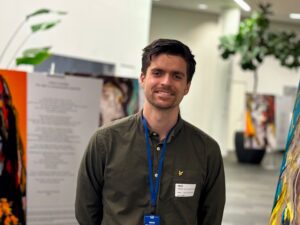
– At home, age-friendly work can often feel solitary, says Stian Fantoft Alvestad.
– That’s why it’s energizing to come to a conference like this and meet like-minded people. No one opposes age-friendly initiatives in principle, but creating age-friendly societies requires us to rethink how we develop our cities, and change often meets resistance, he says.
Cross-sector collaboration is key
A main takeaway from the conference was that age-friendly work must be transsectoral. Health care, urban planning, transport, culture, education, labor markets, and housing all need to collaborate.
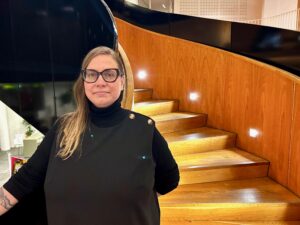
– Age-friendly work often depends on a few motivated people inside the municipality rather than being a shared responsibility across departments, says Helle-Triin Hansumäe, architect at Tori rural municipality, Estonia.
We also need to stop treating older adults as a homogeneous group, she adds.
– This conference has shown very clearly that we must move beyond saying ‘we include everyone’ and actually do the work: create real personas for different groups, map their specific needs, and design processes with empathy.
Outreach is crucial
Reaching out to seniors where they are is key to success. In Turku, “peer messengers” have been recruited to inspire older adults to participate in activities.
– It’s really effective to go where people are. 74 percent of our participants get information through peer messengers, in face-to-face encounters, says Saija Kultala, coordinator for Age-friendly Turku.
The initiative has successfully engaged housing companies, sports associations, businesses, schools, libraries, and more. When you approach stakeholders boldly and openly, you might be surprised by how many values you share, Kultala says.
– For many parties—businesses, housing companies, and the municipality—older adults are an important and valued target group. Because of this, they were eager to collaborate and strengthen senior participation. This cooperation has been absolutely essential in enabling groups to be established in almost every residential area in Turku.
Involving the target group
To avoid a top-down perspective, it is crucial to involve older adults themselves in the work. In Estonia, Helle-Triin Hansumäe’s team actively invites seniors to participate in discussions about the municipal development plan.
– We also invite older residents as ‘local experts.’ Not just to react to finished plans, but to help define problems and priorities from the very beginning, she says.
She describes her ideal age-friendly society as one where she can move around safely and comfortably without a car, with public spaces that are not divided into “youth” and “senior” zones, and where digital tools are helpful but never the only option.
– Most of all, I hope that when I am older, my experience and voice will be wanted, not merely tolerated. In an ideal age-friendly society, nothing essential should change except the number of years I have lived.
Text & photo: Heidi Hakala
Facts
- Since 2017, the Nordic Welfare Centre has been coordinating the Nordic Network for Age-Friendly Cities and Communities. Today, the network includes 25 Nordic cities and municipalities. Read more about the network: Nordic network for age-friendly cities and communities | NVC
- The Ageing is Living: Building Age-Friendly Communities in the Nordic-Baltic Region conference was organized in Copenhagen the 25-26th of November by the Nordic Welfare Centre in collaboration with the WHO Regional Office for Europe and the Centre for an Age-Friendly Norway.
- In June 2026, the global World Congress for Age-friendly Cities and Communities will be held in Spain. The meeting will bring together representatives from around the world to share best practices, public policies, and experiences in building more inclusive environments for older adults.


