Enhancing active citizenships for young people with disabilities: Nordic side event at COSP19
Funksjonshinder
18 mai 2026
Young people with disabilities need equal opportunities to be involved in civil society, public and political life. What is holding them back? Are there good examples in the Nordic countries of support and promotion to give young people with disabilities more influence?
Meaningful youth participation is essential to enhance a socially sustainable society. Article 29(b) of the Convention on the Rights of Persons with Disabilities, CRPD, means that the states must make sure people with disabilities can take part in public life on an equal basis.
But in reality, young people with disabilities do not participate in public and political forums as often as their peers. Reasons are for example lack of information, physical inaccessibility, prejudice, and limited awareness of disability.
Nordic side event at the UN
The Nordic countries will bring this topic to discussion at the COSP19 at the UN Headquarters in New York on 9–11 June.
The side event brings together policymakers, experts and youth representatives. The aim is to discuss how we move beyond theoretical rights and toward practical inclusion in order to ensure that democratic arenas are not just open, but actively welcoming, empowering young people with disabilities to be involved, engaged, and equal actors in society.
Structural discrimination limits youth participation
The Nordic side event will be moderated by William Korte, chairperson of the Danish Association of Youth with Disabilities, SUMH. According to Korte, the main barriers to youth participation are structural discrimination and exclusion.
– Young people with disabilities are hungry to participate. The key objective should be to remove the structural barriers, so the individual resources and capabilities aren’t wasted on administration instead of participation, says William Korte.
He underlines the importance of advocacy led by organisations. SUMH has a special focus on helping its members put the spotlight on their skills, not on their disabilities.
– There are a lot of young people in Denmark that are neither educated nor employed. We are working to empower the youth so they can take part in the workforce. We’ve unfortunately learned to focus upon our own barriers instead of our skills. We are working to change the focus and narrative, explains William Korte.
Accessibility is a prerequisite for participation

At the Nordic side event, a youth panel will discuss the actions needed to support and promote active citizenship. Klara Asklund, Chair of The Swedish National Organization for Young Rheumatics is participating in the panel, and highlights accessibility.
– In order to strengthen participation, I believe we need to make the participation in public, political and civic life truly accessible. It should not need to be something people have to force themselves into or around in order to participate in. We need to create awareness, understanding and adaptability in our systems and society to truly include people, says Klara Asklund.
Being invited is key
There are several ways to encourage youth participation.
– A broader representation of people with disabilities in politics and political parties would encourage young people with disabilities to participate in politics and use their freedom of speech, says Siri Espe, Head of Politics and Public Affairs at Disabled Youth Norway. She will participate in the youth panel.
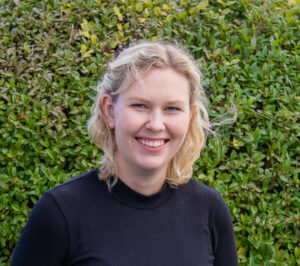
Disabled Youth Norway has examined political participation among youth with disabilities in the project “Til maktens korridorer” (To the corridors of power). Many respondents highlighted the importance of being invited to events and being encouraged to speak and participate actively. However, unnecessary attention and applause will not promote participation.
– One important thing we found in the project is that youth with disabilities that participate in political and civic life experience unnecessary bragging or excitement just for participating. These types of comments – or microaggressions – are often said with a good intention, but do not encourage youth with disabilities to sustain their participation. Being treated like everybody else, being given the accommodation needed, and being applauded for the actual work you do will promote their participation, says Siri Espe.
Live stream at UN Web TV
The side event will be streamed live on UN Web TV. The event is organised by the Ministry of Social Affairs and Housing in Denmark, the Ministry of Social Affairs and Housing in the Faroe Islands, and the Nordic Council of Ministers and is co-sponsored by UNICEF.
Top picture: Istockphoto, sturti


