State of the Nordic Region – 2026: Diversity in the Nordic population by country of birth
Integration
16 apr 2026
Recently, Nordregio, one of the organisations under the Nordic Council of Ministers, published their biennial report on the status of the Nordic countries, entitled State of the Nordic Region – 2026. The report is particularly relevant for integration, as Chapter Four provides an overview of the demographic composition by country of birth across the Nordic region.
Key findings
Chapter Four highlights several key findings that, whilst familiar to experts in the field, are less recognised in public debates concerning migration in the Nordic countries.
The following are the two main points from the composition:
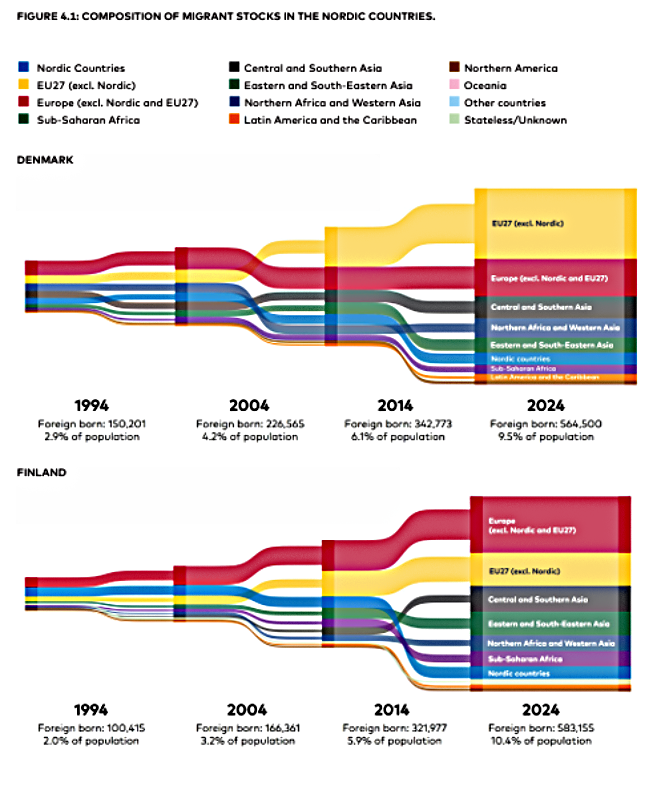
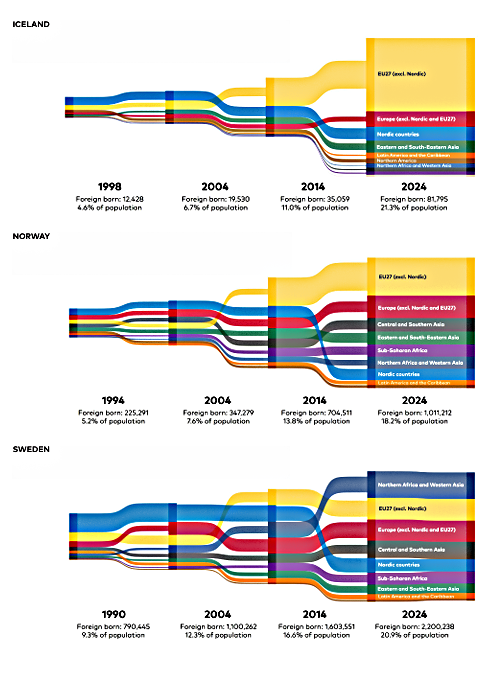
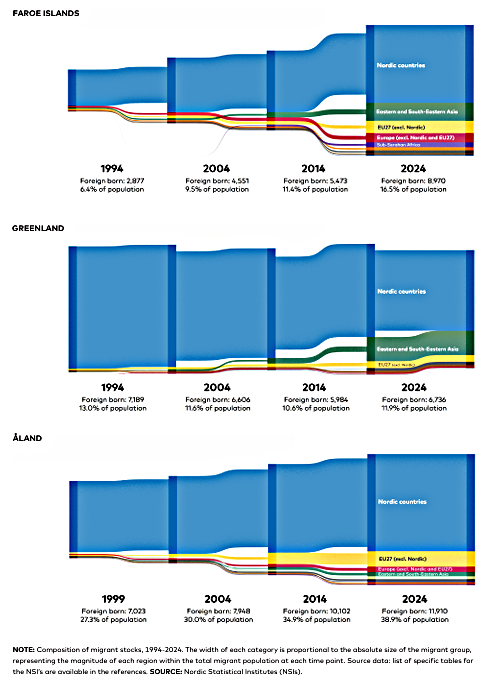
- Why have migration and integration become increasingly prominent topics in public discourse over the past twenty years? One explanation is the growth in the migrant population. The proportion of residents with a migrant background has increased in all Nordic countries during this period, with the exception of Greenland, where the migrant population has remained relatively constant. When examining Figure 4.1 in the report, it is evident that all Nordic countries which have experienced increases in their migrant stock have witnessed a rise of more than 100%. For example, Finland has seen its migrant stock increase to five times the size of that in 1994, when considering the numbers for 2024.
- What are the origins of these migrants, and what are the underlying reasons for migration? Analysis of Figure 4.1 reveals that migrants in the Nordic countries are diverse in origin. The largest group of migrants in all countries except Sweden comes from other European countries or neighbouring Nordic nations. The largest group of migrants from outside the Nordic countries consists of fellow Europeans. Notably, following the enlargement of the European Union in 2004, there has been a significant increase in migration from EU27 countries in all the Nordic countries.
Conclusions
One of the conclusions from the two points above that is relevant to bear in mind and take away from this is that the largest migrant groups are not refugees, but rather European citizens who utilise the free movement provisions within the European Union. Statistical data indicates that these migrants typically exhibit high employment rates compared to other migrants; in some Nordic countries, the rate is just a few percentage points lower than that of native-born residents (Dzamarija and Lysen, Statistics Norway, 2024). Given that this group constitutes the dominant segment of the migrant population and is often several times larger than other migrant groups, an important conclusion, therefore, is that the most common migrant group in the Nordic region is a positive success story, contributing both to the labour market and public finances.
Watch the webinar


