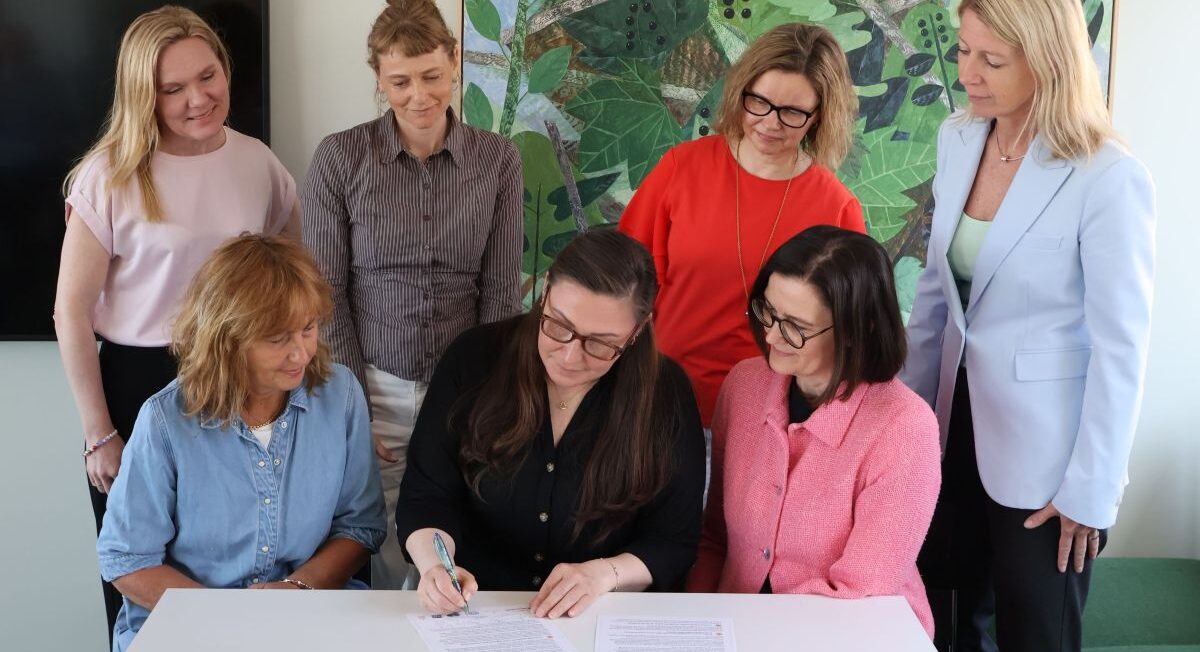
Children’s rights and perspectives are too often overlooked when societies prepare for crises. This is the key message in a new joint statement from the Nordic Children’s Ombudspersons, signed by representatives from across the region.
The ombudspersons call on national authorities to ensure that children’s rights, needs, and participation are systematically integrated into crisis preparedness and emergency response.
– When societies prepare for crises and conflict, they must also prepare for how these situations affect children, says Mina Gerhardsen, Ombudsperson for Children in Norway.
A shared call to action
The joint statement underlines that governments are legally obliged under the UN Convention on the Rights of the Child to safeguard children’s best interests in all decisions affecting them – including in times of crisis.
To strengthen this, the ombudspersons call for:
- the inclusion of children’s perspectives in all preparedness planning
- systems for meaningful child participation
- measures that are adapted to children’s needs
- stronger competence on children’s rights in crisis governance
The message is clear: children must not be treated as an afterthought in crisis planning, but as rights-holders whose perspectives are essential.
– We must also do what we can to protect children’s everyday lives and sense of normality, as far as possible, says Salvör Norðdal, Ombudsperson for Children in Iceland.
Nordic knowledge from the pandemic
The ombudspersons’ concerns are supported by a growing body of Nordic knowledge. The report Participation is protection – Embedding children’s rights in Nordic crisis governance, developed in collaboration with the Nordic Children’s Ombudspersons and Professor Emerita Kirsten Sandberg, shows that children across the Nordic countries were significantly affected by pandemic-related measures, including school closures, restrictions on social life, and reduced access to services.
At the same time, children’s perspectives were often not included in decision-making processes, and opportunities for meaningful participation were limited. The report also finds that decisions affecting children were frequently made without systematic assessments of how children’s rights would be impacted.
The joint statement builds on the same knowledge base presented in the report, and brings renewed urgency to a shared Nordic agenda: strengthening children’s rights and participation in crisis preparedness. This makes the message particularly strong. Through their joint statement, the ombudspersons are not only calling for change – they are also pointing to evidence and recommendations they have helped develop.
Must be part of crisis preparedness
A key lesson emerging from Nordic experiences is that participation is part of the crisis preparedness, and cannot be improvised in times of crisis. To be effective, structures for involving children must already be in place. This includes:
- permanent mechanisms for participation
- access to clear and child-friendly information
- systems for assessing how decisions affect children
When children’s perspectives are included, decisions are better informed, more legitimate, and more responsive to the realities of children’s lives.
The joint statement comes at a time of increasing focus on preparedness across the Nordic region. The ombudspersons emphasise that crises affect children differently, and that those in vulnerable situations are particularly at risk. At the same time, children are not only recipients of protection, but also important contributors whose experiences can improve how societies prepare for and respond to crises.
Next step: child-friendly reports
The Nordic Welfare Centre is preparing for continued collaboration with the Nordic Children’s Ombudspersons. The report Participation is protection – Embedding children’s rights in Nordic crisis governance is only available in English today. As a next step, child-friendly versions in Nordic languages of the report will be developed, aiming to make the findings accessible to children and young people themselves. This is an important part of strengthening meaningful participation – ensuring that children are not only affected by decisions, but also informed and able to engage with them.
– A society that is well prepared for crises is one that listens to children, protects their rights, and involves them in shaping the decisions that affect their lives, says Merethe Løberg, Senior Adviser at Nordic Welfare Centre.
Top photo: Signing of joint statement by the Nordic Ombudspersons for Children: front row, from left: Juno Blom (Sweden), Stina Sværd (Greenland), Salvör Norðdal (Iceland); back row: Elina Pekkarinen (Finland), Andrea Langergaard Nicolaisen (Denmark), Sanna Roos (Åland) and Mina Gerhardsen (Norway).
Related news

Young people and digital media: Too much focus on protection, too little on influence
Inequities in services and gaps in support for expectant parents and families with young children