Exploring life adjustment in combined dual sensory loss and deafblindness
Kuurosokeus
4 joulu 2025
On 12–13 November, professionals from across the Nordic region met in Hallunda Folkets Hus for a two-day seminar on life adjustment when living with combined dual sensory loss or deafblindness. The seminar was arranged by the Nordic Network on Usher Syndrome and brought together practitioners, researchers and people with lived experience to deepen the understanding of the Life Adjustment Model and its use in practice.
Life adjustment as an ongoing process
Living with combined dual sensory loss or deafblindness involves continuous change. For many individuals with Usher syndrome, hearing and vision deteriorate gradually, often beginning in adolescence or early adulthood. These changes may require re-learning everyday strategies, reconsidering future plans and managing an emotional process that shifts over time.
Life adjustment refers to the ongoing process of adapting practically, emotionally and socially to changing sensory conditions.
The life adjustment model, first published in 2012, describes this internal process through four phases: Holding on, Processing and Exploring, Rooted in oneself, and Living with and Maintaining. The model is used for example by the professionals working in the deafblindness field as a way to understand the psychological, social and practical transitions that occur when adapting to progressive sensory loss.
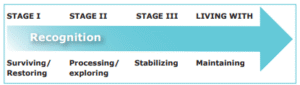
Presentations, reflections and shared insights
Throughout the seminar, participants received an overview of the model’s development and central themes. Presentations highlighted that deafblindness is not static. Instead, individuals with diagnose move between phases depending on life circumstances, health changes and external demands.
The seminar programme combined lectures with examples from practice and group discussions. Participants came with different levels of experience when it comes to working with the model. Some had applied the model for years in rehabilitation work, while others were new to it. This created a broad foundation for reflection.
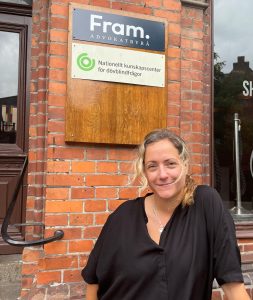
Emma Varga working as a curator at National Knowledge Center for Deafblind Issues (Nationellt kunskapscenter för dövblindfrågor) described the value of the discussions:
“I truly enjoyed the discussions and found the reflections very valuable. It is always inspiring and enriching to hear different perspectives, and sharing my own always gives a good opportunity to reflect on them. The conversations gave me some fresh insights, and overall, these two days felt both meaningful and energizing.
The seminar featured examples from Sweden and Iceland, showing how the model is applied in different national contexts. Participants also heard a presentation from a person living with Usher syndrome, who connected the model to lived experience and offered a concrete understanding of how the phases can unfold in everyday life.
A shared Nordic framework
The life adjustment model was developed through Nordic collaboration and continues to function as a shared reference point across the region. It provides a common language for understanding adjustment processes and supports the development of coherent methods and tools.
Emma Varga, who is also a member of the Nordic Network on Usher Syndrome noted:
“The Life adjustment model with its 10 central themes, was developed through Nordic collaboration. It works well as a cross-sector and cross-country framework offering a shared conceptual map for understanding how individuals adapt to progressive sensory loss over time, such as living with Usher syndrome. As we have seen during our two-day seminar on life adjustment, the model is already used in a variety of ways across our countries.”
Participants underlined that Nordic cooperation is essential in the field of Usher syndrome. With relatively few individuals in each country, shared approaches and joint knowledge-building become important for ensuring coherent and well-tailored support. According to one participant, cooperation across borders helps create more comparable services, strengthens peer support and training opportunities, and makes it easier to use a shared vocabulary when discussing life adjustment. This contributes to more consistent support for individuals with Usher syndrome, regardless of where in the Nordic region they live.
Strengthening support through shared understanding
The seminar offered a space for professional exchange and deeper understanding of how life adjustment unfolds for individuals with combined dual sensory loss or deafblindness. It underlined the continued relevance of the life adjustment model as a tool for structuring conversations, guiding rehabilitation work and supporting individuals as their sensory situation changes.
By bringing together practitioners, researchers and people with lived experience, the Nordic Network on Usher Syndrome contributes to a more cohesive and informed approach to life adjustment. The seminar strengthened the foundation for ongoing collaboration and shared learning across the Nordic region.


