Child poverty in focus at Nordic Council committee meeting
Lapset & nuoret
13 touko 2026
What additional knowledge do we need regarding the risk of growing up in relative poverty in our high-income countries? How can we increase children’s influence and participation in matters that affect them? Are age limits the only option for strengthening digital safety for children and young people? These were some of the questions raised by members of the Committee on Welfare in the Nordic Region in the Norwegian parliament on 16 April.
The Nordic Welfare Centre, commissioned by the Nordic Council and the Nordic Council of Ministers, has compiled a report describing the extent and recent developments regarding the negative consequences associated with growing up in relative poverty in the Nordic countries. The report was launched at a conference earlier this year, and on 16 April, project manager Merethe Løberg was invited to the Nordic Council to present the findings as well as other activities linked to the area of operations Children and young people.
Social transfers are crucial
The main message of the report Children and youth at risk of poverty – Nordic approaches to social mobility and remaining challenges is that households with persistently low income constitute a societal challenge and that developments need to be closely monitored. The report emphasises the importance of structural factors such as the labour market, housing costs and income security. Eva Biaudet (Finland) raised a question about the importance of social transfers, i.e. various forms of financial support.
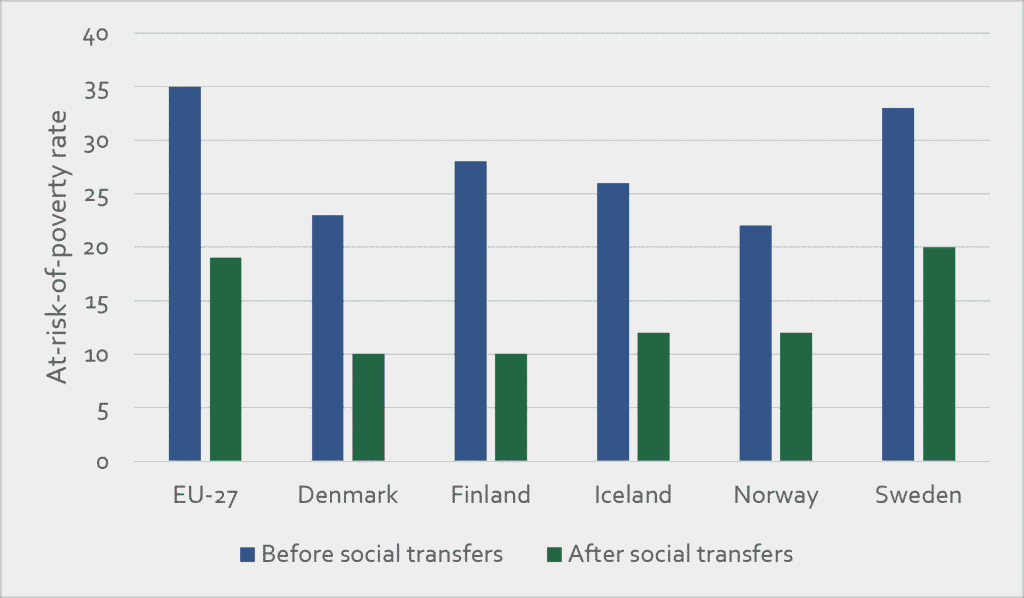
The report shows that social transfers are crucial. The diagram below illustrates the role of welfare policies in combating poverty by comparing a hypothetical scenario in which the state does not intervene with the actual situation in which children and families receive financial support.
At-risk-of-poverty rate before and after social transfers by country, 2023: Individuals under 18 years and 60% median equivalised income threshold.
Pia Sillanpää (Finland) also raised the question of how to prevent poverty from being passed on between generations. Research shows that the reasons why economic disadvantage can be transmitted across generations are the result of a complex interplay between structural, economic and social factors.
– Child benefits and other income support are the most important and effective tools for preventing and reducing child poverty, said Merethe Løberg.
Longitudinal studies and children’s voices are needed
The Chair of the Committee, Eva Lindh (Sweden), asked what additional knowledge is needed beyond what is presented in the new report. Merethe Løberg provided several examples, noting that national data are often better and more up to date than the comparable EU-SILC data used in the report for monitoring developments in regions and areas in the Nordic countries where families face the greatest challenges. National data provide averages, meaning that significant local and regional differences in living conditions are not captured. However, local and regional data must be purchased from national statistical authorities, and there is currently no funding allocated for this.
– If we had funding to acquire national data, we could identify common comparable indicators at a Nordic level and achieve better monitoring. There are considerable disparities also within countries, and these are not reflected in the figures we currently have, said Merethe Løberg.
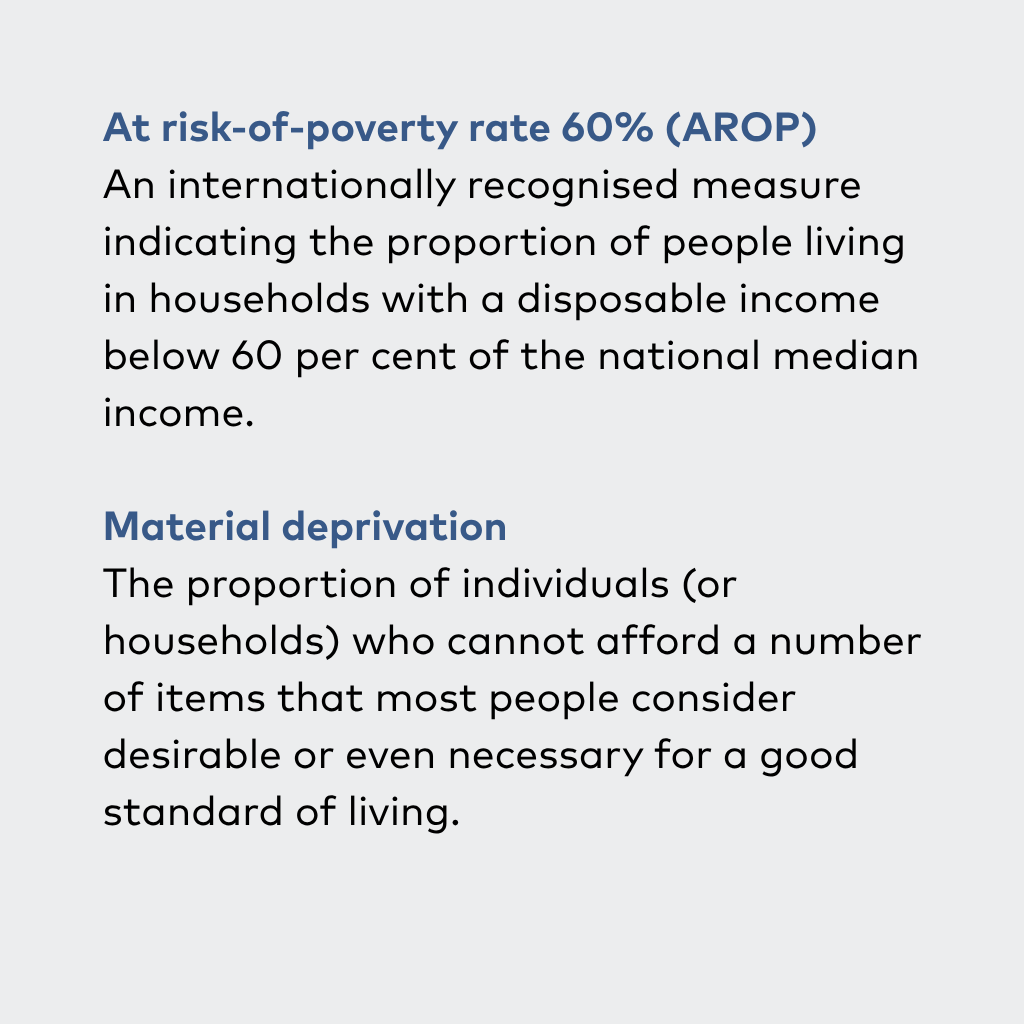
The researchers behind the report also emphasise the need for individual-level data and income data, as well as the importance of following the same families over time. Only then can the development be assessed with certainty. The report also highlights the need to combine income-based indicators such as AROP with indicators of material deprivation (see fact box), which would provide more knowledge about what families can afford in times of rising prices.
Child poverty is primarily measured at the family level, and there is also a lack of surveys directed to children themselves.
– Not all children growing up in households with persistently low income are negatively affected, as parents tend to shield their children from adverse consequences. However, children also report that they are very aware of their parents’ financial situation, and of feelings of shame. We need to listen to children to gain a better understanding of what kind of support is needed, said Merethe Løberg.
Use Child Rights Impact Assessments
Lotta Johnsson Fornarve (Sweden) asked for advice on how to involve children and young people in decisions that affect them. The Nordic Welfare Centre has recently concluded a project on youth participation during and after the Covid-19 pandemic, which has resulted in several reports. Among the material produced is a checklist for politicians and decision-makers and a final report in which all children’s ombudspersons in the Nordic countries have contributed their recommendations. One specific measure highlighted in the final report is the use of Child Rights Impact Assessments (CRIA).
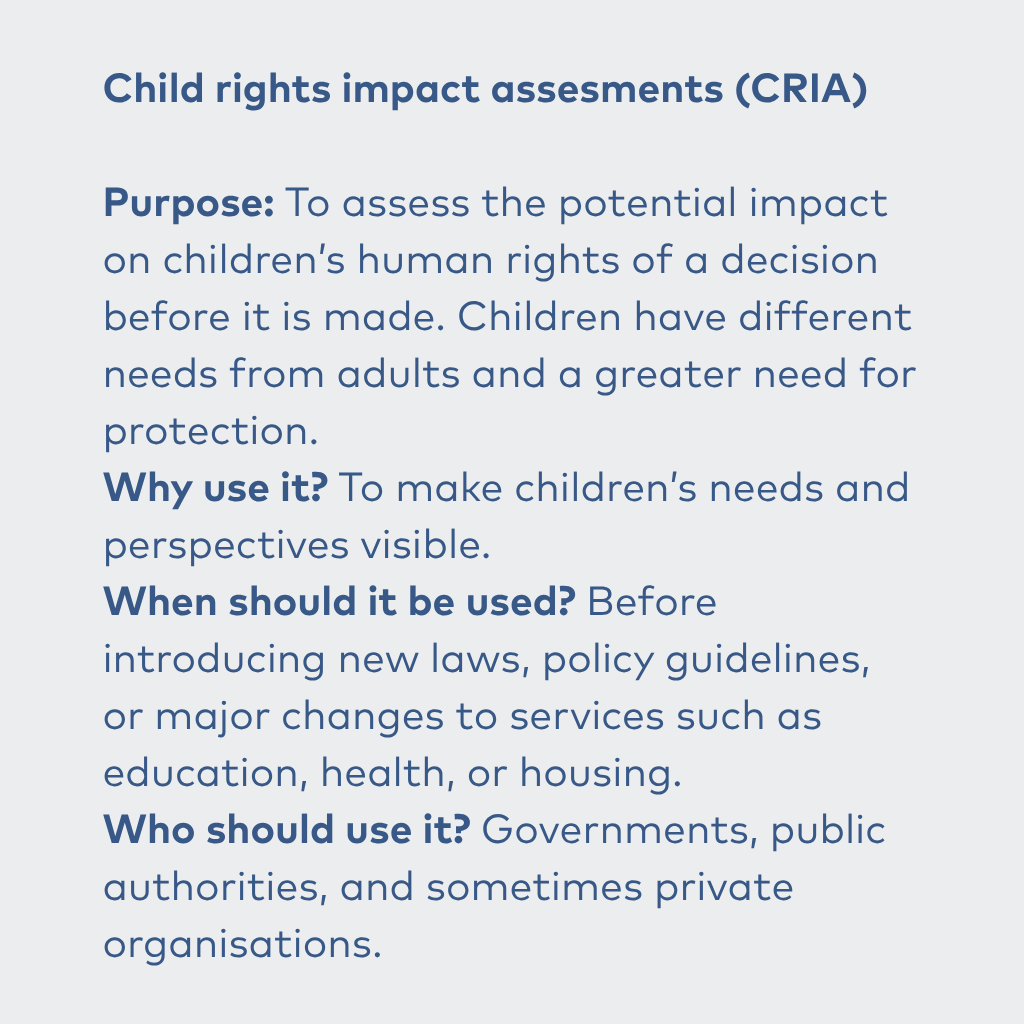
Children have the right to express their views on matters affecting them, and their views must be taken seriously. This right is rooted in Article 12 of the UN Convention on the Rights of the Child and exists to ensure that children’s needs are better met. A well-conducted CRIA requires authorities to analyse the effects of decisions on children’s wellbeing and whether their human rights are sufficiently safeguarded.
Young people and digital media – new knowledge on the way
The same speaker also asked whether age limits for digital media is the only tool for strengthening digital safety for children and young people, or whether there are other approaches. This is both an important and complex issue. Children have the right to information and to seek help. They also have the right to a safe and secure environment, both online and offline.
The Nordic Welfare Centre is leading the project Safer digital democracy for children and young people, which examines both positive and negative effects of digital media use.
The project, which concludes this year, will produce a report containing a literature review, an overview of policies and initiatives in the Nordic countries and other countries, as well as a separate report reflecting the views and recommendations from Nordic children and young people. In a few months, we will therefore know more. However, Nordic countries have been ahead in introducing recommendations regarding both screen time and age limits.
– Age limits and screen time are probably not the only solutions; they address only parts of the problem. It is important to strive to ensure that the content children encounter online is of good quality, said Merethe Løberg.
Taken together, it can be said that the answers to many of the committee members’ questions shared a common theme: listen to children. This article is based entirely on the questions raised at the committee meeting in the Norwegian parliament on 16 April and provides only selected insights from the report Children and youth at risk of poverty – Nordic approaches to social mobility and remaining challenges. Read more about the report in previously published articles:
The Nordic countries are not protected from the risks of child poverty
Vissa drabbas hårdare av barnfattigdomen i Norden
Top image: From the Nordic Council meeting at the Norwegian parliament on 16 April.


