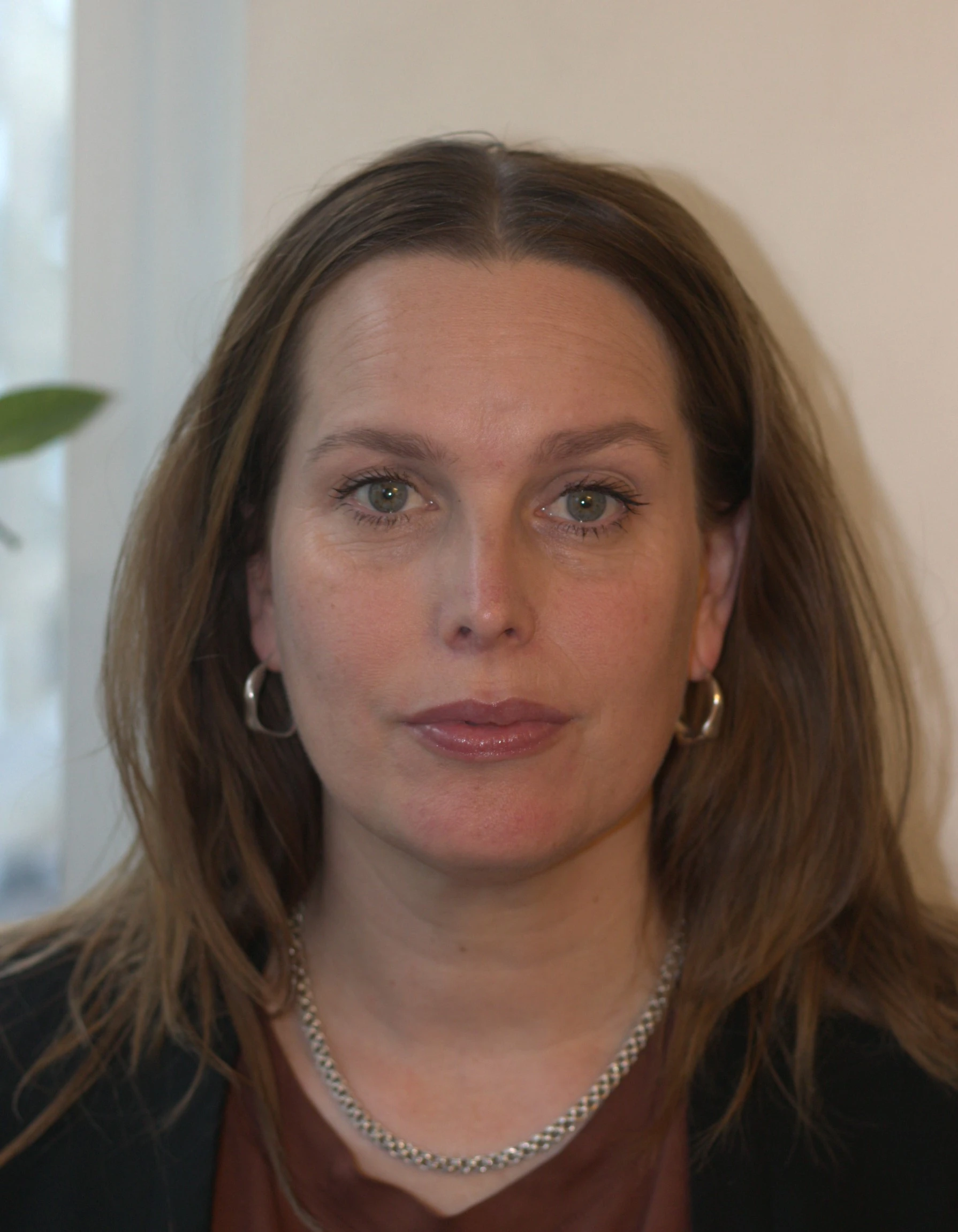
Tove Samzelius
Today Tove works as a Senior Lecturer and researcher in the Department of Social Work at Malmö University, Sweden.
She is in the process of starting up two new research projects. The first one is a project focusing on dialogues and trust-building work involving social workers, civil society organisations and parents with migrant backgrounds in Malmö. The second one is a study that focuses on the everyday lives and survival strategies of single mother households suffering from the impact of persistent poverty in Sweden.
What has the journal Nordic Welfare Research meant for you?
- It was the first Journal to publish a scientific article based on my PhD research and made it accessible to a wider audience. The journal has continued to be a good source for up-to-date Nordic research in my field.
- It was the first Journal to publish a scientific article based on my PhD research and made it accessible to a wider audience. The journal has continued to be a good source for up-to-date Nordic research in my field.
7. ‘It’s like they are doing injustice’: A single-mother perspective on family homelessness in Sweden
Vol.8, Iss.2 | pp 115–126 | 13 October 2023| https://doi.org/10.18261/nwr.8.2.4
Abstract
Single mothers with a foreign background and their children are a growing group within the homelessness population in Sweden. However, they are also more likely to live in “hidden homelessness” than other groups and are therefore less visible in official counts, a factor that contributes to misrepresentation and misrecognition of their living circumstances. In recent years, this invisibility has been exacerbated through new guidelines that delimit target groups, including families with children, and put stronger emphasis on the individual’s responsibility to solve their own housing situation regardless of structural constraints. This article outlines the experience and impact of those changes as articulated by single mothers affected by homelessness and housing exclusion in the greater region of Stockholm. The findings presented show aspects of experiences of homelessness and encounters with social services that tend to be invisible in official accounts in Sweden. They further illustrate the difficulties and harmful impact on vulnerable women and children of a system that primarily focuses on exit and individual deficiencies.
Introduction
Until recently, in Europe, there has been a widespread assumption that children and their carers are looked after by social services in the event of homelessness. However, there is a growing body of research that indicates that this idea may be wrong and that both family homelessness and women’s homelessness may be more common than previously thought (Pleace, 2019). Families with children are now the fastest growing homelessness population in many European countries (Baptista et al., 2017). Across all countries, single mothers and their children make up a significant proportion of this population (Baptista, 2019). It could be argued that family homelessness consolidates all our society’s gender issues in one place. Underlying factors are the rise in female-headed households in poverty, the expansion of the low-wage economy, lack of affordable housing, female migration, an inappropriate response to victims of domestic violence, and inadequate social services (Bassuk, 2015).
Despite its women- and child-friendly image, Sweden is no exception to this development. Over the past 20 years, research has highlighted emerging gendered and racialised patterns of family homelessness and poverty in the country (Nordfeldt, 2012). The latest official homelessness count estimated that some 14,000–15,000 children experienced homelessness during the week that the counting was done. The number of families with children categorised as being in ‘acute homelessness’ had increased by 60 per cent in six years. Households headed by a single mother with an African or Middle Eastern backgrounds were significantly over-represented within this group (Socialstyrelsen, 2017). Further, the number of families that were at risk of homelessness or faced inadequate living situations is unknown.
Official counts of homeless populations are critiqued as constructs that tend to favour a certain type of knowledge. Those who remain out of sight during counts or live in places or circumstances that elude official definitions of homelessness, remain undercounted (Brush, Gultekin & Grim, 2016). Single mothers with children are one of the groups that are most likely to be excluded from official counts (Baptista et al., 2017). This is because women who are mothers tend to navigate the system differently and might more proactively try to prevent absolute (or acute) homelessness (Watson & Austerberry, 1986). They are also more likely to proactively seek to avoid acute homelessness due to the negative impact it has on their children. This ‘ongoing struggle to survive’, or ‘fight to keep going’, is a form of agency that Ruth Lister (2004) has described as ‘getting by’. The efforts made by mothers in this situation tend to go unnoticed and, as Lister argued, ‘the cloak of invisibility surrounding getting by tends to be lifted only when it breaks down and the situation becomes classified as a “problem”’ (p. 130). How ‘the problem’ is interpreted and understood by people in positions of power will in turn have an impact on how it is addressed.
The failure to recognise differences between genders can lead to a misrepresentation of the experience of homelessness and a misrecognition of the needs of different groups (Pleace, 2016). Changes to policy and assessment models can also impact the numbers of officially homeless (Fitzpatrick & Pawson, 2016). Since Sweden’s latest official count, the number of families with children that are counted as homeless has decreased in some of the country’s largest cities. However, rather than being the result of improved services and pathways to housing, these changes primarily appear to be a result of new guidelines that delimit target groups and put a stronger emphasis on the individual’s responsibility to solve their own housing situation (Runqvist, 2021).
In this article I discuss homelessness and housing exclusion through the lens of everyday experiences of marginalised single mothers. The analysis presented is focused on how they ‘get by’ in the face of adversity, and on how they describe their experiences of ‘breakdowns’ and subsequent interactions with social services. By placing the experience of these mothers at the centre of the analysis, the aim is to offer a deeper understanding of the potential impact of policies and guidelines that exclude, or limit, marginalised mothers and their children from accessing support and pathways to more stable housing arrangements.
Background and analytical framework
In response to rising costs for temporary accommodation, municipalities in Sweden’s largest urban areas now apply a categorical distinction between what is sometimes referred to as ‘structurally homeless’ and ‘socially homeless’. Most families with children are placed in the category of ‘structurally homeless’, which is described as those whose main problem is difficulties in accessing housing due to low incomes, and who have no ‘social problem’ that requires any special support (Samzelius, 2022a). The guidelines for providing housing assistance to homeless people that have been adopted in several municipalities underline that the social services are not responsible for organising accommodation for ‘structurally homeless’ people. They might, however, be eligible for temporary accommodation in emergency situations. Importantly, there is no other local or national authority that accepts responsibility for the supply and allocation of housing for families placed within this category either. Nor is there any ‘social housing’ allocated based on need, as is the case in many other European countries. Instead, there is an expectation that those excluded from support should solve their own situation on the general housing market, regardless of the structural issues that caused their homelessness and social exclusion in the first place (Samzelius, 2022b).
Although not necessarily made explicit, one consequence of these shifts is that ‘homeless women (born abroad) and their children by now are judged to be less “deserving” than, e.g., homeless single men (born in Sweden) with substance abuse or mental health problems’ (Sahlin, 2020, p. 43). Sahlin further argues that this development is ‘at odds with the historically strong social norm’ in the Swedish welfare state ‘that women – especially mothers – and children should be protected by society’ (Ibid.). This happens at a time when economic inequality is growing in Sweden and when poverty levels among single migrant mothers is significantly higher than among other households with children (Salonen, 2021).
The focus on individual responsibility and withdrawal of support present in Swedish responses to homelessness is reflective of core changes that have characterised neoliberal reforms in many advanced welfare states. Individuals are increasingly required to take responsibility for their own circumstances and to provide for themselves and their families independently, mainly through labour-market participation (Mik-Meyer & Villardsen, 2012). Addressing the gendered impact of welfare reforms, it has been highlighted that women, especially low-income and single mothers, are at risk of losing the state’s gendered protection (Weigt, 2010). Material deprivation and a scarcity of resources are also recurrent themes in research involving single mothers with experience of homelessness (Baptista, 2019).
In the case of Sweden, it has been pointed out that restrictive measures in social security law and retrenchment of welfare support ‘risk intensifying existing inequalities related not only to gender, but also to ethnicity and social class’ (Wennberg, 2008, p. 365). Previous Swedish research concerning single mothers in receipt of social assistance has further raised concerns regarding the inadequacy of the organisational structure and regulation of social services in meeting the needs of this group (Stranz & Wiklund, 2015). It also points to the difficulties that can arise within a system that primarily focuses on the correction of individual deficiencies without taking structural constraints into account, and the negative influence this might have on how parenting capacity is assessed. Similar concerns are highlighted in research that analyse ongoing policy changes and redefinitions of target groups eligible for support from social services in the event of homelessness (Sahlin, 2020; Runqvist, 2021; Samzelius, 2020).
In this article I depart from a critical approach to poverty that sees it as a ‘dynamic social process through which people gain, lose and re-gain access to essential resources and material objects’ (Sharam & Hulse, 2014, p. 297). This is also an approach that aims to transcend the dichotomy between individualist and structuralist approaches. It offers an analytical framework that locates agency in the context of the individual’s social position ‘in relation to wider forms of stratification and social relations of power’ (Williams, Popay & Oakley, 1999, p. 2). This allows for a focus on the agency of individuals, like the mothers in this study, that are facing poverty and hardship, but ‘without losing sight of the ways in which their agency is constrained by lack of material resources and power’ (Lister, 2004, p. 127). Lister (2004) has developed a model distinguishing different forms of agency that can help us to better represent choices, actions and strategies used by people in poverty.
I primarily focus on the form of agency that Lister has described as ‘personal’. This involves ways in which agency is used to ‘get by’ in everyday life to cope with the difficulties presented, and, on ‘getting out’, or strategies used to try to change the situation. The notions of coping and of resources – both in terms of access to them and deployment of them – are central as they can ‘help to illuminate the ways in which getting by when in poverty involves the exercise of agency’ (Lister, 2004, p. 132). However, as Lister has also pointed out, this is an aspect that tend to be invisible in official accounts of poverty, and, as I discussed earlier, in accounts of family homelessness in Sweden. It is only when fragile housing arrangements ‘break down’ that the situation of these families come to the attention of the authorities and might officially be counted as homelessness.
The study: Context and methodology
The analysis presented in this article is based on data originally gathered as part of a PhD project that was published as a monograph (Samzelius, 2020). I have revisited the empirical material, applying a more focused and slightly different theoretical lens. Furthermore, the original study involved marginalised both single mothers and frontline welfare professionals. It also included social service journal notes and other written materials that the participants shared with me. In this article, I have limited my analysis to data gathered through in-depth interviews and ethnographic observations involving 17 single mothers with migrant backgrounds who had experiences of being homeless with children. The data collection was carried out in the greater Stockholm region during 2018 and 2019. The research procedure was approved by the regional Ethics Review Board in Lund, and the study conforms to internationally accepted ethical guidelines.
Fifteen of the participants came to Sweden as adults and had arrived between 2003 and 2013. Two came as children in the late 1990s but had led transnational lives and lived abroad for periods of time as adults prior to returning to Sweden. All but one had either Swedish citizenship or indefinite leave to remain. They were officially residents of five different municipalities and four administrative districts within the city of Stockholm. Some of the mothers changed their official municipality or district of residence during the research. The mothers and their children had journeyed between different forms of ‘hidden’ and ‘official’ homelessness for between two and nine years, which included spells in hostels, hotels, with friends or family, as lodgers, in privately sublet flats, in flats sublet through social services or in residential care settings.
All families had moved across large spatial distances within the region of Stockholm, generally at the outskirts of the city, and between areas with high levels of deprivation, or industrial estates or campsites where some of the emergency shelters in the region are located. During the time that the research was carried out, most of the participants had ongoing or intermittent contact with social services due to their housing troubles. Eight of them were in receipt of social assistance for subsistence, while the remaining nine either worked or were in receipt of maternity benefits. One woman had qualified for unemployment insurance. Some had also been in receipt of student loans.
The participant mothers were recruited through organisations that meet homeless families in their day-to-day work. All participants spoke good enough Swedish, English, or French (languages that I am fluent in) to engage with me in conversations, which helped in establishing relationships and trust. However, some participants opted to have an interpreter present when we conducted recorded interviews. Working with interpreters and in a multilingual research environment in qualitative research may of course have methodological implications. However, although the linguistic skills and qualifications of an interpreter are important, a “technical fixity” does not necessarily strengthen the credibility of the interview data (Ingvarsdotter, Johnsdotter & Östman, 2010). For me it was important to work with interpreters that had a good understanding of the project and a respectful approach towards the participants. Therefore, I used skilled interpreters already known to me and who were able to be there throughout the project.
Some of the mothers actively called me to share experiences from meetings and invited me to come along to visit ‘housing options’ suggested by social services and to other events. They also sent me pictures of hostels and other ‘housing options’ they had visited, and shared documents such as court decisions or letters from social services. In this way, they dynamically shaped the research process. Without their active involvement in the process, my data would not have been as rich. Those informants also offered me the opportunity to capture their experiences by ‘being there’ and becoming familiar with parts of ‘their worlds’ first hand (Gubrium & Holstein, 1997).
All recorded interviews were transcribed by myself and became the starting point for my analysis, which was originally done from a content-theme perspective (Berg, 1998). I also created case profiles documenting key features of each mother’s life story, which helped me to visualise key emerging themes. In this article I was interested in areas of their stories that capture how they were ‘getting by’, how they tried to ‘get out’, and on ‘breakdowns’ (Lister, 2004) related to housing emergencies that led to contacts with social services. In re-reading the empirical material, I have therefore focused on those themes.
Results and analysis
The analysis is presented in three sections. In the first section I focus on how the mothers are ‘getting by’ and trying to ‘get out’, drawing on different resources available to them when trying to solve their family’s housing needs. In the second section, I discuss the notion of ‘breakdowns’ – in what kind of situations are the mothers deciding to turn to social services to ask for help? Finally, I discuss experiences of interactions with social services.
Getting by
The mothers that took part in this research journeyed between different forms of ‘hidden’ or ‘official’ homelessness with the children for many years. The main reasons for not being able to secure stable housing on the regular market was low income, rules stipulated by landlords (level or type of income, number in a household etc.), and not enough points/years in local housing queues. The strategies used to try to solve the housing situation through other means were: 1) asking around in social networks, including ethnic networks, and in religious establishments; 2) searching internet sites and social media adverts; and 3) asking for help from social services as a last resort.
All the research participants used a combination of these strategies at different times depending on the situation. Asma, a mother with two young children who became homeless after a divorce, describes one such setting as follows:
It was really difficult. Many children and two mothers in just three rooms. We used to sleep in the living room – me and the children. I bought two mattresses and I used to sleep on the sofa.
Being forced to double up in crowded apartments with family or acquaintances, sometimes even strangers, in some of the most deprived neighbourhoods of Stockholm, due to a lack of other options was common. Asma paid 2500 SEK for the arrangement described above. Others reported paying as much as 7500 SEK for a room, but the most common fee was between 4–5000 SEK.
Asma was one of the mothers that primarily asked around in her social and ethnic networks. In this way she found rooms as a lodger with other single mothers, or women whose husbands were abroad. However, those arrangements usually only lasted a few months, either because she found the arrangement difficult or because she was asked to leave. Asma also told me about the situation of other mothers she knew:
They stay with a criminal cousin or with a family with teenagers that are criminal. I saw many flats where there is hashish and drugs and they live there because they don’t know what to do. The person with a first-hand contract abuses the family that has nowhere to live […]
The most common strategy was, however, to both ask around in social and ethnic networks, and to use the internet and social media. Mounia, also a mother with two children, had experience of both. Through social and ethnic networks, she found different time-limited and temporary arrangements, for example flats that were let on a short-term basis when a household was in a moving process. In Sweden, it is common that people that live in rental flats end up having to pay double rent for two to three months. Letting one of the flats during this time eases the cost burden. Mounia also described arrangements where she had been offered a room in exchange for doing household chores like cleaning and cooking. On one such occasion she was living with a Swedish family in the basement of their large house. The family had contacted her after seeing that she was searching for a place to stay online. Another time, Mounia and her daughters, stayed for several weeks in the back of a basement mosque, after turning to an imam from the same country of origin for help.
Although short-term arrangements like the ones described by Asma and Mounia fall within the boundaries of what is defined as one of four categories of homelessness in Sweden (Socialstyrelsen, 2017), they are only counted if known to, and registered by, local social service offices. This was, however, far from always the case. Alice, a mother of one child with special needs, became homeless after leaving a violent relationship. Initially she received support from social services, with sheltered accommodation and social assistance. When she started to study to improve her career prospects within the care industry, she had to move from the sheltered accommodation as she had a student loan. Alice and her child moved in as lodgers with another single mother with two children who lived in a two-bedroom flat. After a few months they were asked to leave. They continued to move between different lodging arrangements for several years. Alice found most places through adverts on the internet and said that she felt that most people only wanted money, and many refused to sign a contract:
Most people who rent out a room do not want to sign a contract, which I find strange. They want the money in cash […] And they change their mind all the time. One day they can suddenly say: ‘My friends are coming; you have to leave as soon as possible’.
This was a common experience described to me by the research participants. Without a contract, it was not possible to apply for housing benefits or to ask for financial assistance from social services. Living under such circumstances meant that the families had no tenancy rights and no right to public support.
When temporary arrangements break down
Although the mothers managed to ‘get by’, using agency and different, albeit severely limiting resources available to them, their housing arrangements were never sustainable or secure. Alice described what she would normally do when she had to find a new place to live:
First, I usually call friends. Then I go to Blocket [an internet marketplace] and call them one by one. I also write and write…I usually write a little about myself and then I send it off. Sometimes they call, some don’t respond at all…after some time I usually find something.
Alice spoke both Swedish and English, which facilitated communication with strangers and made it easier to access temporary housing outside of social or ethnic networks. She had also taken a strategic decision to study which she hoped eventually would help her to ‘get out’ of the predicament she found herself in.
Mike Titterton (1992) has argued that personal, social, and material resources can be of significance for an individual’s situation and for how they cope with very trying situations. Cultural resources, such as language skills, can also help people to make sense of their situation and gain access to information. Alice avoided contact with social services as she was determined to finish her studies. She knew that she would be asked to actively look for work if she asked social services for help with temporary housing.
All other research participants had resorted to contacting social services at some point due to a housing emergency. Gloria, a pregnant mother of one child, had ended up renting a sub-let flat after separating from her partner. When the landlord found out, she was asked to leave but was unable to find somewhere else to stay. She described what happened:
We went to social services, but they refused to see me. They told me I must use the money in my bank account and find a hotel on my own. The only hotel I found that night was [name of hotel]. I found that at midnight. During all that time I was trying to get help, they just told me they wouldn’t help me. I even had to sleep in a basement two nights with my baby. I had told them I had slept in the basement and even so they said there is nothing we can do for you. They told the guard in the reception area that, ‘If she comes back, you should not let her in’.
Reflecting on what happened to her and several other mothers she met in the council building, Gloria said, ‘I don’t know if it is to try to put people off. Maybe they think that people have somewhere to live and that they are lying or something’. For those mothers like Gloria who were unable to find friends or family willing to help, sitting in the social service reception area was described as an act of desperation. Eventually, Gloria was granted emergency assistance for temporary accommodation. However, the response in cases where the mother was deemed unentitled could be heavy-handed. Several mothers described how security guards had been used to remove them and their children from a social service office. Others described how they had been stopped from applying for assistance over the phone.
Asma and her children had to leave a room she had rented as a lodger with only a day’s notice. She went to social services to ask for help but was told to call back the following day:
When the interview was finished, she said, ‘Unfortunately, we are not the housing exchange. Who told you to contact social services? You are irresponsible and unplanned…’
Like Alice, Asma was studying to improve her opportunities to find work, and her student loan meant that she had an income. However, moving around with two young children was affecting her health. When she was denied support, she turned to family and friends for a temporary roof over her head. On one occasion she turned to an aunt that lived two hours out of Stockholm. She left her children there while travelling to Stockholm to continue with her course. Eventually, after three years of moving around, the situation became unsustainable, and her mental health deteriorated. Asma was unable to manage her studies and lost the right to financial support from the Board of Student Finance (CSN). Through an internet forum she found an organisation that helped her with advocacy, and after several years she eventually received support from social services with temporary accommodation. Although she would have liked to finish her course at this point, she was told that it was a requirement to actively look for work, which she would not be able to do if she was in full-time education.
Interactions with social services
As the mothers were trying to solve their situation, there was a complex pattern of movement through precarious housing, ‘hidden’ homelessness and emergencies that arose when they were asked to leave a temporary arrangement at short notice. In general, it was only these emergency situations that had potential to be classified as a ‘problem’ and lead to temporary support through social services, thereby making the situation visible.
The right to support is assessed on a case-by-case basis, and, as described in relation to Asma’s and Gloria’s situations, it is often linked to the family’s financial resources rather than their direct need for shelter. This is because emergency accommodation is paid for through the means-tested social assistance scheme, which is regulated through the Social Service Act. The right to apply for social assistance is regulated in the first paragraph of chapter 4 in the Social Service Act, which states that:
Individuals unable to provide for their needs or to obtain provision for them in any other way are entitled to assistance from the social welfare committee for their livelihood and for their living in general. The individual shall, through social assistance, be assured a reasonable standard of living. The assistance shall be designed in such a way as to strengthen his or her resources for independent living.
The actual conceptualisation of notions like ‘reasonable standard of living standard’ is interpreted by municipalities and their employees (Kjellbom, 2009). On the one hand, this allows for freedom for social workers to match clients’ needs with services. On the other hand, it also permits considerable variation in assessments and decision-making procedures between different municipalities and in relation to different clients (Hjort, 2019). However, since the 1990s many municipalities have introduced stronger activation requirements, and sanctioning measures if a client is judged as not making enough effort to become self-sufficient.
The mothers in this study had to show that they were ‘actively trying to solve their situation’. One mother with two children called Sophia described her experience:
They told me all the time that I had to look for somewhere else to live. They were putting pressure on me and asked why I couldn’t find somewhere to live. But how easy is it to find somewhere in one week?’ I told them, ‘If you can do it please let me know!’
Sophia was asked to look for 30 flats per week all over Sweden. Other mothers told me about requirements of 20 per week or 20 per month. They had to list their searches and hand them to their social worker on a weekly or monthly basis. Some were asked to hand over log-in details to private internet accounts and others to take screenshots and send to their social workers. Some were strictly supervised while others were just asked how the house search was going or encouraged to look by themselves. Many described the tasks assigned to them as meaningless and aimed at control rather than help. A mother called Yasmin, who had three children, described that she had to attend a ‘house-searching school’ once a week. However, she did not feel that it was of any support, but rather designed as a way of controlling:
The house-searching school is just used as an excuse. They say, ‘Well we have offered them help. They don’t want to move anywhere else. Now they have to leave…’ That is the only reason why they have it. All they want is for us to disappear as they see us as hopeless cases. They don’t want us here…
The discretionary elements of social service working practices were described as confusing and disempowering by the mothers. They found it difficult to know what to expect and sometimes they did not know what was required from them.
Sara, a mother with one child, was sanctioned twice for not accepting housing offers made by social services. In the first instance, she was told to move to a sublet in a small village three hours away from Stockholm, and the second time to a villa shared with single men in another municipality. Sara explained what happened the first time:
They said I had to apply for flats three hours from Stockholm, but I was scared. I said, ‘I can’t do it and what about my child? Can you please help me?’ They said no. I was scared and couldn’t cope. The place in the village was only a temporary contract so I said no. Then social services threw us out from the hostel. Me and my child were travelling around on the tube, and we slept in different places. I had to leave my clothes in my teacher’s room. It was too much to carry around. Then my teacher booked a hotel for me. She was paying for it. She saw me and my child in the centre and that we were upset so she booked the hotel. Then after that, social services put me in a hostel again, but they say they will not pay for a flat. I have to look for places on Blocket. They say I have to look by myself.
Sara said she did not know they could throw her out, and several mothers had similar reflections – they did not understand the rules. Several participants described situations where social workers were unable to answer their questions, and where they were given contradictory advice, and how different municipalities or city districts appeared to apply different rules.
The loss of housing and housing emergencies were often seen as confused with the loss or absence of parenting skills, which was felt by the women as an assault on their integrity and a lack of recognition and respect for their core identity as mothers (see also Cosgrove & Flynn 2005). When I asked Leila, a mother with three young children, if there was something specific she thought was important to bring up, she said:
Well, you know, I didn’t know that it was a normal thing that they could put your children against you. I thought that was really scary. It was what surprised me in any case. Even with my own caseworker. It was always like, ‘Oh, the children can be put in care’. It was always brought up in one way or another. I thought it was horrible. It was getting so bad that I went to see a psychologist. You know, I went to see a psychologist…or a therapist…because I was suffering from anxiety and that…I had sleeping problems because of this situation. This is also the backstory you know. This was the symptoms of what I was going through at that time.
None of the mothers had their children removed during this research, but it was a constant worry that had a major impact on their families’ lives. Several mothers described feelings of powerlessness, but also felt that the situation was unjust. Those feelings were summed up by Gloria as follows:
It is upsetting. It’s like they are doing injustice…I don’t know…I don’t know… You tell yourself you don’t even want to live anymore. Then you look at your child and that is what keeps you going, you know.
Gloria, like Leila, felt that she was treated with distrust and disrespect in her encounters with staff at her local social service office. Feelings of being denigrated and dehumanised are reflective of findings from international research that focus on single mothers’ experiences of encounters with welfare services (see e.g., Liegghio & Caragata, 2016). They also felt that the efforts that they did make, both in terms of caring for their children under extremely difficult situations and attempts to solve their housing situation went unnoticed and unrecognised.
Concluding discussion
The stories shared by the single migrant mothers that took part in this research highlight aspects of the experience of family homelessness that are not captured through official data or statistics. Over several years, these families gained, lost, and re-gained access to different forms of temporary accommodation. However, it was only during shorter periods when they were receiving support through social services that their housing problems became visible. Yet, as pointed out by Sahlin, ‘most municipalities aim at reducing the number of homeless individuals, but not necessarily through housing provision’ (2020, p. 50).
The findings presented in this article suggest that a strong focus on ‘gatekeeping’ (not granting people access to services) and ‘exit’ might support a reduction in the number of individuals counted as homeless, but without necessarily ensuring that their situation is improved. When exiting temporary accommodation provided through social services, the mothers and their children generally went back to unstable housing arrangements. Eventually they came back to social services when there was another ‘breakdown’.
When unstable living circumstances like those shared in this article are made invisible, there is also a risk that the extent and nature of the housing problem in Sweden becomes misrepresented, and that the needs of vulnerable women and children remain unrecognised. Currently, no statutory agency is assigned the responsibility to offer long-term support or to identify realistic pathways to housing for families that find themselves excluded from the Swedish housing market. Social services therefore become a last resort, but without adequate tools, their interventions might become counterproductive, and have a detrimental impact on children.
The category ‘structurally homelessness’ indicates a recognition that the underlying cause of housing exclusion and family homelessness is structural. Yet, interventions offered to those accepted as eligible for temporary accommodation are primarily focused on individual activation. Rather than putting the housing situation at the centre, attention is shifted to individual effort and capability. Without a recognition of the ways in which the mother’s agency is constrained by a lack of resources, by powerlessness, and by systemic barriers, a focus on ‘individual responsibility’ and ‘failed parenting’ risks leading to ‘individualized blame’. However, from the mothers’ perspective, the focus on individual blame was perceived as unjust and counterproductive. Their insights could be paramount for the development of policies and practices that aim to prevent and mitigate, rather than exacerbate, family homelessness and housing exclusion.
References
Baptista, I., Benjaminsen, L., Busch-Geertsema, V., & Pleace, N. (2017). Family Homelessness in Europe. EHO Comparative Studies on Homelessness. European Observatory on Homelessness. https://www.feantsaresearch.org/download/feantsa-studies_07_web3386127540064828685.pdf
Baptista, I. (2019). Family Homelessness: a gender issue? FEANTSA. Homeless in Europe Magazine – Autumn 2019, 7–8. https://www.feantsa.org/public/user/Resources/magazine/2019/Autumn/Homeless_in_Europe_Ma gazine_Autumn2019_final.pdf
Bassuk, E. L. (2015). Child Homelessness: A Growing Crisis. https://www.samhsa.gov/homelessnessprograms-resources/hpr-re- sources/child-homelessness-growing-crisis. Accessed January 20, 2020.
Berg, B. L. (1998). Qualitative Research Methods for the Social Sciences. Allyn and Bacon.
Brush, B., Gultekin, L., & Grim, E. (2016). The Data Dilemma in Family Homelessness. Journal of Health Care for the Poor and Underserved, 27(3), 1046–1052. https://doi.org/10.1353/hpu.2016.0122.
Cosgrove, L., & Flynn, C. (2005). Marginalized mothers: Parenting without a home. Analyses of Social Issues & Public Policy, 5(1), 127–143. https://doi.org/10.1111/j.1530-2415.2005.00059.x
Fitzpatrick, S., & Pawson, H. (2016). Fifty years since Cathy Come Home: critical reflections on the UK homelessness safety net. International Journal of Housing Policy, 16(4), 543–555. https://doi.org/10.1080/14616718.2016.1230962
Gubrium, J. F., & Holstein, J. A. (1997). The New Language of Qualitative Methods. Oxford University Press.
Hjort, T. (2019). Uppdrag exit – med fokus på att minska socialbidraget. In T. Hjort (Ed.), Det yttersta skyddsnätet: Om arbete med socialbidrag. Studentlitteratur, 201–220.
Ingvarsdotter, K., Johnsdotter, S., & M. Östman. (2010). Lost in interpretation: the use of interpreters in research on mental ill health. International Journal of Social Psychiatry, 58(1), 34–40. https://doi.org/10.1177/0020764010382693
Kjellbom, P. (2009). Kommunala riktlinjer. In A. Hollander & K. A. Borgström (Eds.), Juridik och Rättsvetenskap i Socialt Arbete. Studentlitteratur.
Liegghio, M., & Caragata, L. (2016). ‘Why Are You Talking to Me Like I'm Stupid?’: The MicroAggressions Committed Within the Social Welfare System Against Lone Mothers. Affilia -Journal of Women and Social Work, 31(1), 7–23. https://doi.org/10.1177/0886109915592667
Lister, R. (2004). Poverty. Polity Press.
Mik-Meyer, N., & Villardsen, K. (2012). Power and Welfare: Understanding Citizens’ Encounters with State Welfare. Taylor and Francis.
Nordfeldt, M. (2012). A Dynamic Perspective on Homelessness: Homeless Families in Stockholm. European Journal of Homelessness, 6(1), 105–123. https://www.feantsaresearch.org/download/article-5-26425791292885481283.pdf
Pleace, N. (2019). Family Homelessness in Europe. FEANTSA. Homeless in Europe Magazine – Autumn 2019, 22–23. https://www.feantsa.org/public/user/Resources/magazine/2019/Autumn/Homeless_in_Europe_Ma gazine_Autumn2019_final.pdf
Pleace, N. (2016). Exclusion by Definition: The Underrepresentation of Women in European Homelessness Statistics. In P. Mayock & J. Bretherton (Eds.), Women’s Homelessness in Europe. (pp. 105–126). Palgrave Macmillan.
Runqvist, W. (2021). Hur har andrahandslägenheter i Malmö kommun fördelats till hemlösa över tid? En studie av prioriteringar och exkluderingar. (Research reports in Social Work, vol. 2021, Nr. 5.) Socialhögskolan, Lunds universitet.
Sahlin, I. (2020). Moving targets: On reducing public responsibilities through recategorisation of homeless people and refugees. European Journal of Homelessness, 14(1), 27–54. https://www.feantsaresearch.org/public/user/Observatory/2020/EJH/EJH_14_1-A2-Web[1].pdf
Samzelius, T. (2020). A vicious circle of silent exclusion: Family homelessness and poverty in Sweden from a single-mother perspective. PhD Dissertation. Malmö University Press.
Samzelius, T. (2022a). Den nya hemlösheten och fattigdomsparadoxen i det sociala arbetets praktik. In M. Hertz (Ed.), Kritiskt socialt arbete (pp. 86–110). Liber.
Samzelius, T. (2022b). Bostadens emancipatoriska betydelse: den svenska jämställdhetspolitikens blinda fläck? In B. Bengtsson, M. Holdo & E. Holmqvist (Eds.), Allas rätt till bostad: Marknadens begränsningar och samhällets ansvar. Daidalos.
Sharam, A., & Hulse, K. (2014). Understanding the Nexus between Poverty and Homelessness: Relational Poverty Analysis of Families Experiencing Homelessness in Australia. Housing, Theory and Society, 31(3), 294–309.
Socialstyrelsen [The National Board of Health and Welfare]. (2017). Öppna jämförelser av hemlöshet och utestängning från bostadsmarknaden. Enkätundersökning 2016. Socialstyrelsen. https://www.socialstyrelsen.se/globalassets/sharepoint-dokument/artikelkatalog/ovrigt/2017-11- 15.pdf
Stranz, H., & Wiklund, S. (2015). Child welfare activities targeting single mothers on social assistance. A study of child welfare interventions and case managers’ referrals in a Swedish sample. British Journal of Social Work, 45(4), 1224–1241. https://www.jstor.org/stable/43687902
Titterton, M. (1992). Managing threats to welfare: the search for a new paradigm of welfare. Journal of Social Policy, 21(1), 1–23.
Weight, J. (2010). “I feel like it’s a heavier burden …”: The gendered contours of heterosexual partnering after welfare reform. Gender & Society, 24(5), 565–90. https://doi.org/10.1177/0891243210382865
Wennberg, L. (2008). Social Security for Swedish Solo-Mothers in Swedish and EU Law: On the Constructions of Normality and the Boundaries of Citizenship. Iustus förlag.
Williams, F., Popay, J. & Oakley, A. (1999). Welfare Research: A Critical Review. LCU Press.