
Charli Eriksson
Since 2022 Charli is employed by Department of Learning, Informatics, Management and Ethics, LIME), Karolinska Institute. His present position is senior research specialist/professor in public health sciences.
Right now Charli together with a group of Nordic researchers are collaborating in the FORTE-funded research program Mental health through the adolescents’ eyes: longer term trends in the Nordic countries. The overall purpose is to develop knowledge about how adolescents’ mental health has developed from 1986 to 2022 and investigate determinants of both mental well-being (positive mental health) and various forms of mental complaints reported by adolescents in Nordic countries. The research program is part of a Nordic research collaboration within the Health Behaviour in School-aged Children (HBSC).
What has the journal Nordic Welfare Research meant for you?
- A special issue based on our Nordic research on positive mental health enabled us to publish seven scientific papers and an editorial. The special issue was an important incentive for completing our research effort, which was funded by the The Nordic Arena for Public Health Issues, Nordic Council of Ministers. Moreover, it was also an asset when applying for research funding.
- A special issue based on our Nordic research on positive mental health enabled us to publish seven scientific papers and an editorial. The special issue was an important incentive for completing our research effort, which was funded by the The Nordic Arena for Public Health Issues, Nordic Council of Ministers. Moreover, it was also an asset when applying for research funding.
4. Trends in high life satisfaction among adolescents in five Nordic countries 2002–2014
Vol.4, Iss.2 | pp 54–66 | 11 November 2019 | https://doi.org/10.18261/issn.2464-4161-2019-02-03
Abstract
Life satisfaction is an important indicator when assessing positive mental health aspects in populations, including among adolescents. The aim of this study was to investigate trends over time in prevalence of high life satisfaction among adolescents from five Nordic countries: Denmark, Iceland, Finland, Norway and Sweden.
We used data from four waves of the Health Behaviour in School-Aged Children study from 2002, 2006, 2010 and 2014 (n=109,847). HBSC is a school-based study examining social circumstances, health and health behaviour among 11-, 13- and 15-years olds every four years in many European and North American countries. The Cantril Ladder, an 11-step visual analogue scale, was used as the measure of life satisfaction, and was dichotomised into two groups: high life satisfaction (scoring 9 or 10 on the scale) and medium/low life satisfaction (scoring <9).
Over the 12-year period studied, between 28.6 and 44.8% of adolescents in the five countries rated their life satisfaction as high. Relatively large changes in prevalence levels occurred at the country level over the period. Denmark and Finland showed a steady, significant decline in the prevalence of high life satisfaction over the years. Iceland showed the highest prevalence in 2010. Norway and Sweden showed similar development until 2010, followed by a clear increase for Norway and a sharp decline in adolescent high life satisfaction for Sweden up until 2014. In all countries, high life satisfaction was most prevalent in 11-year- olds and least prevalent in almost all surveys among 15-year-old girls.
Introduction
Life satisfaction is an important concept within the science of positive psychology as well as in many neighbouring disciplines (Gilman & Huebner, 2003; Veenhoven, 2012). Indicators of subjective well-being including measures of life satisfaction are now widely recommended as important and valid tools to assess a society’s progress alongside dimensions of physical health, and of factors related to the labour market, such as economic development and growth (OECD, 2013; Diener, 2012). Life satisfaction is as important a measure of wellbeing in adolescence as it is in adulthood. This period of life bears witnesses to immense change in biological, social and psychological factors, and the perception of the satisfaction with life contributes valuable information over and above more direct health-related measures such as symptoms and chronic diseases.
One established means of measuring life satisfaction in adults is with the ‘Cantril ladder’ (Cantril, 1965). It has been widely used internationally and allows cross-national comparisons of adult well-being (Co-operation & Development, 2013). In adolescent populations, the measure has more recently been used in large epidemiological studies such as the Health Behaviour in School-aged Children (HBSC) (Currie, Nic Gabhainn, & Godeau, 2009; Currie, Zanotti, Morgan, Currie, de Looze et al., 2012; Inchley, Currie, Young, Samdal, Torsheim et al.,2016). The administration of the measure is simple, and the measure is easy to use for respondents as well as researchers. The Cantril Ladder has shown good reliability in seven consecutive Scottish HBSC surveys of adolescent samples, and showed good convergent validity with other emotional well-being measures, perceived health and subjective health (Levin & Currie, 2014). Mazur and colleagues (2018) studied key factors related to the Cantril Ladder in a Polish sample of adolescents and concluded that the Cantril Ladder can be considered a useful measurement tool for adolescent psychosocial health. They applied two different cut-off points on the scale, and found that moods and emotions showed stronger associations with the traditional cut-off point of 0–5 (low) vs. 6–10 (high) on the Cantril Ladder, while school environment was a stronger associated factor when using a cut-off point of 0–8 (low) and 9–10 (high) (Mazur, Szkultecka-Debek, Dzielska, Drozd, & Malkowska-Szkutnik, 2018). They found that compared to the youngest age group (11-year-olds) life satisfaction was lower among the oldest age group (15-year-olds), while gender differences were small and insignificant.
Cavallo and colleagues studied trends in life satisfaction using the Cantril Ladder in the 31 European and American countries represented with data in the HBSC study in 2002, 2006 and 2010 (Cavallo et al., 2015). They found that 12 countries showed an increasing prevalence level of high life satisfaction among their adolescents from 2002 to 2010, including Norway. Seven countries showed a decrease in the level of life satisfaction across time, among these Finland and Denmark. For 12 other countries, including Sweden, no significant changes were observed. In all countries, low life satisfaction was more prevalent among girls compared to boys, and 11-year-olds had higher prevalence of high life satisfaction compared to 13- and 15- year-olds. The cut-off point of 0–5 vs. 6–10 was used on this 11-step visual analogue scale, and between 82.8% and 91.6% of the adolescents from Denmark, Finland, Norway and Sweden in the group had high life satisfaction in the time period studied. The analyses showed a 5.1% increase in prevalence of high life satisfaction among Norwegian adolescents, but there was a less than two per cent change over the eight-year period in Denmark, Finland and Sweden, indicating that while there are significant changes in prevalence over time, these are not meaningful in terms of requiring interventions.
Data from the HBSC 2010 survey revealed that the mean Cantril Ladder scores for all countries was 7.58 and that 28 of 31 countries had a mean value between 7 and 8 (Looze, Huijts, Stevens, Torsheim, & Vollebergh, 2018). This indicates that to understand variation over time and to study differences in measures related to positive mental health, more ambitious cut-off points may provide further information regarding adolescent life satisfaction using the Cantril Ladder – an assertion supported by other scholars (Proctor, Linley, & Maltby, 2010).
Aim
The purpose of this study was to investigate trends over time in the prevalence of high life satisfaction as an important aspect of positive mental health among adolescents in five Nordic countries. We used four repeated surveys in each country conducted over a period of 12 years, from 2002 to 2014. Further, we investigated gender and age differences in the trends in all countries.
Methods
Population
The international WHO collaborative study; the Health Behaviour in School-Aged Children Study (HBSC) gathers data every four years in all member countries and provided the data for this paper (Currie, Gubhainn & Godeau, 2009). Since 1984, the HBSC study has been collecting data from nationally representative samples of 11-, 13- and 15-year olds according to a common protocol used in each country (Currie, Gubhainn & Godeau, 2009). Survey data gathered in 2002, 2006, 2010 and 2014 were included from four Nordic countries: Denmark, Finland, Norway and Sweden, and, in the last three cycles, from Iceland. HBSC uses standardised cluster sampling procedures based on nationwide, representative sampling of school classes (Inchley, Cosma, & Samdal, 2018). Questionnaires are answered by students during school hours. The study adheres to international and national ethical standards of the countries involved in the study; data are treated confidentially by all researchers involved and no children will be identifiable when results are made public. Detailed methodology information is published in the HBSC External Protocol (Inchley, Cosma, & Samdal, 2018). The population included 112,128 adolescents, but 2,281 were missing on the life satisfaction variable, leaving 109,847 adolescents to be included in the analyses.
Measurements
The Cantril Ladder was used as the measure of general life satisfaction (Cantril, 1965). Minor changes in wording were conducted on the original item to facilitate its use with 11-year-olds, and this revised version was piloted in five countries in spring 2001 (Inchley, 2018). The scale has remained unchanged in use in the HBSC study since the 2001–2002 survey. A recent validation study has detailed the appropriateness of its use in adolescent populations (Levin & Currie, 2014).
The measure is presented pictorially as a ladder of 11 steps from 0 to 10 and introduced by a text describing 10 to be indicating the ‘best possible life’ and 0 to indicate ‘ the worst possible life’ for you (Inchley, Cosma & Samdal, 2018). Students are asked: Where on the ladder do you feel you stand at the moment? (Fig. 1)

Source: Cantril, H. (1965). The pattern of human concern. Rutgers University Press. HBSC survey(s): 2001/02, 2005/06, 2009/10, 2013/14.
Most HBSC studies have used a cut-off point of 0–5 versus 6–10 to categorise low vs. high score. However, data from the HBSC 2010 survey revealed that the mean value for life satisfaction for all countries using the Cantril Ladder was 7.58 and that 28 of 31 countries had a mean value between 7 and 8 (Looze et al., 2018). In the present study, we have therefore applied scores of 9–10 as a distinct measure of high life satisfaction versus low and medium scores of 0–8.
Gender was measured as a dichotomous variable (boy/girl).
Age group was used as a categorical variable (11-year/13-years/15-year-olds) according to the three school class levels of students involved in the survey.
Data analyses
To adjust for the uneven distribution of adolescents by age and gender in the prevalence comparisons, we standardised by age and gender within each country/survey year group by weighting (equal number of boys and girls, equal number of each age group). The Cochran-Armitage Trend Test was used to estimate the significance (95%) of trends in each of the countries over the 12-year period. SAS 9.4 was used for all analyses. To adjust for cluster effects of the sampling procedures, estimation of confidence limits was performed by the SAS procedure SURVEYFREQ. The 109,847 adolescents with information on life satisfaction were included in the analyses.
Results
Table 1a shows the distribution of main variables by survey year for the total population, while table 1b shows the distribution of the dichotomised life satisfaction variable by survey year for the analysis population.
Table 1a. Data sample, distribution of main variables (country, gender and age) by survey year (%, N)
Survey year | 2002 % (n) | 2006 % (n) | 2010 % (n) | 2014 %(n) | % of total population | 2002–2014 N total |
Country | ||||||
Denmark | 24.4 (4,587) | 19.3 (5,682) | 12.4 (4,046) | 12.3 (3,843) | 16.2 | 18,158 |
Finland | 28.4 (5,348) | 17.6 (5,193) | 20.2 (6,607) | 18.7 (5,835) | 20.5 | 22,983 |
Iceland | – | 32.2 (9,476) | 33.8 (11,049) | 33.5 (10,439) | 27.6 | 30,964 |
Norway | 26.6 (5,015) | 16.0 (4,697) | 13.3 (4,338) | 10.8 (3,386) | 15.6 | 17,436 |
Sweden | 20.7 (3,896) | 14.9 (4,392) | 20.3 (6,645) | 24.6 (7,654) | 20.1 | 22,587 |
Gender | ||||||
Boy | 49.9 (9,411) | 49.6 (14,600) | 49.4 (16,145) | 49.2 (15,319) | 49.5 | 55,475 |
Girl | 50.1 (9,435) | 50.4 (14,840) | 50.6 (16,540) | 50.8 (15,838) | 50.5 | 56,653 |
Age group | ||||||
11-year-olds | 35.5 (6,683) | 36.6 (10,781) | 35.1 (11,469) | 34.1 (10,634) | 35.3 | 39,567 |
13-year-olds | 33.0 (6,213) | 35.6 (10,479) | 33.0 (10,771) | 32.9 (10,243) | 33.6 | 37,706 |
15-year-olds | 31.6 (5,950) | 27.8 (8,180) | 32.0 (10,445) | 33.0 (10,280) | 31.1 | 34,855 |
Total | 16.8 (18.846) | 26.3 (29,440) | 29.2 (32,685) | 27.8 (31,157) | 100.0 | 112,128 |
Table 1b. Distribution of life satisfaction by survey year (%, N)
Survey year | 2002 % (n) | 2006 % (n) | 2010 % (n) | 2014 % (n) | % of total population | 2002–2014 N total |
Life satisfaction | ||||||
High (9–10) | 36.5 (6,776) | 40.2 (11,607) | 39.4 (12,630) | 34.9 (10,594) | 37.9 | 41,607 |
Medium/low (0–8) | 63.5 (11,807) | 59.8 (17,287) | 60.6 (19,396) | 65.1 (19,750) | 62.1 | 68,240 |
Total | 16.9 (18,583) | 26.3 (28,894) | 29.2 (32,026) | 27.6 (30,344) | 100.0 | 109,847 |
Analyses over the four surveys were based on 109,847 students – between 16,508 and 29,436 students from each country. The crude prevalence of high life satisfaction in the population was 37.9% over the four surveys ranging between 34.6% (DK) and 41.5% (IS) in the five countries involved in the analyses.
In the gender- and age-standardised analyses, the prevalence of high life satisfaction at the country level ranged between 34.3% (DK) and 40.9% (IS) (table 2). The lowest prevalence of high life satisfaction in the study was found in Sweden in 2014 (28.4%), while the highest prevalence of high life satisfaction was found in Iceland in 2010 (44.8%).
Table 2. Age and gender standardised prevalence of high life satisfactiona over time by country (%, 95% CI)
Survey year | 2002 % (95% CI) | 2006 % (95% CI) | 2010 % (95% CI) | 2014 % (95% CI) | 2002–2014 Adj. mean (95% CI) |
Country | |||||
Denmark | 37.3 (35.2–39.4) | 36.5 (34.8–38.3) | 31.2 (29.3–33.2) | 30.7 (28.1–33.4) | 34.3 (33.1–35.5) |
Finland | 40.7 (39.0–42.5) | 40.4 (39.3–41.4) | 37.0 (35.3–38.7) | 34.9 (33.4–36.4) | 38.1 (37.2–39.0) |
Iceland | – | 38.5 (37.5–39.5) | 44.8 (43.9–45.7) | 39.0 (38.0–39.9) | 40.9 (40.4–41.5) |
Norway | 32.2 (30.1–34.2) | 41.1 (39.1–43.0) | 38.3 (36.2–40.5) | 41.7 (39.2–44.1) | 37.9 (36.8–39.1) |
Sweden | 33.4 (31.6–35.3) | 41.3 (39.3–43.4) | 37.3 (35.4–39.1) | 28.4 (26.7–30.2) | 34.4 (33.0–35.9) |
aHigh life satisfaction indicated by students answering 9 or 10 on the Cantril Ladder
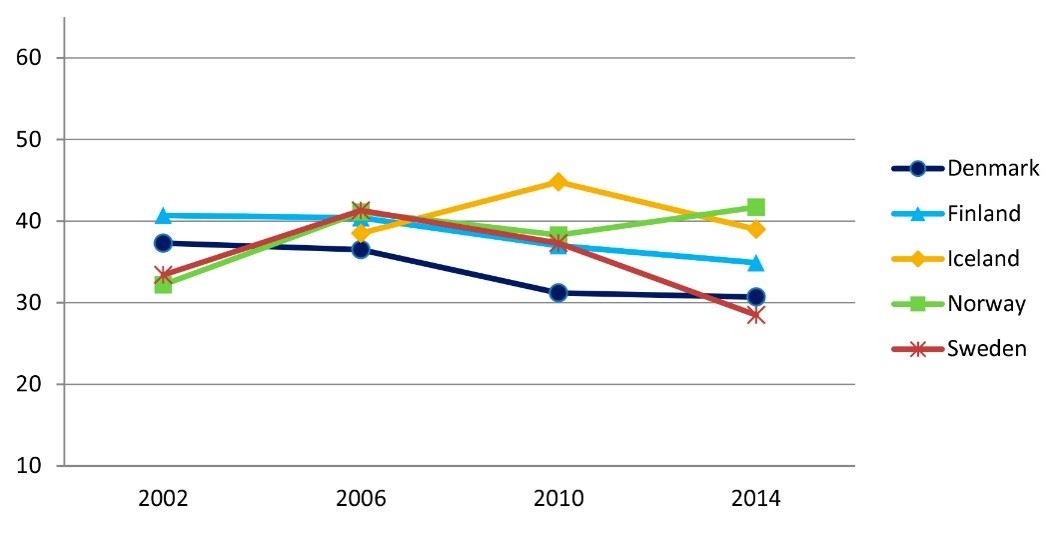
Figure 2. Age- and gender-standardised prevalence of high life satisfactiona over time by country (%)
aHigh life satisfaction indicated by students answering 9 or 10 on the Cantril Ladder
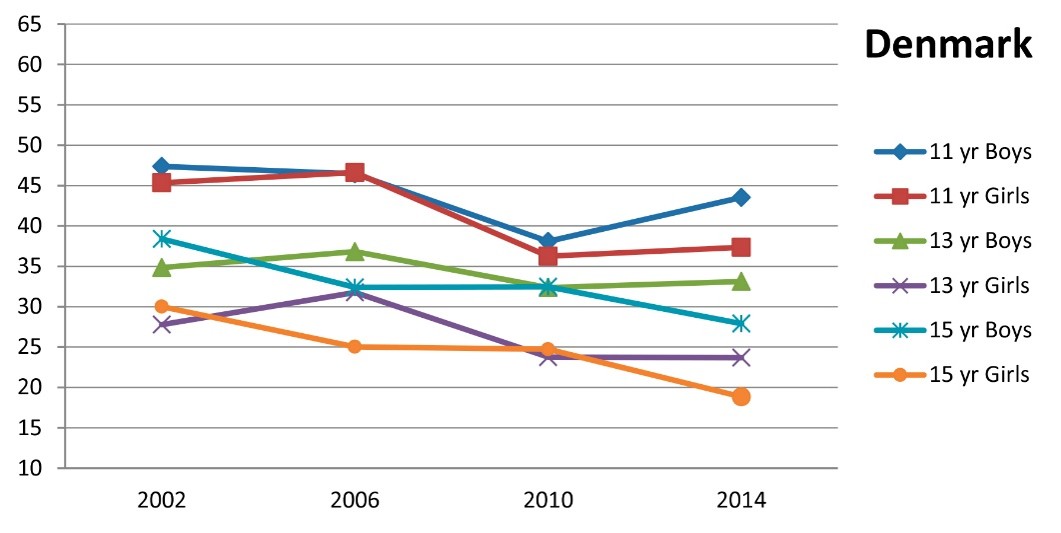
Figure 3a. Prevalence of high life satisfactiona among Danish adolescents over time by age and gender (%)
aHigh life satisfaction indicated by students answering 9 or 10 on the Cantril Ladder
aHigh life satisfaction indicated by students answering 9 or 10 on the Cantril Ladder
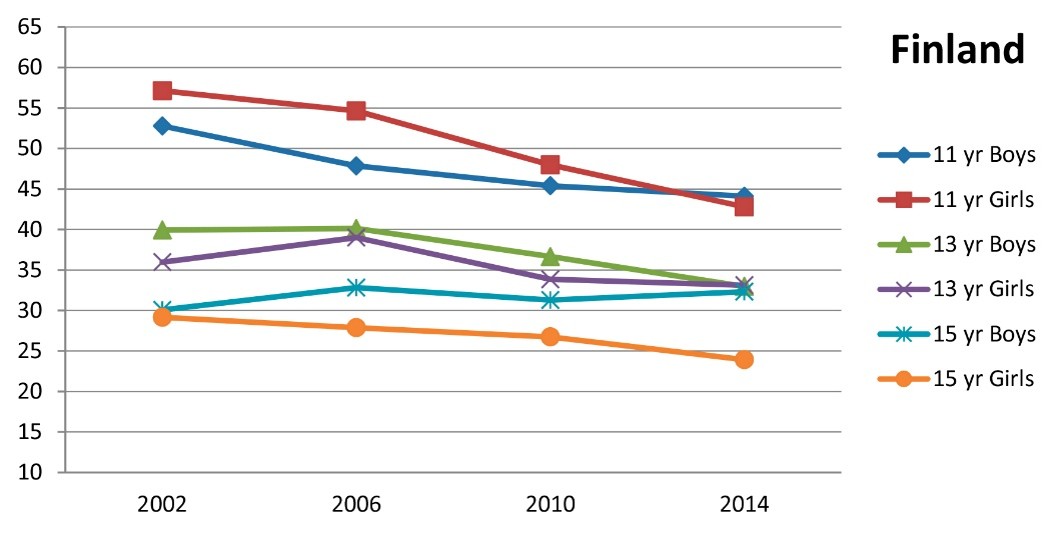
Figure 3b. Prevalence of high life satisfactiona among Finnish adolescents over time by age and gender (%)
aHigh life satisfaction indicated by students answering 9 or 10 on the Cantril Ladder
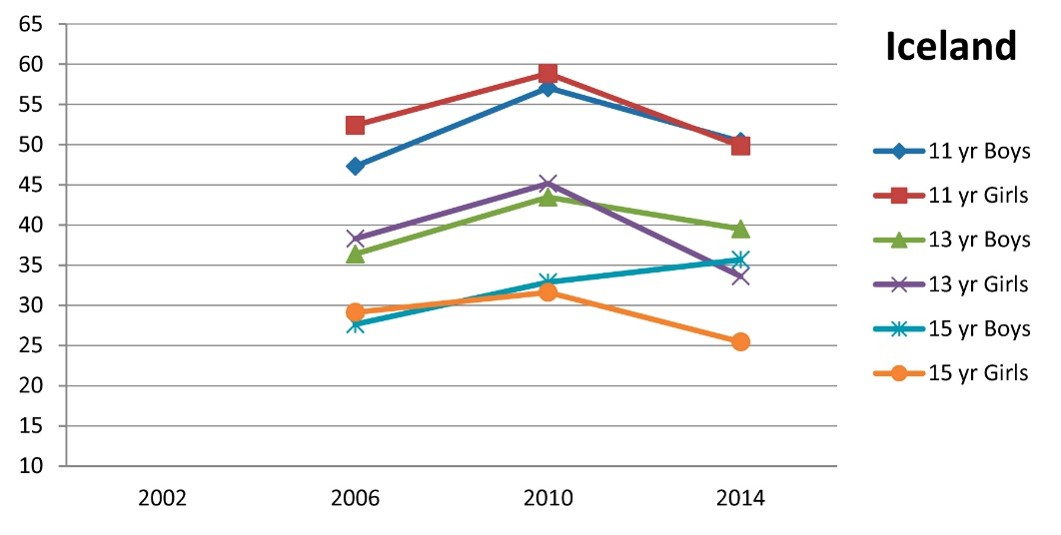
Figure 3c. Prevalence of high life satisfactiona among Icelandic adolescents over time by age and gender (%)
aHigh life satisfaction indicated by students answering 9 or 10 on the Cantril Ladder
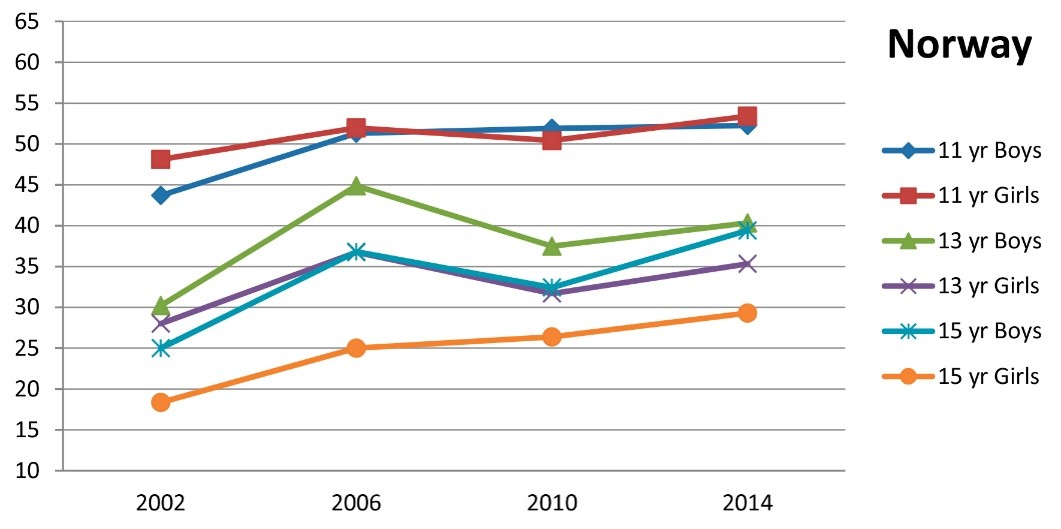
Figure 3d. Prevalence of high life satisfactiona among Norwegian adolescents over time by age and gender (%)
aHigh life satisfaction indicated by students answering 9 or 10 on the Cantril Ladder
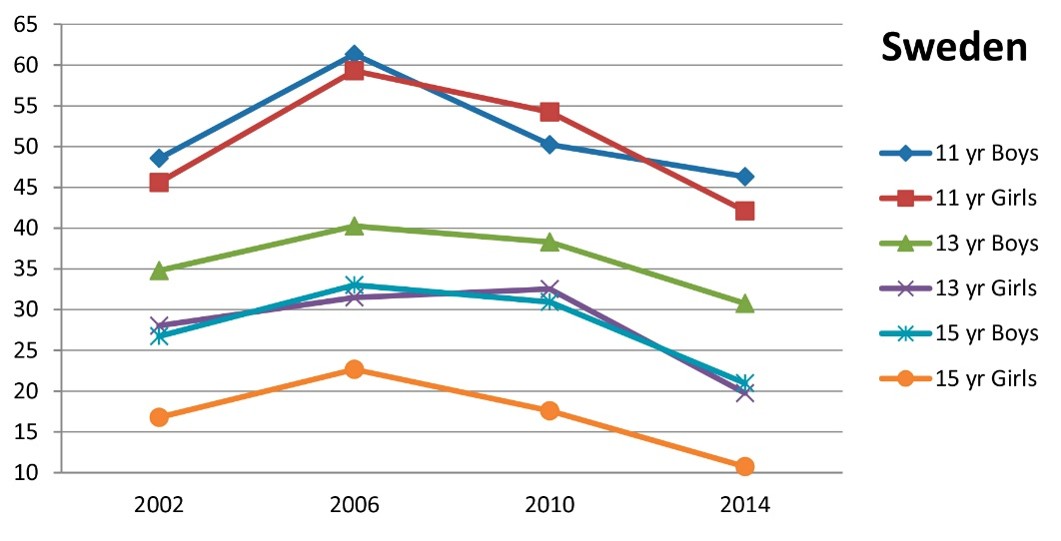
Figure 3e. Prevalence of high life satisfactiona among Danish adolescents over time by age and gender (%)
aHigh life satisfaction indicated by students answering 9 or 10 on the Cantril Ladder
Figures 3a to 3e show the development over time of the prevalence of high life satisfaction in the five Nordic populations, separately for 11-, 13- and 15-year-old boys and girls. The strongest prevalence of high life satisfaction across groups by gender, age, country and survey year was among 11-year-old Swedish boys in 2006 (61.3%), and the weakest prevalence of high life satisfaction was found among 15-year-old Swedish girls in 2014 (10.8%). Across all countries, the differences in prevalence by gender ranged from 0.1% (11-year-olds in Denmark in 2006 and 13-year-olds in Finland 2014) to 13.3% (15-year-olds in Sweden in 2010). In Norway and Sweden the gender differences in high life satisfaction (lower prevalence of high life satisfaction among girls than among boys) seems to expand with increasing age group across all time periods. Similar patterns are seen at some time periods in the other countries. Differences by age, measured by the prevalence differences among same-gender individuals at 11 and 15 years old, respectively, ranged from 5.6% (Danish boys in 2006) to 31.4% (Swedish girls in 2014). Overall, there were large age differences in the prevalence of high life satisfaction in all countries, while gender differences were generally smaller, but increased with age in some countries.
Figures 3a to 3e show that overall, the development of the prevalence of high life satisfaction across surveys in the age and gender specific groups showed similar trends within each country. Exceptions were 15-year-olds boys in Finland and Iceland, who showed a more positive development than the overall trend in the country. Trend analyses confirmed these results (data not shown).
Discussion
Our study shows that at the country level, at any point in time over the 12-year period studied, more than every fourth adolescent in the five Nordic countries investigated were very satisfied with their life when we define high life satisfaction as scoring 9 or 10 on the Cantril Ladder. However, relatively large changes in the development of prevalence levels occurred at the country level over the 12-year period of the study. Denmark and Finland showed a steady, significant decline in the prevalence of high life satisfaction over the years. Sweden showed an increase in prevalence levels from 2002 to 2006, a small decline up until 2010 and a strong decline from 2010 to 2014. Iceland had only three surveys (2006, 2010 and 2014), but showed large, significant changes in prevalence levels with lower prevalence in 2006 and 2014. Although following the same pattern as Sweden from 2002 to 2010, Norway was the only country showing a significant increase in the prevalence of high life satisfaction over the 12-year period. When comparing the development in age- and gender- specific groups of adolescents across the five countries, it becomes evident that although country differences are relatively large, the largest prevalence differences are across age groups. In all countries, high life satisfaction is most prevalent in 11-year-olds, and in almost all surveys 15-year-old girls have the lowest prevalence of high life satisfaction. In Norway and Sweden in particular, we observed a greater decrease in prevalence of high life satisfaction among girls than among boys with increasing age group. Generally, across all countries studied, most age and gender groups contributed to the developmental trend of adolescent high life satisfaction over time.
Cavallo and colleagues dichotomised Cantril Ladder scores as 0–5 for low life satisfaction and 6–10 for high life satisfaction (Cavallo et al., 2015). This is a conservative approach that classifies more than 80% of children with high life satisfaction. To understand how to create a better life for adolescents, we need to be more ambitious about what level of life satisfaction we should endorse as high. Using their classification, Cavallo et al. concluded that very small, mostly negative, changes had occurred in the Nordic countries, especially when considering the relative changes i.e. the percentage of change compared to the high prevalence of (scoring >80%) a very good life satisfaction. Furthermore, Norway was the only Nordic country showing a positive change over time.
Even if each country followed a representativeness-generating sampling procedure, there will always be a certain, unknown probability of non-response bias at the school level, which may differ between the countries. In addition, the cluster sampling procedures used may have produced different but unknown levels of precision in the different countries. This implies that the significance figures presented here should not be regarded as authoritative, but as possible yet qualified estimates. That said, as a standardised approach to measurement is used in all HBSC study countries, it is unlikely that the observed differences can be attributed to measurement differences. The challenges of language differences and cultural response bias is also considered to be smaller in this study than in other cross-cultural comparisons due to the strong similarities between the Nordic countries, as well as the care taken to check translations of the questionnaire (Currie, Gubhainn & Godeau, 2009). The HBSC study includes schools attended by children who are able to answer questionnaires without help. As such, the study does not represent children with special needs who are unable to attend an ordinary school and answer a questionnaire. Thus, this study represents trends in high life satisfaction among children in ordinary public and private schools. The extent to which differences in school policies between countries might possibly introduce bias in these comparisons is unknown.
The conclusion of our paper is that there are large negative changes over time in the prevalence levels of high life satisfaction in four of the five Nordic countries, and a relatively large positive change among Norwegian adolescents. Cross-national differences in life satisfaction have also been shown in a large international study of 15- to 24-year-olds, The Multiple Indicator Cluster Study (MICS)(UNICEF, 2015). The study compared another group of countries with relatively comparable socioeconomic and cultural characteristics, namely five former Eastern European countries (Lim, Cappa, & Patton, 2017). It used a measure of life satisfaction with five answer categories and dichotomised the variable using the highest level: very satisfied vs. all other categories. They found large prevalence differences in high life satisfaction across the five countries, from 22.1% in Ukraine to 63.1% in Bosnia and Herzegovina.
Both individual- and contextual-level factors have been highlighted in the explanation of high life satisfaction in adolescent populations (Liebkind & Jasinskaja-Lahti, 2000; Moor et al., 2014). Generally, the prevalence of high life satisfaction is lower in girls compared to boys, and lower the older the adolescent or youth (Levin et al., 2011; Lim et al., 2017). Consequently, our results were weighted by gender and age to leave country comparable estimates. The age- and gender-specific analyses conducted in this study for each country confirmed this finding, but drew attention to the fact that age differences in prevalence levels of high life satisfaction were generally much larger than gender differences.
In studies of adult populations, and in all European and North American adolescent populations involved in the HBSC, except Greenland, socioeconomic differences have been found in life satisfaction, leaving individuals of higher affluence with a better level of life satisfaction (Currie et al., 2008; Schyns, 2002). However, individual-level differences are small in affluent countries, and socioeconomic differences seem to do better at explaining cross-national differences rather than intra-country differences (Diener & Biswas-Diener, 2002; Levin et al., 2011; Schyns, 2002). Economic level (GDP) and economic differences (GINI) at the country level are associated with the mean level and the prevalence level of high life satisfaction in adolescent populations, especially among adolescents of low affluence (Levin et al., 2011). Research is needed to investigate to what extent country-level economic developments contribute to the large changes across the Nordic countries over the 12-year period, and whether these developments contribute to explaining the adverse trends that occur in some of the countries.
At the individual level, health behaviours – such as screen time, physical activity and substance abuse – and family circumstances – such as socioeconomic affluence, family composition, parenting style and strain in the family relations – are all factors that have been shown to be associated with life satisfaction of the adolescent (Bjarnason et al., 2012; Chen, Matthews, & Boyce, 2002; Hrafnkelsdottir et al., 2018; Lim et al., 2017; Proctor, Linley, & Maltby, 2008). Social relations, and especially relational strain in the form of bullying, are other important factors associated with adolescent life satisfaction (Chu, Saucier, & Hafner, 2010; Przybylski & Bowes, 2017).
When studying relatively similar countries, the individual-level factors associated with having high life satisfaction may be of less importance in explaining the country-level differences, especially when studying trends over time. A range of contextual factors have been shown to be associated with the prevalence of child and adolescent life satisfaction, among these socioeconomic and gender equality, acculturation, cultural values and factors related to school (Chu et al., 2010; Jose, Ryan, & Pryor, 2012; Lim et al., 2017; Looze et al., 2018; Proctor et al., 2008; Tov & Diener, 2009).
Life satisfaction is important as an indicator within the science of positive psychology focusing on identifying strengths, is important in its own right, or as a buffer against the development of mental problems (Veenhoven, 1988, 2012). Our study causes concern about the negative development of the prevalence of high life satisfaction among adolescents in most of the countries, but also leaves a hope for the possibility of positive changes, when observing the positive trend in Norway, especially from 2010 to 2014.
Our study provides no clear explanation for the reported changes in high life satisfaction, but in the main, gender- and age-specific analyses pointed to the oldest girls as having the lowest level of high life satisfaction, with declines over time in all countries except Norway. Further analyses that include the development within and across countries of the above-mentioned factors should be conducted in order to try to understand the large prevalence differences across countries and over time in the Nordic welfare states.
In all Nordic countries there has been a strong public health focus on the issue of child and adolescent health and well-being, but even so, large differences exist in the ability among these countries to form adolescent populations with high life satisfaction. Norway may provide some of the answers needed to change the decline in the prevalence of adolescents with high life satisfaction in the other Nordic countries.
References
Bjarnason, T., Bendtsen, P., Arnarsson, A. M., Borup, I., Iannotti, R. J., Löfstedt, P., … Niclasen, B. (2012). Life satisfaction among children in different family structures: a comparative study of 36 western societies. Children & Society, 26(1), 51–62.
Cantril, H. (1965). Pattern of human concerns. New Brunswick, NJ: Rutgers University Press.
Cavallo, F., Dalmasso, P., Ottová-Jordan, V., Brooks, F., Mazur, J., Välimaa, R., …, Raven-Sieberer U; Positive Health Focus Group. (2015). Trends in life satisfaction in European and North American adolescents from 2002 to 2010 in over 30 countries. European Journal of Public Health, 25(Suppl. 2), 80–2. https://doi.org/10.1093/eurpub/ckv014
Chen, E., Matthews, K.A., & Boyce, W.T. (2002). Socioeconomic differences in children's health: how and why do these relationships change with age? Psychological Bulletin, 128(2), 295.
Chu, P.S., Saucier, D.A., & Hafner, E. (2010). Meta-Analysis of the Relationships Between Social Support and Well-Being in Children and Adolescents. Journal of Social and Clinical Psychology, 29(6), 624–645. https://doi.org/10.1521/jscp.2010.29.6.624
Currie, C., Nic Gabhainn, S., Godeau, E., et al. (2008). Inequalities in young people’s health: Health Behaviour in School-aged Children International Report from the 2005/2006 Survey. Copenhagen: WHO Europe.
Currie, C., Nic Gabhainn, S., & Godeau, E. (2009). The health behaviour in school-aged children: WHO Collaborative Cross-National (HBSC) study: origins, concept, history and development 1982–2008. International Journal of Public Health, 54, 131–9.
Currie, C., Zanotti, C., Morgan, A., Currie, D., de Looze, M., Roberts, C., Samdal, O., Smith, O.R.F., & Barnekow, V. (2012). Social determinants of health and well-being among young people. Health Behaviour in School-aged Children (HBSC) study: international report from the 2009/2010 survey. Health Policy for Children and Adolescents, No. 6. Copenhagen, WHO.
Diener, E. (2012). New findings and future directions for subjective well-being research. American Psychologist, 67(8), 590–597. https://doi.org/10.1037/a0029541
Diener, E., & Biswas-Diener, R. (2002). Will money increase subjective well-being? Social Indicators Research, 57(2), 119–169.
Gilman, R., & Huebner, S. (2003). A review of life satisfaction research with children and adolescents. School Psychology Quarterly, 18(2), 192.
Hrafnkelsdottir, S. M., Brychta, R. J., Rognvaldsdottir, V., Gestsdottir, S., Chen, K. Y., Johannsson, E., . . . Arngrimsson, S. A. (2018). Less screen time and more frequent vigorous physical activity is associated with lower risk of reporting negative mental health symptoms among Icelandic adolescents. PloS One, 13(4). https://doi.org/10.1371/journal.pone.0196286
Inchley, J.C.D., Cosma, A., & Samdal, O. (Ed.) (2018). Health Behaviour in School-aged Children (HBSC) Study Protocol: background, methodology and mandatory items for the 2017/18 survey. St. Andrews: CAHRU.
Inchley, J. Currie, D., Young, T., Samdal, O., Torsheim, T., Augustson, L, … (eds.). (2016). Growing up unequal: gender and socioeconomic differences in young people's health and well-being. Health Behaviour in School-aged Children (HBSC) study: international report from the 2013/2014 survey. Copenhagen: WHO Regional Office for Europe (Health Policy for Children and Adolescents, No. 7).
Jose, P.E., Ryan, N., & Pryor, J. (2012). Does Social Connectedness Promote a Greater Sense of Well-Being in Adolescence Over Time? Journal of Research on Adolescence, 22(2), 235–251. https://doi.org/10.1111/j.1532-7795.2012.00783.x
Levin, K.A., & Currie, C. (2014). Reliability and validity of adapted version of the Cantril Ladder for use with adolescent sample. Social Indicator Research, 119, 1047–63.
Levin, K., Torsheim, T., Vollebergh, W., Richter, M., Davies, C., Schnohr, C., . . . Currie, C. (2011). National income and income inequality, family affluence and life satisfaction among adolescents in 35 countries. Journal of Epidemiology and Community Health, 65, A39–A39. https://doi.org/10.1136/jech.2011.142976b.11
Liebkind, K., & Jasinskaja-Lahti, I. (2000). Acculturation and psychological well-being among immigrant adolescents in Finland: A comparative study of adolescents from different cultural backgrounds. Journal of Adolescent Research, 15(4), 446–469.
Lim, M.S.C., Cappa, C., & Patton, G.C. (2017). Subjective well-being among young people in five Eastern European countries. Glob Ment Health (Camb), 4. https://doi.org/10.1017/gmh.2017.8
Looze, M.E., Huijts, T., Stevens, G., Torsheim, T., & Vollebergh, W.A.M. (2018). The Happiest Kids on Earth. Gender Equality and Adolescent Life Satisfaction in Europe and North America. Journal of Youth and Adolescence, 47(5), 1073–1085. https://doi.org/10.1007/s10964-017-0756-7
Mazur, J., Szkultecka-Debek, M., Dzielska, A., Drozd, M., & Malkowska-Szkutnik, A. (2018). What does the Cantril Ladder measure in adolescence? Archives of Medical Science, 14(1), 182–189. https://doi.org/10.5114/aoms.2016.60718
Moor, I., Lampert, T., Rathmann, K., Kuntz, B., Kolip, P., Spallek, J., & Richter, M. (2014). Explaining educational inequalities in adolescent life satisfaction: do health behaviour and gender matter? International Journal of Public Health, 59(2), 309–317.
Organisation for Economic Co-operation and Development (OECD) (2013). OECD guidelines on measuring subjective well-being. In: OECD publishing Paris.
Proctor, C., Linley, P.A., & Maltby, J. (2010). Very happy youths: Benefits of very high life satisfaction among adolescents. Social Indicators Research, 98(3), 519–532.
Proctor, C.L., Linley, P.A., & Maltby, J. (2008). Youth Life Satisfaction: A Review of the Literature. Journal of Happiness Studies, 10(5), 583–630. https://doi.org/10.1007/s10902-008-9110-9
Przybylski, A.K., & Bowes, L. (2017). Cyberbullying and adolescent well-being in England: a population-based cross-sectional study. The Lancet Child & Adolescent Health, 1(1), 19–26. https://doi.org/10.1016/S2352-4642(17)30011-1
Schyns, P. (2002). Wealth Of Nations, Individual Income and Life Satisfaction in 42 Countries: A Multilevel Approach. Social Indicators Research, 60(1-3), 5–40.
Tov, W., & Diener, E. (2009). Culture and subjective well-being. In Culture and well-being (pp. 9–41): Springer.
UNICEF. (2015). Multiple Indicator Cluster Surveys (MICS), from Retrieved from http://mics.unicef.org/
Veenhoven, R. (1988). The utility of happiness. Social Indicators Research, 20(4), 333–354.
Veenhoven, R. (2012). Cross-national differences in happiness: Cultural measurement bias or effect of culture? International Journal of Wellbeing, 2(4).