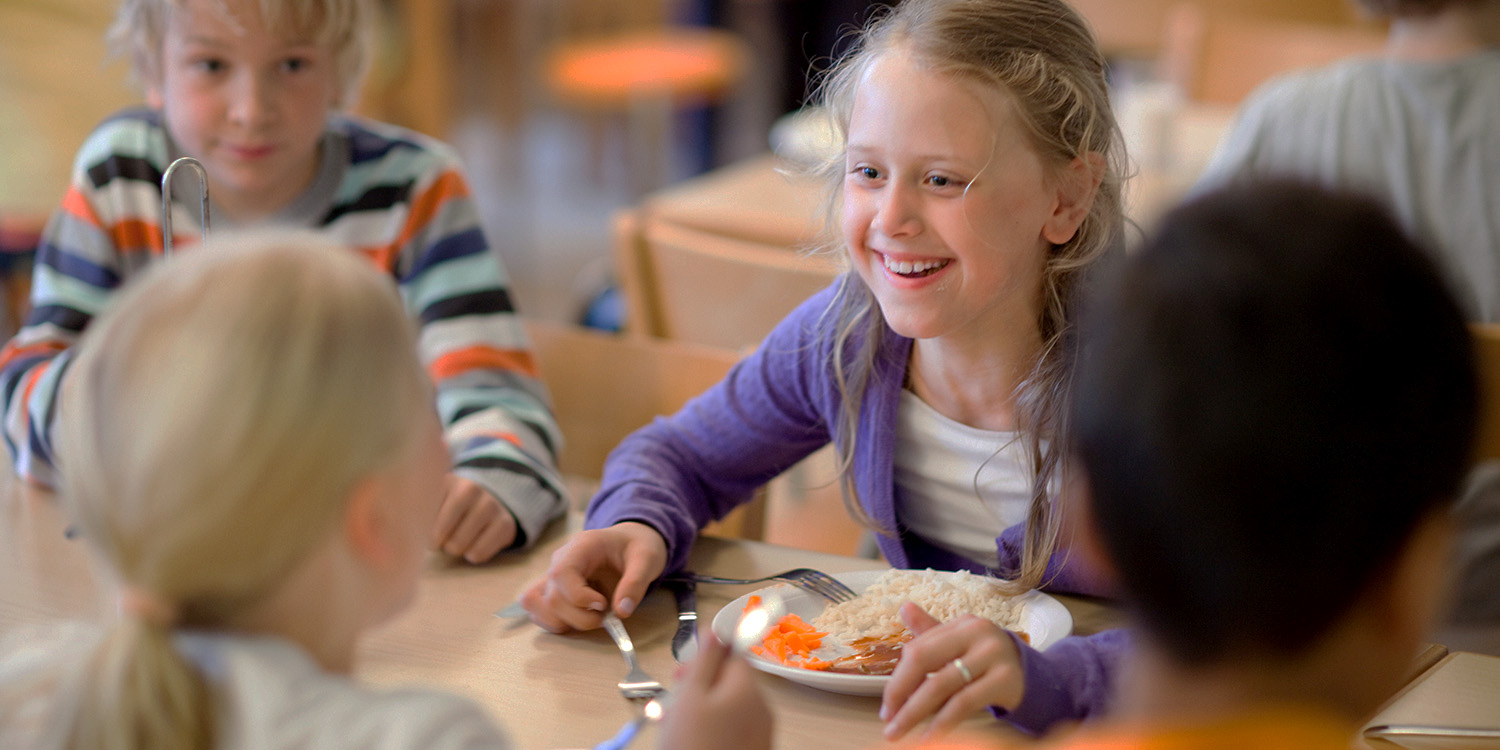
Model photo: Lena Granefeldt / imagebank.sweden.dk
4. Growing up with low income:
Children’s experiences and strategies
Children find themselves in a situation in which they compare themselves with other children on a daily basis. Other children, consciously and unconsciously, may come to see poorer children – who are unable to take part in the same leisure activities, or who are dressed unfashionably or in second-hand clothes – as different, because they stand out from the crowd. This may trigger a process of stigmatisation and exclusion
– Larsen & Müller, 2015, p. 36
4.1 Poverty from a child-centred perspective
Just over twenty years ago, British researcher Tess Ridge published a book titled Childhood poverty and social exclusion: From a child’s perspective (Ridge, 2002). This book is regarded as a pioneering work in the study of children and young people’s own perspectives on growing up in poverty. In this chapter, a ‘child perspective’ refers to an approach in which children are treated as competent social actors and informants, and where knowledge about childhood conditions is grounded in children’s own accounts of experiences, meanings, and priorities. It therefore goes beyond adult assessments of children’s needs, and beyond interpreting children’s situation solely through parents’ resources or household-level indicators.
Until the 1980s, childhood research had been dominated by developmental psychology and adult perspectives (Alanen, 1988; James & Prout, 1990/2015). Children were often treated primarily as objects of socialisation, and research relied largely on parents’ or professionals’ descriptions rather than on children’s own voices. Research on child poverty was similarly dominated by quantitative analyses of household income and parental circumstances, while children themselves were included as informants to a limited extent. Inspired by the new sociology of childhood (James & Prout, 1990/2015; Qvortrup et al., 1994; Mayall, 2002), Ridge (2002) was among the first to examine poverty systematically as lived and understood by children. She employed child-centred methods to elicit low-income children’s own accounts of everyday life, school, and social exclusion.
Ridge’s child-centred approach has resonated in more recent research. Listening to children’s and young people’s experiences is crucial for understanding how income poverty operates in everyday life. Children’s experiences cannot simply be inferred from their parents’ situation or from statistical income measures. Such sources rarely capture how children interpret their circumstances, including experiences of belonging, shame, or their ability to live what they perceive as a ‘normal’ childhood. By including children’s perspectives, research can illuminate how economic constraints shape friendships, school participation, leisure activities, and self-understanding in ways that are easily overlooked in traditional living-conditions analyses.
Research inspired by the new sociology of childhood shows that children are competent informants who can describe experiences and needs that adults do not always perceive. Children’s perspectives therefore provide a more nuanced knowledge base for policymaking and strengthen the potential to develop measures that address real needs and prevent both marginalisation and long-term consequences. Taking children’s voices seriously is therefore not merely a methodological choice, but also a matter of rights and democracy. Children and young people have the right to be heard on issues that affect their lives (Article 12 of the UN Convention on the Rights of the Child), and their experiences are essential for developing evidence-based policies that work.
In Nordic policy cooperation listening to children and young people and strengthening their voice and participation is presented as part of building a socially sustainable Nordic region. In the strategy for achieving Vision 2030, social sustainability is linked to inclusion, equality, and social cohesion, and the document states that civil society, especially children and young people, should be given a stronger voice and participation in Nordic cooperation (Nordic Council of Ministers, 2020). Maintaining trust and cohesion in the Nordic region is highlighted as a core objective within the same strategic priority, with an emphasis on democracy, inclusion, and non-discrimination.
As this chapter examines children's lived experiences within the wider policy ambitions outlined above, it is necessary to clarify how the report understands child poverty in analytical terms. Child poverty can be defined in different ways and measured using different indicators. It has multiple causes and is associated with consequences that extend beyond income alone. As discussed in Chapters 1 and 2, this report recognises child poverty as a multidimensional phenomenon. This includes factors such as low household income, material and social deprivation, and children's own experiences of not being able to participate on an equal footing with their peers. Chapter 3 sheds further light on how these various dimensions influence the everyday opportunities available to children. In this chapter, the term 'poverty' is employed in this broader sense.
How can the experiences of children and young people be studied?
Both qualitative and quantitative approaches can be employed to generate knowledge about children’s and young people’s experiences. In recent decades, a distinct field of research known as child indicators research has emerged based on quantitative data. This research has been driven partly by a stronger children’s rights perspective and partly by the new sociology of childhood, which views children as independent social actors (Ben-Arieh & Frønes, 2007). Researchers can now draw on a wide range of datasets that include child-specific indicators:
- UNICEF, OECD, and WHO have developed large, global indicator systems, such as the OECD Child well-being dashboard and PISA study, UNICEF’s Innocenti reports, and WHO’s Health behaviour in school-aged children (HBSC). The Children’s worlds study is a further example. The European study of living conditions, EU-SILC, contains some indicators of children’s living conditions. The Nordic countries are included in these international comparative studies.
- The Nordic Council of Ministers has compiled a joint Nordic indicator set for children and young people in the Nordic Statistics Database. The indicators cover demographics, physical and mental health, family and housing conditions, education and skills, working life, and leisure and culture. Publications such as Nordic Children and Young People in Figures 2021 (Nordic Council of Ministers, 2021) present these indicators in a consolidated form and are used as a knowledge base for both policy and research.
- The countries have developed their own studies that function as data repositories on children’s and young people’s lives. ‘Ungdata’ in Norway, Icelandic youth study, ‘Børn og unge’ in Denmark (Ottosen et al., 2022), ‘Ung idag’ [young today] in Sweden, and the Finnish ‘Youth barometer’ are examples of such national studies.
The national (and global) studies provide direct information about the experiences of children and young people based on their own reports, as well as indirect information through register data and statistics, and from studies where parents provide information.
Indicator-based studies are used to varying degrees to shed light on poverty and its consequences. As many of them are based on children’s and young people’s own experiences and perceptions, the studies vary and differ in the extent to which they contain data that can form the basis for poverty measures. Several studies use the Family Affluence Scale (FAS) as a measure of families’ material well-being. FAS is a child-reported composite index originally developed in Scotland and then adapted for use in the HBSC study on health behaviour in school-aged children. The aim of the scale is to capture socioeconomic position through concrete and relatively easy-to-answer questions about household assets and consumption-related opportunities. In its current versions, it typically includes indicators such as car ownership, having one’s own bedroom, the number of computers or tablets in the household, the number of bathrooms, and the frequency of family holidays, and it is scored and grouped into affluence categories that can be compared across countries and over time (Currie et al., 2024). Because it relies on tangible items and experiences rather than parental income reports, FAS is often considered particularly useful in surveys of children and adolescents, where standard income measures are unavailable or unreliable.
This index cannot necessarily replace a traditional income poverty measure, since it captures material affluence and relative household resources rather than income, consumption needs, or the ability to meet necessities. It is also sensitive to cross-national differences in consumption patterns and in the diffusion of consumer goods, which can affect the meaning of specific items. Studies do however suggest that the Family Affluence Scale provides a good reflection of material affluence at an aggregated, national level (Boyce et al., 2006), while there is greater uncertainty as to how well the indicator captures poverty (Corell et al., 2021; Brook et al., 2024).
In other studies, responses from children and young people are combined with register data to create economic indicators based on parents’ income. However, there are relatively few analyses that use these data to analyse low income or poverty per se. For instance, in the main reports from ‘Ung idag’ in Sweden, the Icelandic youth study, the Danish ‘Youth analysis’ (DUF), or the Finnish ‘Youth barometer’, low income is not used as a background variable to explain other outcomes.
In addition to the quantitative indicator studies, qualitative approaches are used to elicit children’s and young people’s own perspectives. Methods such as in-depth interviews, focus groups, participant observation, and child-friendly techniques – such as drawings, photo diaries, and creative exercises – enable children to express experiences and perspectives that often fail to be captured by standardised study instruments.
Such methods make it possible to explore stigma, shame, social exclusion, strategies for concealing deprivation, and children’s and young people’s own understandings of what is experienced as deprivation or as a deviation from what is considered normal. Interviewing children who live in low-income families nevertheless raises certain ethical concerns, particularly because discussions on economic deprivation may touch on sensitive issues and evoke discomfort or sensations of inadequacy. Nor is it a given that children and young people are always aware of their family’s actual financial situation. Research shows that parents often go to great lengths to shield their children from financial difficulties (Thorød, 2006). However, as the chapter will illustrate, the degree to which children are shielded varies, and many children are aware of the family’s financial situation.
Although qualitative studies provide rich and valid information about children’s and young people’s own experiences, it can be difficult to determine whether these experiences are specific to children in low-income families unless interviews also include children who do not live with economic deprivation. Some research studies and NGO reports in which children’s voices are included have therefore also conducted interviews with children who do not experience income poverty. This provides an important comparative perspective (Hakovirta & Kallio, 2015; BLD, 2015). Hearing what children and young people more generally think about poverty is also significant for those children who grow up in poverty. For instance, children’s views on the causes of poverty can affect how they relate to poor children. It also provides some indication about the position of poor children in society (Hakovirta & Kallio, 2015).
As the basis for this chapter, we have compiled Nordic research articles and reports, as well as reports from voluntary organisations in which children’s and young people’s views on various aspects of poverty are documented. We have primarily focused on publications issued after 2015. The studies referenced differ in terms of sampling methods, sample sizes, research methods, and measures of poverty. We do not provide an account of this in each individual example; instead, we refer the reader to the respective studies for more detailed descriptions.
In what follows, we will first present children’s and young people’s experiences of how they perceive their material and social living conditions, as well as how low-income affects relationships within the family. We then summarise what the literature says about children’s and young people’s strategies for coping with economic constraints. Finally, we comment on the importance of safeguarding children’s opportunities for participation and genuine influence.
4.2 Children’s experiences related to material deprivation
Economic deprivation often manifests itself through children’s material living conditions. It is well documented in research that children who grow up in low-income families are more likely than other children to experience various forms of deprivation. The quantitative data shows a clear pattern.
EU-SILC data (European Union Statistics on Income and Living Conditions) for Norway illustrates how economic deprivation affects children’s access to basic necessities. Six per cent of low-income families could not afford for their children to eat a daily meal of fruit/vegetables or meat/fish, compared with one per cent of all families with children. Similar proportions (six versus one per cent) reported that they could not afford to buy new clothes for their children. The study also shows that low-income families are less likely than others to be able to afford the equipment needed for indoor and outdoor activities, and that a greater proportion of children in these families lack a safe place to play (With & Thorsen, 2018).
The Danish study ‘Børn og unge – Velfærd og trivsel’ [Children and young people – Welfare and well-being] includes an indicator of low material affluence. In 2021, seven per cent of all children and young people (aged 3–19) experienced low material affluence, compared to 34 per cent of children in families with incomes below a poverty line set at 50 per cent of median. Three per cent of children aged 7–19 did not have a quiet place to do their homework, compared to seven per cent of children in poor families. Renting accommodation was also far more common among low-income families (69 versus 37 per cent). (Ottosen et al., 2022).
Save the Children Finland regularly conducts the ‘Children’s voices’ study. In the 2025 study, 19 per cent of children and young people who rated their family’s financial situation as poor reported that they did not receive sufficient and varied food at home. It must be noted that children’s perceptions of their own material situation and their family’s income may be influenced by their overall satisfaction with life (Sletten et al., 2004; Haanpää et al., 2019). The corresponding figure among children who consider their family’s financial situation to be good was four per cent (Save the Children Finland, 2025).
Several organisations in the Nordic region report increased demand for food distribution from families with children, particularly following the rise in prices from 2022 onwards. Both Stadsmissionen in Sweden and the Danish Food Bank have recorded an increase in families with children seeking food aid (City Church Mission Sweden, 2019; Fødevarebanken, 2023). A Norwegian study showed that half of the people receiving food aid in May 2023 had children living at home (Fløtten et al., 2023).
Qualitative studies provide a more detailed insight into how material shortages can shape everyday life. The examples below illustrate how lack of access to necessities can constitute a burden for children and young people in the Nordic region (see the cited reports for a description of the methodology):
I can’t ask my parents for money like other people my age do. I must use the money I’ve earned myself, and sometimes I even have to put the money towards buying food (Save the Children Finland, 2025, p. 19).
Sometimes we don’t have breakfast at home and I’m hungry at school. I’m so hungry that I can’t think. (Girl, aged 16) (Odenbring, 2018, p. 853).
Potatoes cost money, rice costs money, meat costs money at home. Food costs money, kind of thing. There’s less food on the table, my parents need to cut back on their spending. They might go round wearing torn clothes themselves so that they can give their children new clothes. (Girl, aged 15–17) (Save the Children Sweden, 2024, p. 33).
I remember worrying that we wouldn’t have any food in the fridge when I was little. My mum doesn’t say much, but I noticed it. (Voksne for barn, 2021, p. 18).
My parents don’t have a lot of money. So, I feel guilty every time I do something, like having a bath or putting too many clothes in the wash (so that we end up doing more washing and using more water). I never put much water in the bath. But the problem is that I’ve been using loads of water over the last few weeks. I’ve had a bath every day, for example. So I just feel guilty about it. What should I do? How should I talk to them about it? (Girl, aged 13) (Børns vilkår, 2024).
These statements illustrate how economic deprivation can affect children’s everyday lives when it comes to food, clothing, and household expenses. At the same time, statements from adults reflecting on their childhood show that the children’s parents adopted strategies for making a lot out of a little, and for shielding their children from this reality:
We couldn’t afford much, but my mum always made sure we had food in the fridge. That gave us a sense of security, in a way (Woman, aged 22) (Church City Mission Norway, 2019).
My mum was really good at making a lot out of a little, she could make a big lasagne and freeze it so we could have it over several days (Woman, aged 27) (Church City Mission Norway, 2019).
Children’s understanding of poverty
The fact that poverty in the Nordic region can be expressed in terms of basic shortages such as lack of food does not necessarily align with what other children and young understand as poverty problems. Hakovirta & Kallio (2015) interviewed 30 Finnish children about poverty. The children were not selected from low-income groups; based on the FAS, they belonged to middle-income households. These children did not perceive poverty in Finland as a lack of necessities. They did not believe that people who were poor lacked things like clothing, accommodation, mobile phones, or equipment for participating in leisure activities. However, they did believe that what poor children had might well be outdated or even broken.
The ones who don’t have a lot of money for example always wear the same clothes even if they’re sometimes dirty and so forth and if they have a phone then it looks a little cheaper and it might be a little broken, and then the ones who have money always wear different clothes and if someone comes to pick them up from school, the car’s humongous and some kind of designer car and whatnot and then they have these more expensive clothes. (Boy, aged 15) (Hakovirta & Kallio, 2015, p. 325).
In studies conducted by Save the Children Norway, children often describe poverty by referring to other parts of the world or as a lack of opportunity to participate, rather than as a lack of basic necessities:
When you think of poverty, you think of poor children in Africa. We forget that it happens here at home too. We mostly have clothes, food, and places to live in. That’s great, but it doesn’t necessarily mean that people’s living conditions are all that good. (Girl, aged 15) (BLD, 2015).
If people are poor in Norway, I think they have a house but can’t afford to take part in activities, or they don’t have enough clothes. And if they want to go cycling, you can’t afford to buy a bike. (Save the Children Norway, 2020, p. 10).
At the same time, children are aware that some of their peers don’t have enough food:
We can see the difference in the food. Some people bring loads of food for lunch, and some don’t. (Save the Children Norway, 2020, p. 17).
A friend of mine didn’t bring any food with her for a whole week, so the other students had to give her food. (Save the Children Norway, 2020, p. 17).
I was on a trip. I’d brought two sandwiches with me, and one girl never used to bring food or fruit to school. And I’ve shared my fruit at breaktime several times. On the trip, I gave her a sandwich because she didn’t have any food with her, not even a water bottle (…) (Girl, aged 17) (Save the Children Sweden, 2024, p. 16).
A study of children and young people in the Faroe Islands shows a similar pattern: Children describe specific shortages, including food shortages, but rarely use the term poverty. Rather, they state directly how they perceive the situation (Barnaverkætlanin, 2025).
Overall, the quantitative data show that children in low-income families are at significantly higher risk of material deprivation than other children, also in terms of basic needs. However, this does not apply to the majority of children in this group. Most children living in low-income families do not report severe material deprivation. The qualitative studies show that children’s and young people’s understanding of poverty varies: Some link poverty to the absence of essentials, while others understand poverty to be a relative phenomenon linked to consumption, participation, and social comparison. This duality – between risk and variation in actual living conditions, and between absolute and relative understandings – is consistent with the broader discussions on how poverty should be understood in Nordic welfare societies (see chapter 1).
4.3 Social relationships
Good relationships with friends and family are fundamental to children’s and young people’s well-being and mental health (Haanpää et al., 2019). Several studies show that children in vulnerable positions, including children in low-income families, report lower mental and social well-being on average than other children (Lausten et al., 2025; Ottosen et al., 2022).
At the same time, children’s own voices show that positive relationships depend not only on the people surrounding them, but also on the opportunity to participate, to contribute, and to present themselves as other children and young people do in interactions with their peers. Children describe how their financial situations become a framework for friendships and how minor differences can have a major impact on everyday life.
Self-esteem and life satisfaction
The Danish ‘Børn og unge’ [Children and young people] study shows that children and young people generally report a high level of life satisfaction, but that satisfaction is lower among children growing up in poor families (Ottosen et al., 2022). Finnish schoolchildren also emphasise the importance of their financial situation. Haanpää et al. (2019) find that both social relationships and the family’s financial situation explain variations in children’s perceived life satisfaction.
This is consistent with findings from the Finnish Children’s Voices’ study (Save the Children Finland, 2025), where children in families with low self-reported income are significantly less likely than others to say they are happy with themselves as they are. In the Icelandic youth study, children who rate their family’s financial situation as poor are more likely to report low life satisfaction (Directorate of Health, 2025).
Qualitative studies provide a more direct insight into how poverty is perceived by children themselves. Several of them describe low self-esteem, shame, and feelings of being less worthy when they are unable to participate on an equal footing with others:
You can end up feeling worthless. Unimportant. You might be bullied because you don’t have what others have. (Save the Children Norway, 2020, p. 9).
You have negative thoughts about yourself, or start putting everyone else down because you feel bad about yourself. (Save the Children Norway, 2020, p. 9).
Here, children themselves elaborate on how economic deprivation affects their self-image – to a degree that is often not fully captured in study data.
Relationships with peers
Family finances affect not only self-esteem, but also children’s ability to develop and maintain friendships. Quantitative studies from Finland, Norway, and Sweden indicate that children and young people in economically disadvantaged families often have limited social interaction, fewer close friends, and a higher risk of being bullied (Sletten et al., 2004; Sletten, 2010; Hjalmarsson & Mood, 2015). In Denmark, the ‘Børn og unge’ study shows that poor children report being bullied more frequently than others (Ottosen et al., 2022, p. 115).
That said, it is important to emphasise the fact that most children living in low-income families do not report significant social problems. Nevertheless, there is clearly an increased risk, and the children’s own descriptions indicate why.
I would never bring home friends, because it’s so embarrassing that we have so few things compared to others. (Save the Children Sweden, 2013, p. 25).
I remember always trying to come up with excuses so that they wouldn’t see how we lived. But I did have visitors sometimes, and they’d ask me why we always hang out in the basement, can’t you show us the whole house? What they didn’t know was that we were only renting the basement (Girl, aged 18) (Church City Mission Norway, 2019, p. 18).
Children who themselves are not living in low-income families recognise the mechanisms:
People who don’t have much money don’t want to bring anyone home, they make excuses and that kind of thing. (Save the Children Norway, 2020, p. 10).
These experiences illustrate how financial strain, as children experience it, can translate into everyday strategies of concealment (avoiding visits, making excuses) that in turn reduce opportunities for friendship and participation.
Participation in leisure activities
Being able to participate in leisure activities is important for children and young people. Leisure activities are an important arena for social belonging, friendship, and a sense of achievement for children and young people. International research emphasises the fact that such participation strengthens both social capital and health (Putnam, 1995; Coleman, 1988).
In Nordic debates on poverty, the fact that children from low-income families participate less in leisure activities than other children is highlighted as a significant concern. The strong desire for all children to be able to participate has been the starting point for local and national initiatives to reduce the financial barriers to participation. Examples of national initiatives include the Norwegian grant scheme for the inclusion of children and young people, the Finnish model for leisure activities where all primary school pupils receive a free leisure programme linked to the school day, or the Swedish fritidskort [leisure card]. There are also many local initiatives, such as the leisure pass [fritidspas] scheme in Danish municipalities or the municipal recreational card in Iceland.
Additionally, local clubs and associations have their own schemes for including children from low-income families. Such schemes may, for example, be fully or partially funded by organisations or foundations.
Despite all these programmes, there is a clear social gradient in all the Nordic countries in terms of participation.
- The Finnish Children’s Voices’ study (Save the Children Finland, 2025, p. 2) describes how the family’s financial situation has a significant impact on children’s and young people’s participation in leisure activities. Just over a quarter of children in low-income families reported being able to participate in leisure activities in the same way as their peers. Almost half felt that it was generally too expensive for them to have a hobby, and they either had to give up their hobbies or find some alternative activities that were free.
- The Swedish ‘Ung idag’ [Young today] study (Swedish Agency for Youth and Civil Society, 2021) shows that four out of ten young people do not participate in leisure activities because of the costs (this figure applies to young people in general).
- The Danish ‘Børn og unge’ study contains no specific questions about leisure activities, but there is no difference between children from poor families and other children when asked whether they have been to a cinema, theatre, water park, or sporting event in the past year (Ottosen et al., 2022).
- Analyses of ‘Ungdata’ (Norway) show that there is a clear social gradient in leisure participation in organisations, clubs, teams, or associations. The proportion of pupils in Years 8 to 10 who say they participate varies from 37 per cent among those in the lowest socioeconomic group to 74 per cent among those with the highest socioeconomic status. Moreover, young people with the lowest socioeconomic status are far more likely than others to find that their parents are unable to pay for the activities in which they wish to participate (Ekspertgruppe om barn i fattige familier, 2023).
Children and young people who participate in the various organisations’ studies perceive being unable to participate in leisure activities as a problem:
We had a club at school, but you had to pay 25 kroner to get in, right, and 25 kroner might not seem like much, but it was too much for us. So sometimes I guilt-tripped my friends into paying an extra 25 kroner so that I could join in (Norwegian Red Cross, 2022, p. 28)
I noticed it in Year 4, when my friends did gymnastics and dance classes. I asked if I could join, but we couldn’t afford it. My little sister was given priority, so she got to join the Scouts (Woman, aged 21) (Church City Mission Norway, 2019, p. 15).
They feel more excluded, and children who don’t take part in leisure activities end up being left out, but it also becomes a kind of division – the kids who take part in a leisure activity end up forming a kind of group, while those who don’t end up being pushed to the side (Save the Children Sweden, 2025, p. 21).
Children associate lack of participation with exclusion and passivity:
Otherwise, this results in less physical activity; people just stay at home, get bored, end up being less fit, they might feel left out if their friends go and they cannot afford it themselves (Save the Children Sweden, 2025, p. 21).
(…) Sport costs money, youth activities keep children in the suburbs away from crime. So if young people do not have the money to spend on leisure activities, this makes it easier for them to end up on the road to crime, because they have nothing else to keep them away from it. (Save the Children Sweden, 2025, p. 21).
They are also very clear about what would be needed to increase participation:
If leisure activities were free, many children would go there when their parents were working instead of staying home on their own or hanging around outside. (Save the Children Sweden, 2025, p. 21).
You feel left out, because everyone in the class has an activity they go to, but we can’t afford it. It makes me sad. So it should be free (Save the Children Norway, 2020, p. 20).
The most important thing is having a youth club that doesn’t cost anything and that provides food. Then we can hang out with our friends for free (Save the Children Norway, 2020, p. 32).
Findings across Nordic qualitative studies show that financial circumstances shape children’s social lives in ways that are not always captured by traditional indicators. Children’s own voices paint a clear picture: financial barriers limit self-esteem, social participation, and the opportunity to be part of the community. Leisure activities, friendships, and everyday life are shaped by what the family can afford, and this creates both practical and symbolic boundaries. Overall, children’s experiences indicate that social participation cannot be understood independently of economic frameworks, and that efforts to strengthen life chances for children and young people must be based on their own descriptions of what stands in the way of living regular lives as children and young people.
4.4 Family relationships
What is known as the family stress hypothesis (Conger et al., 1994) describes how financial difficulties create stress for parents, which in turn affects parents’ mental health and the quality of their parenting, and thus children’s development. The model has strong empirical support and is used internationally to explain how socio-economic status affects children’s well-being and life chances (Conger et al., 2010). Research from the Nordic countries indicates that these mechanisms also apply here.
Weakened relationships and reduced sense of belonging
Quantitative data show that on average, children in economically vulnerable families report weaker relationships with their parents than other children. In the Danish ‘Børn og unge’ study, fewer than half of children from poor families say they have a strong relationship with their parents, compared to two-thirds of children from non-poor families. Almost all children report that they feel safe at home, but the proportion who do not feel safe at home is higher among children living in low-income families (20 versus 6 per cent) (Ottosen et al., 2022, pp. 100 and 106).
Icelandic data show that children who perceive their family’s financial situation to be poor are less likely than other children to report receiving the emotional support and help they need from their parents (Directorate of Health, 2025).
Parents’ attempts at shielding – and children’s awareness of the situation
Parents’ accounts in qualitative studies suggest two recurring strategies for managing poverty in relation to children. First, many parents try to shield children from financial concerns by treating money as an adult matter and avoiding detailed discussions about the household’s economic situation (Näsman & Fernqvist, 2022). Second, parents often prioritise children’s needs and participation over their own, for example by cutting back on their own consumption to provide school-related items, clothing, or opportunities for leisure activities that help children ‘fit in’ with their peers (Thorød, 2006; 2012).
Nevertheless, many children and young people describe being aware that their family has limited financial resources, both through their parents’ behaviour and through specific shortages. In a study from Save the Children Sweden, children describe reading the situation through their parents’ anxiety, priorities, and body language:
I can tell they’re short of money because they’re worried and struggling to pay the rent. You don’t go to training sessions and things like that very often. I can just tell from their faces, too. (Boy, aged 14) (Save the Children Sweden, 2024, p. 13).
You just notice things in lots of different ways. So, for example, if a child wants to buy new clothes, you realise, you can tell by the parents that they can’t, because they have to pay the rent and buy food and stuff. (Girl, aged 12) (Save the Children Sweden, 2024, p. 13).
Children in Norwegian studies express the same views:
Parents talk about it all the time. Children do understand! And you can hear – if they talk about it in the bedroom. The way they talk to each other. (Save the Children Norway, 2020, p. 13).
These quotations suggest that children’s understanding of their family’s financial situation is often more accurate than parents realise. Recognising that parents are struggling causes children to worry about their parents. In the Finnish study ‘Children’s Voices’ (Save the Children Finland, 2025), 42 per cent of children in low-income families (self-reported) say they are worried about their parents’ ability to manage their financial situation, while just 13 per cent of children from high-income families express similar concerns. Thorød’s (2012) study suggests that children actively shield their parents by refraining from expressing their material or social needs.
A further point that needs to be mentioned is that there is not necessarily always alignment between parents’ and children’s perceptions of financial strain. Studies of young people in Oslo show that children and young people may report a different perception of the family’s financial situation to that of their parents, and that these differences may partly be due to children relating to different reference groups than adults (Pettersen & Sletten, 2018). While parents assess their financial situation by considering their own life experience and knowledge of the family’s overall financial situation, children are more likely to compare themselves with their peers in the local area, particularly in areas where most people are fairly affluent (Pettersen & Sletten, 2018). This means that children may feel poorer than their parents perceive themselves to be, or conversely, less poor than the objective financial situation suggests, depending on what is normal for the people around them. This finding is related to the observation that shielding does not always work in the way parents believe. Children interpret the situation on their own terms, even when parents attempt to downplay their concerns.
Consequences for family atmosphere and interaction
In line with the family stress hypothesis, children report that financial strain affects the atmosphere in the home. Several describe increased irritability, tension, and conflict when the family’s financial situation is under pressure:
The atmosphere at home may become bad if the family does not have much money. Or people become irritated more easily because they do not have the things they need. (Save the Children Norway, 2020, p. 13).
The worst thing is that there is a lot of tension at home. (Save the Children Norway, 2020, p. 13).
Children and young people who themselves are not living in low income families may perceive how economic constraints shapes the situation in their friends’ families:
Instead of talking to the kids and keeping an eye on them, they’re so stressed about just surviving. They focus on getting through to the next month. (Boy, aged 20 about other parents in the local area) (Church City Mission Norway, 2019, p. 26).
These quotations are consistent with international research showing that financial stress can reduce parents’ emotional availability and increase the risk of conflict within the family.
However, a recent Norwegian research project on parenting practices adds nuance to this overview. In the study ‘Foreldrepraksis i Norge’ [Parenting practices in Norway], researchers found that Norwegian parents consistently report parenting styles characterised by support and warmth, across socioeconomic backgrounds (Jessen et al., 2024). The analyses also show a clear tendency for supportive, emotionally socialising parenting practices to be more common among parents with lower incomes or parents who are outside the labour market than among parents with high incomes and full-time jobs. Similar, albeit slightly weaker, patterns are found for parenting styles characterised by warmth and autonomy (Jessen et al., 2024). The researchers point to parental stress as a key explanatory factor: high stress levels are associated with more dismissive and chaotic parenting styles and more use of coercion; and this in turn relates to a lower quality of life and more behavioural problems in children, regardless of income level (Jessen et al., 2024).
In combination with qualitative studies showing that many low-income parents make significant efforts to shield the children and maintain good relationships with them, the findings can be interpreted as meaning that some low-income parents attempt to compensate for economic deprivation through a particularly high degree of emotional support and presence. This provides a more complex picture than the family stress hypothesis alone would suggest. Financial difficulties can contribute to anxiety, worry, and strain within the family, but they also trigger counterstrategies where parents consciously invest in their relationships with their children.
4.5 Health
Social inequalities in health are substantial and persistent among both adults and children, and with respect to both mental and physical health (Marmot & Bell, 2012; Bøe et al., 2012; Dahl et al., 2014; Ahlborg et al., 2017; Bekken et al., 2018; Elstad et al., 2022). One of the most consistent findings in research on children growing up in income poor families is that they are at greater risk of mental and physical health problems than other children. Low income can affect children’s health in several ways. Firstly, financial resources can directly determine whether parents can afford healthy and sufficient food, good living conditions, participation in health-promoting activities, and necessary healthcare services. Secondly, financial difficulties can affect health indirectly through increased parental stress, for example (cf. the family stress hypothesis).
The following are examples of studies that confirm social differences in health among children and young people:
- A study of 5,781 Bergen children aged 11–13 found a clear inverse relationship between socioeconomic status and mental health across all symptom dimensions. Poor family finances predicted both a higher level of mental health problems and an increased likelihood of receiving a psychiatric diagnosis (Bøe et al., 2012).
- A study that includes data from all the Nordic countries shows a clear correlation between parents’ financial stress and mental health problems in children aged 4–16, emphasising the importance of relative deprivation and income inequality as determinants of mental health (Gunnarsdóttir et al., 2016).
- A review article documents a persistent social gradient in overweight and obesity among children in the Nordic countries. Children from families with a low socioeconomic position have a higher prevalence of obesity; and the gradient becomes steeper with age for girls, while it increases for boys in late adolescence (Rasmussen et al., 2014).
- A Nordic study of chronic health conditions shows a clear social gradient for all diagnostic categories. For instance, the prevalence of asthma is higher among children with parents with low levels of education, and eczema is more common among children from working-class families than among children from higher social strata (Grøholt et al., 2002).
Studies in which children and young people themselves report on their health also show clear differences according to family financial situation:
- In a Nordic study of self-reported health among more than 30,000 young people aged 11, 13, and 15, the risk of reporting poor health was about twice as high among young people with poor family finances as among those with good finances (Torsheim et al., 2018). In this study, financial circumstances were measured using the Family Affluence Scale (FAS).
- In the Danish ‘Børn og unge’ study, children and young people in poor families are more likely than others to report long-term illness or complaints, poor health, obesity, mental health problems, and eating disorders (Ottosen et al., 2022). Another Danish study found that young people from lower occupational classes report low life satisfaction more frequently than young people from higher occupational classes (Holstein et al., 2020).
- A Finnish study of school students in Years 8 and 9 shows clear socioeconomic differences in anxiety and depression (Kaltiala et al., 2023).
- The Norwegian ‘Ungdata’ studies show that young people from families with low socioeconomic status are less satisfied with their own health and more often have physical and mental health problems than young people from families with more resources (Bakken et al., 2016; Sletten, 2015).
Results such as these can be found in a number of studies (see, for example, Hyggen et al., 2018 for an overview).
The qualitative studies of children’s experiences of low income contain fewer statements that directly address health. This may be because health is perceived as a sensitive topic, so children and young people are rarely asked about it, and they themselves rarely raise their own health situation in conversations about finances. The lack of qualitative studies of how children and young people perceive their own health considering the family’s financial situation indicates that there is a need for more research to help us understand how financial situation affects health.
4.6 Social exclusion and shame
Above, we saw that children and young people living in economically disadvantaged circumstances rarely talk about their own mental and physical health. This can be understood in light of how low income interferes with social relationships and self-understanding. When children experience exclusion – at school, in their free time, or in everyday situations with their peers – it can be difficult to talk about situations that are perceived as vulnerable.
Experiences of social exclusion and shame are well-documented aspects of perceptions of poverty, as research among adults shows (Walker, 2014; Gubrium & Lødemel, 2015). These experiences can also have an impact on children and young people, contributing to topics such as health, participation, and personal needs being downplayed or left unsaid. International research suggests that children and young people may experience similar processes of devaluation, social categorisation, and feeling less worthy than others because of economic deprivation (Ridge, 2002, 2011). These studies indicate that the mechanisms that create shame and stigma among adults, such as the perception of being unable to participate on an equal footing with peers or lacking what is regarded as socially expected, may also operate in childhood.
Experiencing shame can have a serious impact on the welfare of children and young people. Shame affects how they see themselves, how they relate to others, and how willing they are to ask for help when they need it. Shame erodes self-confidence and self-esteem and can make children feel they are not as good as others. It can make it difficult for them to open up because they feel afraid or embarrassed to talk about what they are struggling with. Moreover, shame can lead to isolation in that children distance themselves from friends and activities, which increases the risk of problems with mental health.
In a Finnish study, researchers investigated the relationship between poverty and stigma in the context of the COVID-19 pandemic (Vuorenlinna et al., 2023). They were concerned with both perceived stigma (that is, whether children experienced exclusion) and internalised stigma (that is, whether children expressed a sense of shame, guilt, or inferiority). Their conclusion was that both subjective poverty (families struggling to make ends meet) and material deprivation (lacking common necessities and activities) are strongly associated with higher levels of both perceived and internalised stigma. These findings remain robust even when controlling for other socioeconomic and psychosocial factors. The correlation is particularly strong between internalised stigma and subjective poverty, while material deprivation has a slightly stronger impact on perceived stigma. The study concludes that poverty acts as an important driver of shame and stigma among Finnish children, even in a Nordic welfare state with relatively low levels of poverty.
Qualitative studies from Finland, Norway, and Sweden confirm that children growing up in low income families can associate poverty with shame and stigma. Children report experiences of teasing and exclusion and say that they develop strategies to hide the family’s financial situation. For instance, they may sometimes distance themselves from communities to avoid revealing that they are unable to afford the same things as others. Lacking material goods, such as clothing or equipment for leisure activities, can lead to social stigmatisation, making it safer for them to distance themselves and avoid situations that would highlight their income situation (Harju & Thorød, 2011; Fernqvist, 2012; Odenbring, 2018).
Some children and young people describe feelings of shame and inferiority quite directly.
There’s mostly shame involved, but also fear (Save the Children Finland, 2025, p. 24).
It’s embarrassing, and you feel ashamed. People might look at you (Save the Children Norway, 2020, p. 10).
I’m open with my friends now about the fact I don’t have much money, but I’m so ashamed that I talk about it as little as possible (Voksne for Barn, 2020, p. 12).
Everything is so embarrassing! It’s embarrassing to have no money, it’s embarrassing to lie to friends, it’s embarrassing to talk about how I feel, and it’s embarrassing when people are sympathetic. It’s embarrassing no matter what I do, and I feel like I’m worth less than everyone else (Voksne for Barn, 2020, p. 41).
Both quantitative and qualitative studies suggest that shame and social exposure play an important role in children’s and young people’s experiences of poverty. Nevertheless, we still know relatively little about the extent of shame and stigma among children and the ways in which they are expressed. Most studies of stigma have been conducted among adults, and only a limited number of studies have systematically shed light on how children themselves perceive and cope with such feelings. Thus, there is still a lack of knowledge about the extent to which poverty triggers stigmatising experiences for children, how this is expressed in their daily lives, and its consequences for their social participation and well-being.
4.7 Children’s strategies
Parents develop many strategies for coping with low income, and qualitative studies show that parents go to great lengths to protect their children (Thorød, 2006). For instance, a Swedish study of families experiencing economic hardship comments on how parents put their children’s needs before their own, and the needs of younger children before those of older ones (Harju, 2008).
As poverty can be difficult to talk about and is often hidden, many children and young people develop strategies to help them cope with the situation: within the family, at school, among friends, and in relation to leisure activities. Adjusting in order to cope with the situation involves exercising agency. Such strategies can be understood as ways of creating control, predictability, and social belonging in an everyday life shaped by financial constraints. Research has shown that the extent to which children perceive a sense of agency influences how poverty affects them (Ridge, 2002; Van der Hoek, 2005; Harju, 2008; Fernquist, 2012), so these strategies may be appropriate on many levels.
A distinction can be made between active and reactive strategies for coping with limited family finances (Harju, 2008). We have not identified any quantitative studies of the types of strategies used by children and young people to cope with poverty, but reports from voluntary organisations provide examples of both types of strategies. However, these strategies can impose significant burdens, requiring children to take on disproportionate amounts of responsibility or withdrawing from social arenas, for example. They may also come at a cost, increasing stress, feelings of guilt, or social withdrawal, for instance.
By employing active strategies, children and young people attempt to influence their own scope for manoeuvre. For instance, they might save money, refrain from asking parents for money, ask for things well in advance so that their parents can plan, or buy things cheaply or second-hand. The following quotations illustrate how children refrain from asking their parents for money:
I’ve never asked. I’m ashamed about asking my parents for money, I’ve never done it. So, because of that, I’ve always felt real pressure to get a job as soon as I was old enough (Save the Children Sweden, 2024, p. 14).
If your parents don’t have a lot of money, if you want to ask for something, you end up feeling quite guilty (Save the Children Sweden, 2024, p. 14).
Children and young people may also endeavour to contribute to the family finances themselves, or save to buy the things they want:
I realised this when I was just six. We didn’t have enough food, and our clothes were full of holes. I remember me and my little brother chopping wood and selling it. I remember we earned 1,000 kroner. My little brother and I went down to the shop and bought bread rolls, they cost a krona each. Then we knew we’d have money for breakfast and packed lunches for a little while. (Girl, aged 19) (Church City Mission Norway, 2019, p. 15).
It’s normal for teenagers who have summer jobs to give their parents the first money they earn because they feel sorry for their parents. It’s actually very normal.’ (Girl) (Save the Children Sweden, 2024, p. 14).
This business with clothes has really shaped me. I was so embarrassed. I remember the first time I bought branded clothing, I bought a hoodie. I saved for almost a year and it cost me 1000 kroner. I wore that hoodie every day that year in Year 9, and I washed it more or less every night. That made me feel like I fitted in more. (Boy, aged 17) (Church City Mission Norway, 2019, p. 20).
You might say things that aren’t quite true so that you don’t get teased or bullied. Like, ‘we didn’t bother going on holiday this year, we stayed at home’ (Save the Children Norway, 2020, p. 10).
We were going on one of those White Bus trips [i.e. school study trip that follows the route and history of the WWII White Buses rescue missions, helping students learn about the Holocaust and the war through visits to memorial sites and museums]. We were supposed to sell tins of biscuits for 60 kroner, but we sold them for 100 kroner instead. That gave us a bit of pocket money for the trip (Man, 21) (Church City Mission Norway, 2019, p. 23).
Children also describe strategies for dealing with school lunches, school trips, and extracurricular activities to reduce the risk of revealing the family’s financial situation (Odenbring, 2018).
I told them I couldn’t go on the class trip, but in reality, we didn’t have the money to buy the things I needed to take (Save the Children Norway, 2020, p. 16).
Not all children have the opportunity or energy to actively influence the situation. Unlike active strategies, where children and young people try to find solutions so they can have the kind of consumption they want, reactive strategies involve accepting the limits and either waiting for things to get better or pretending not to care about having what other children have.
If you’re part of a poor family, you can’t think about yourself. You must think about your brothers and sisters first – they need packed lunches and have to go to school. You can’t really think about yourself (Save the Children Norway, 2020, p. 13).
You’re at home. That can also lead to problems – well, not problems exactly, but children find it a bit harder to socialise with others. Because you’re at home all the time and only go out when it’s time for school (Boy, aged 17–19) (Save the Children Sweden, 2024, p. 19).
Luckily, there was a group of people at school who were against designer labels. We wore second-hand clothes from Fretex or hand-me-downs and thought the others were just superficial (Woman, aged 27) (Church City Mission, 2019, p. 20).
One thing I’m very grateful to my parents for, although I wasn’t back then, was that they saved a lot of money by not buying clothes or food or the latest mobile phone. I didn’t get … I’ve always inherited phones from my parents. But they spent loads of money on cultural … I was allowed to try everything I wanted to because … well …, I wasn’t very grateful then, I didn’t realise then, but I see it now, and it’s given me more than a mobile phone. That would’ve been broken and destroyed a long time ago, wouldn’t it? So that’s given me so much. It’s taught me how to learn, even though I can’t dance now, I can’t do the splits any more (laughs). It’s made me a richer person, you could say. In my head (Red Cross, 2022, pp. 24–25).
The quotations highlighted here illustrate the fact that children and young people apply different strategies to help them cope with the economic deprivation they experience. However, these quotations are merely examples, selected to illustrate points. Save the Children Sweden (2024) arrived at the following conclusion:
The strategy highlighted most by children and young people to whom we have spoken is that they adapt their stated needs to the family’s financial situation, and that they take responsibility for helping out financially at home as far as they can (p. 14).
The conclusion by Harju (2008) is as follows:
The most crucial strategy for children is to use their own money above all for their own consumption, but also for the household’s shared consumption (p. 131).
Although these are important findings from the qualitative studies, we cannot know how common it is for children and young people in low-income families to develop strategies, or which strategies are most prominent. Nor do we know whether there are any systematic differences between children and young people in terms of the types of strategies that they develop. For instance, how do age, family composition, place of residence, ethnic background or networks, and other available resources impact the choice of strategies? And how do different strategies affect how children cope as they grow up? In other words, there are many unanswered questions about what children and young people are doing to tackle poverty and what consequences their strategies have in the short and long term.
The qualitative studies conducted in other countries point in the same direction as the Nordic ones: children and young people develop different strategies for coping with limited financial resources. This suggests that such adaptations are not unique to the Nordic countries, but are part of more general ways in which children relate to poverty. Ridge (2002) and Van der Hoek (2005) show how children and young people actively try to make their everyday lives appear as normal as possible and to maintain a sense of belonging to their peers, despite limited resources. In this research, children are understood as active agents who interpret their situation and develop strategies to cope with economic deprivation, rather than as passive victims of their parents’ income situation.
4.8 From child-centred perspective to child participation
So far, we have shown how growing up in low-income families affects children’s everyday lives and their opportunities to participate in social communities. Documenting children’s own experiences and the strategies they develop provides valuable knowledge for decision-makers and for professionals working with children affected by income poverty. At the same time, there is a considerable distance between adopting a child-centred perspective in poverty research and ensuring that children and young people have genuine influence over decisions that shape their lives. This section therefore examines what participation means in a Nordic context, the ambitions expressed in legislation and professional practice, and the ways in which meaningful participation can challenge established structures.
Children’s right to participation is firmly rooted in the Nordic welfare states. Article 12 of the UN Convention on the Rights of the Child has been incorporated or given precedence in all the Nordic countries. For instance, child protection legislation, social services legislation, and the education sector emphasise that children’s voices must be heard, and they must be given influence in matters that concern them (Haugli et al., 2019).
Participation is also embedded in statutory participatory bodies across the Nordic countries. For example, Norwegian municipalities are required to establish a youth council (or another representative body for young people) (The Local Government Act §5-12), and Finnish municipalities must establish a youth council or a similar youth influence group (Municipalities Act, section 26). In Iceland, the Youth Act (No. 70/2007) similarly provides for local youth councils that advise municipal governments on youth issues. In the education sector, pupils’ influence is likewise supported through legally anchored structures such as student councils, for instance in Denmark’s Folkeskole Act (§46) and Sweden’s Education Act (Chapter 4, §9).
Despite strong normative grounding, as well as legal and institutional structures for participation, research shows that the principle of participation is applied unevenly. In Sweden, studies of social services have shown that children’s views are often, but not always, systematically obtained or emphasised in follow-up work (Pålsson et al., 2025). Finnish research points out that children’s participation rights are recognised across several sectors, including education, while children are consulted less consistently in some family law proceedings, a concern also raised in international monitoring of Finland’s implementation of child participation rights (Tolonen, 2019). Hartoft (2019) shows how children’s right to participation is clearly set out in Danish law. She concludes that Denmark takes children’s rights seriously, but that there is still some way to go before the principles of participation and self-determination are realised in practice. In Norway, research on, for example, the Norwegian Labour and Welfare Administration and municipal services has shown that children’s perspectives are rarely sought when making decisions that affect the family’s financial situation or children’s everyday lives (Rugkåsa & Bergheim, 2020).
Across all the Nordic countries, therefore, there is a gap between the firm legal grounding of children’s rights and actual institutionalised practice. Children’s voices are often heard, but typically in limited forms such as conversations, consultations, or surveys. As a result, their opportunities to influence decisions at a level where their input would change practice are limited. For children in families with persistent low income, this means that their experiences, needs, and priorities often remain underrepresented when devising measures that directly affect their participation, everyday lives, and well-being.
To make this gap more precise, it is useful to distinguish between different levels of children’s involvement. Not all efforts to listen to children amount to participation in the sense implied by Article 12. The following typology clarifies the difference between understanding children’s situation, eliciting children’s own accounts, and ensuring genuine influence over decisions.
Levels of involvement
It is useful to distinguish between three levels of involvement from children:
- Child-centred perspective: adults are concerned with children’s situation and try to understand how children feel.
- Children’s perspective: children are given the opportunity to express their own perspective, in their own words.
- Children’s participation: children have genuine influence over decisions that affect their lives.
Much research, including studies of child poverty, has shifted from a child-centred perspective to inclusion of children’s own stories. However, this does not necessarily mean participation and co-determination. Participation is more than simply being listened to. For participation to be considered genuine, there must be an opportunity to influence the outcomes of processes and measures. When children’s voices are used only as sources of information to improve services, without the children themselves having any real influence, there is still a low level of participation.
From consultation to genuine co-determination
Roger Hart (1992) introduced what is known as the ladder of participation, which describes different degrees of participation, from manipulation and tokenism to cooperation and self-initiated action. The model is still widely used as an educational framework, but it has also faced criticism for being too linear and assuming that more participation is always better (UNICEF Innocenti, 2025). In Why participation matters, UNICEF Innocenti points out that forms of participation must be adapted to the child’s age, maturity, situation and context, and that genuine participation can take different forms.$
Nevertheless, the ladder provides a useful language for analysing the situation. In many Nordic services, children’s participation is still at levels where the primary elements are information and consultation. Adults often decide what topics are relevant to discuss, how the discussion should take place, and what forms of participation are possible. For instance, Rugkåsa and Bergheim (2020) call for a clearer participant perspective in the Norwegian Labour and Welfare Administration’s comprehensive follow-up of children in low-income families.
Participation in Nordic welfare states – ambitions and practice
There are examples across the Nordic region of innovative initiatives that give children a more active role. In Iceland, for example, a project has been conducted in which children and young people have participated directly in the development of leisure programmes and local activity offerings (Rauterberg, 2019). In Sweden, a project is underway that aims to measure the effects of participation in health-promoting leisure activities through children’s active participation (Ramji et al., 2024).
However, research from Denmark, Finland, Norway, and Sweden documents the fact that participation is often limited when children encounter complex or resource-intensive services (Križ & Skivenes, 2012). Children from low income families are at particular risk of not being heard. Research suggests that this is largely related to how services and professional cultures are organised, rather than a lack of willingness to include children. Participation for children in vulnerable situations often requires more time, closer follow-up, and secure relationships – conditions that are often difficult to fulfil in services characterised by high workloads and limited resources.
Participation – more than co-determination
UNICEF Innocenti (2025) highlights three main reasons as to why child participation is crucial:
- Participation transforms life. Participation strengthens children’s self-esteem, sense of control, and sense of belonging. It also fosters a critical sense of agency. It can be argued that this is particularly important for children experiencing poverty, as economic marginalisation is often accompanied by shame and low influence in everyday life.
- Participation strengthens policies and services. Children bring in knowledge that adults do not have. Interventions are more effective when they are based on children’s own experiences. This can lead to both better services and better decisions.
- Participation builds more inclusive societies. When children participate in decisions that affect them, they develop skills such as responsibility, negotiation, and citizenship. However, participation is important not only for the child. It is also beneficial for society. It can strengthen democratic systems in general and contribute to social cohesion (Gottschalk & Bohran, 2023).
For children in low-income families, participation can also help to highlight needs that would otherwise remain hidden. This applies to everything from participation in leisure activities to what is required to cope with schooling or experience a sense of social belonging. Participation can therefore function as a measure to counter both social exclusion and shame.
4.9 The way forward – how to promote genuine participation?
Several elements appear to be essential in strengthening children’s participation in the Nordic welfare states, including participation of children living in low income families:
- Systematic approaches: Children’s voices must be systematically sought across all relevant services, not just for selected projects.
- Methodological diversity: Conversations are one way of listening to children, but they do not always suffice. The methods must be adapted to the child’s specific situation. Creative methods, group processes, and digital tools can make participation possible for more children.
- Expertise: Professionals must be given both the expertise and the space to work in ways that allow children to participate.
- Low threshold for vulnerable children: Children living in low-income families may face many challenges, and the services must actively compensate for this to give them the opportunity to participate.
- Long-term involvement: Children should participate through processes, not just through individual statements.
- More research: There is a need for knowledge about how participation works in practice for children in low-income families.
From a Nordic perspective, children are normative rights holders with a right to participation. Nevertheless, both research and practice show that children affected by poverty are often left out of participatory arenas. Hart’s model illustrates that participation can be understood at various levels, but the question in the Nordic region is not whether children are high enough on the ladder. What matters is whether services and structures give children opportunities to influence their everyday lives through participation that is genuine, meaningful, and adapted to their situation.
These Nordic discussions also speak to broader international debates about how to operationalise children’s participation rights in welfare services and policymaking. Although this chapter focuses on children from the Nordic countries, its themes have clear international relevance. The right of children to be heard is universal, yet translating this right into meaningful participation remains challenging across contexts. The Nordic countries are often seen as high-capacity welfare states with strong rights frameworks, which makes them a useful case for examining how participation is implemented in practice and how children’s perspectives are connected to real decisions. Nordic research also illustrates a broader methodological point: children can provide knowledge about their lives, needs, and constraints that adult proxies and administrative indicators do not fully capture. Finally, recent Nordic policy strategies frame children’s and young people’s voice as part of building socially sustainable and cohesive societies, highlighting links between participation, inclusion, and trust. Taken together, Nordic experiences can inform international discussions on how to design participation that is inclusive, avoids tokenism, and contributes to policies that better reflect children’s lived realities.