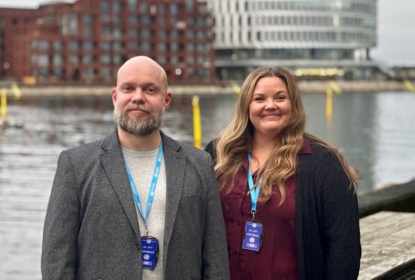
The Nordic countries are working in various ways to strengthen care and support for people with dementia. Preventative measures, earlier diagnoses and better coordination between different stakeholders are some of the issues that were raised when the Nordic Dementia Network met in October to exchange experiences and present current initiatives.
Prevention and early detection
In Finland, efforts are being made to promote prevention through initiatives based on the FINGER model, which uses lifestyle changes to reduce the risk of cognitive decline. Iceland prioritises prevention and early detection. The country’s new National Action Plan on Dementia 2026–2030 comprises 27 measures across six priority areas, including improved diagnostics, early intervention and increased knowledge about dementia.
In Denmark, a national review has highlighted differences in quality and waiting times for dementia assessments. At the same time, funds have been allocated to develop a new national action plan for dementia.
Knowledge and development in dementia care
Work is currently underway in Norway on a new national dementia plan. A comprehensive review of local authorities’ initiatives is intended to provide a better understanding of how support is organised and what needs exist. The national guidelines are currently being revised, and this work has drawn inspiration from the guidelines in Denmark and Sweden, amongst other sources. New digital training materials are also being developed to enhance the skills of healthcare and social care staff.
In Sweden, the national dementia strategy Varje dag räknas (Every Day Counts) serves as the starting point for this work. The strategy includes, amongst other things, the development of knowledge-based support and the monitoring of dementia care.
In Denmark, work is underway to implement the new Elderly Care Act, which comes into force in 2025. This Act is based on values such as the self-determination of older people, trust in staff and citizen-centred leadership, as well as close collaboration with relatives, local communities and civil society. Furthermore, the new Health and Medical Care Act will come into force in 2027. Among other things, this means that general practitioners will have increased responsibility for the assessment and diagnosis of dementia.
Support in everyday life
In Sweden, practical support initiatives are being developed, including study materials for people who have recently been diagnosed with dementia, outdoor activities and exercise programmes.
In the Faroe Islands, dementia coordinators play a key role in supporting people with dementia. This work involves both local authority dementia coordinators and functions at national level. Collaboration between these bodies is a key issue for future development. Since January this year, local authorities have been responsible for dementia care, with the exception of people with intellectual disabilities and dementia, who remain the responsibility of social services.
In Finland, memory services are also being developed to strengthen coordination between welfare sectors, local authorities and organisations. Memory coordinators play an important role in supporting people with dementia and their carers.
Common challenges in the Nordic region
Despite differences in how dementia care is organised, several common issues recur in the work carried out by the Nordic countries. These include detecting dementia at an earlier stage, strengthening expertise within health and social care, and ensuring that people with dementia and their relatives receive support throughout the various stages of the condition.
Through the Nordic dementia network, the countries can exchange knowledge on both effective approaches and the challenges that remain.
Related news
Age-friendly development requires a whole-of-society approach
Strengthening services for people with dementia and intellectual disability