Parents’ mental health during pregnancy and the first years of a child’s life is crucial for the child’s development and long-term mental and physical health and well-being. However, despite a strong evidence base regarding risk and protective factors, access to support varies both geographically and between population groups across the Nordic countries. The implementation of evidence-based methods is progressing slowly, partly due to high costs and a lack of expertise. These findings are highlighted in a recently published report.
The Nordic network about the child’s first 1000 days – a healthy start in life has recently published a report on mental health and well-being of pregnant women, partners and families with young children in the Nordic countries. The report is based on a comprehensive literature review and mapping of psychosocial risk and protective factors, as well as the identification of effective interventions relevant to Nordic contexts.
Parents’ mental health is influenced by a wide range of factors and life circumstances and may manifest as depression, anxiety and stress. The mapping shows that most evidence-based interventions currently used in the Nordic countries focus on maternal depression and universal parenting support. Interventions targeting other mental health conditions, such as obsessive-compulsive disorder, eating disorders and traumatic birth experiences, are very limited or entirely absent.
Ensure early intervention and tailored support at multiple levels
Support services are also distributed unequally. Of particular concern is the fact that families with the greatest needs are not always identified and reached, and that fathers, partners and minority families are underrepresented among those receiving support.
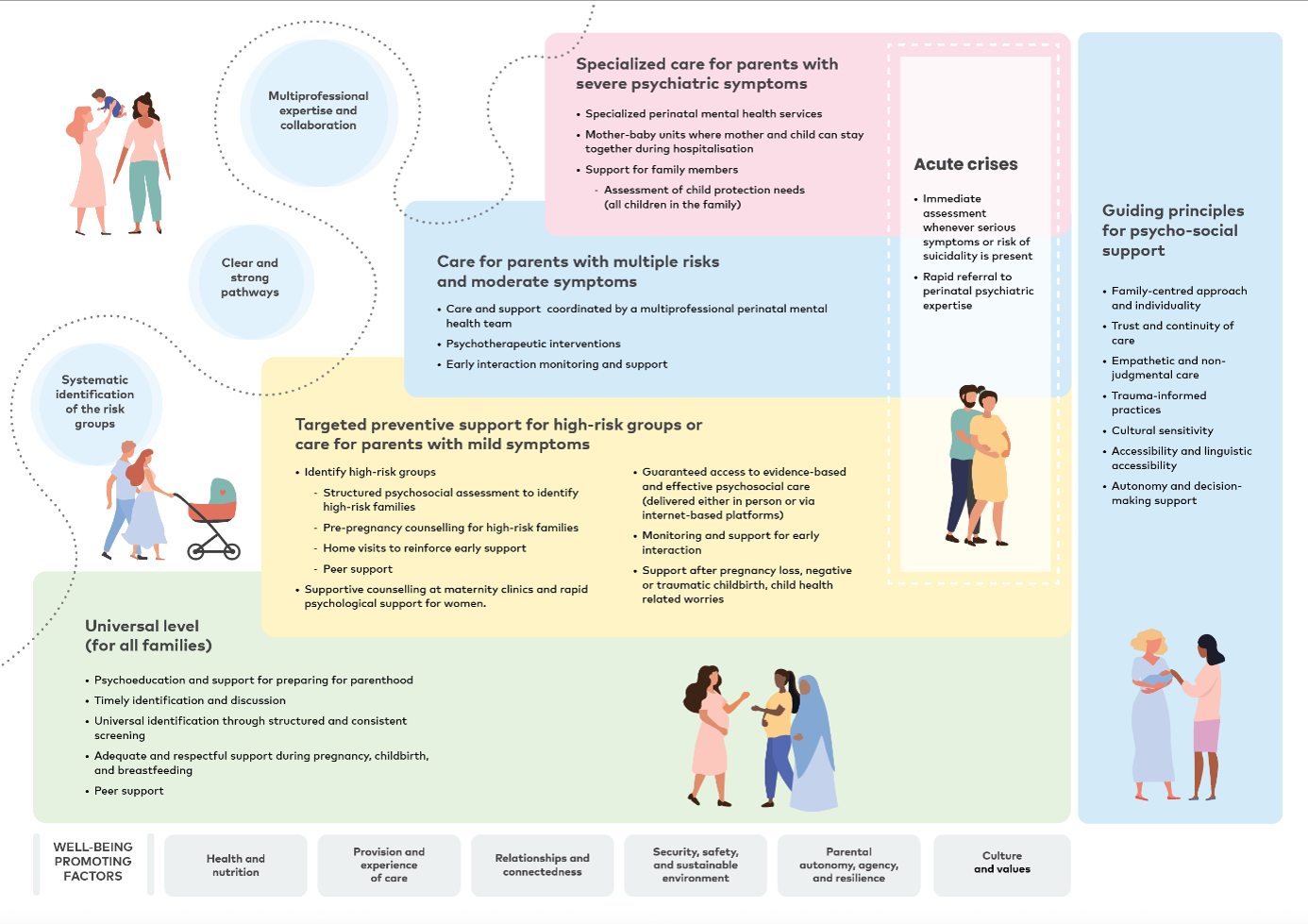
– Current approaches do not reach all population groups and do not meet all needs. We need to ensure early intervention and adequate, culturally sensitive support across service levels. To achieve this, we need to strengthen multidisciplinary care and support, as well as stepped care models, says Jonna Lehikoinen, co-author of the report.
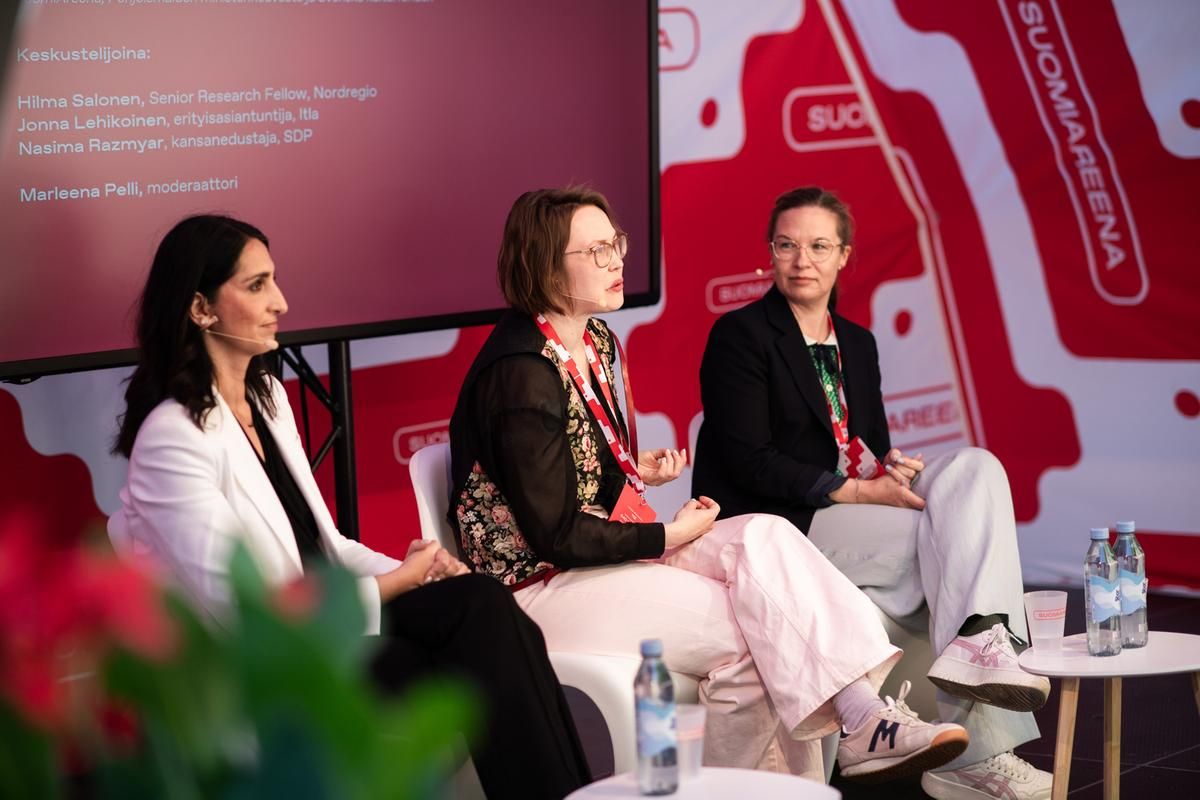
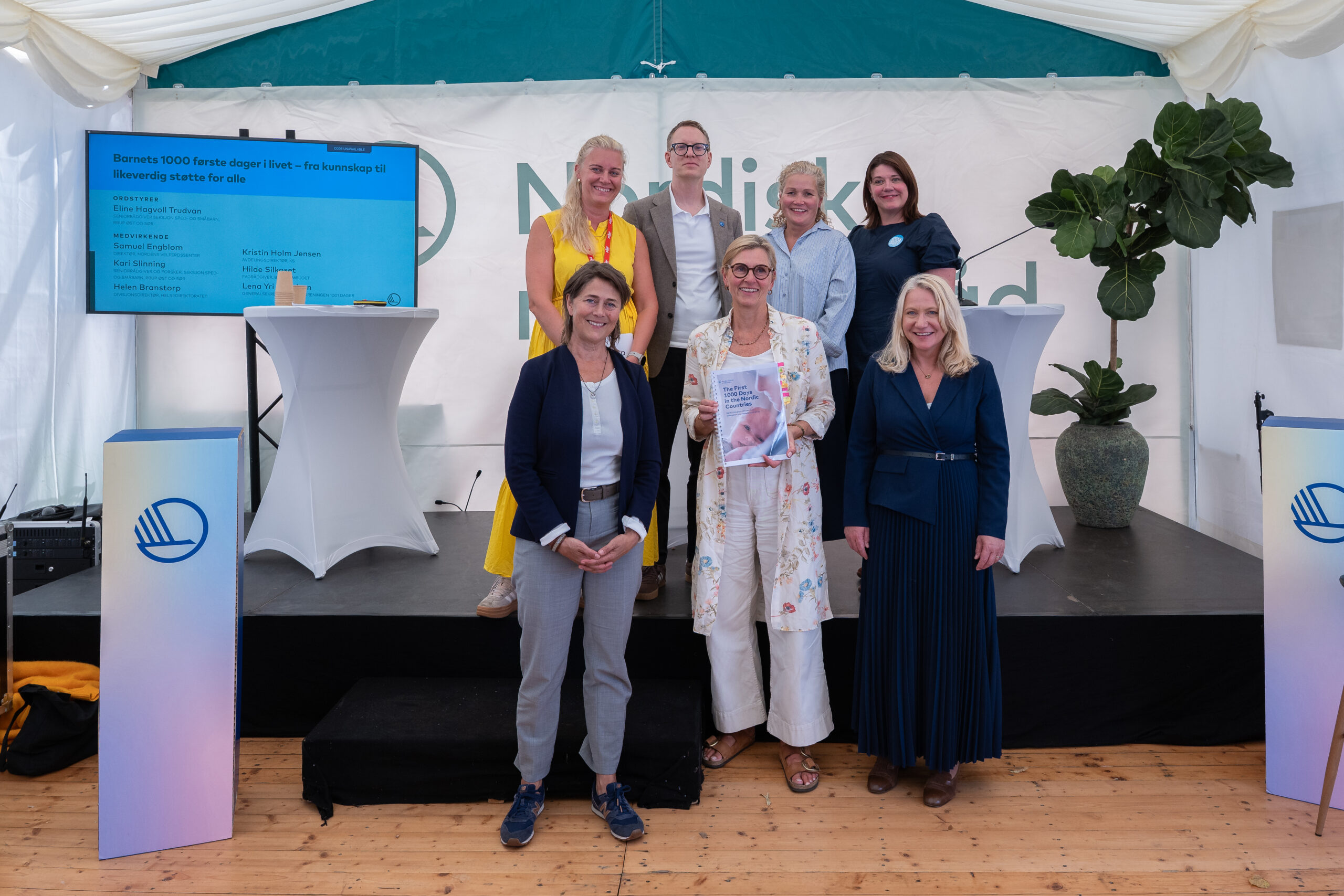
The findings of the report have been presented and discussed on several occasions, including a launch webinar in May, at SuomiAreena in June, and most recently at Arendalsuka in August. At Arendalsuka, the importance of stepped care models was once again emphasised.
– The national reference groups in the project emphasised the importance of stepped care models. What is the first intervention we offer once we have identified a parent in need of support? And if that doesn’t work, what is the next step, and the one after that? This has not been sufficiently documented, and we need to address that. This is perhaps the most important thing we must do going forward, said Kari Slinning, member of the network, during her presentation.
Support for implementation required
According to the report, one reason why municipalities do not implement existing evidence-based methods is that these methods are often associated with high costs or a lack of knowledge of how to use and implement them. Several proposals raised during the panel discussion at Arendalsuka focused on the need for national authorities to support the development and implementation of knowledge-based interventions adapted to local conditions.
– The gap between what we know and what we do has never been wider, said Lena Yri Engelsen, Secretary-General of the Landsforeningen 1001 Days, who took part in the panel discussion.
Strengthen knowledge exchange between the Nordic countries
The report recommends developing a shared Nordic assessment and implementation model for effective psychosocial interventions. Such a model would support scalability, quality assurance and consistency across the Nordic region. The network has also discussed the need for the Nordic countries to work together to develop training and implementation models for interventions that have proved effective in a Nordic context.
– Professionals who are to offer advice and support to pregnant women and families with young children must have access to training and guidance in evidence-based methods, says Kari Slinning.
– This network has proven to be an excellent forum both for compiling and generating Nordic knowledge and for sharing that knowledge within and between the Nordic countries, all with the aim of ensuring that children across the Nordic region receive the best possible start in life, says Samuel Engblom, Director of the Nordic Welfare Centre.
Background
About the network
The Nordic Welfare Centre and the Nordic network about the child’s first 1000 days – a healthy start in life collaborate to strengthen knowledge exchange on the implementation of evidence-based methods in this field across the Nordic countries. The network consists of representatives from national authorities, centres of expertise and organisations, and works to promote equitable access to services and support that strengthen children’s development, health and well-being.
About the report
The report summarises findings from 167 meta-analyses and systematic reviews, assessments of psychosocial interventions in Nordic and international evidence portals, and Nordic expert dialogues conducted in 2025. Together, these sources provide an overview of psychosocial well-being during the child’s first years of life and highlight key risk and protective factors, as well as gaps in interventions affecting families across the Nordic region.
The report targets policymakers, public officials, practitioners and researchers in the Nordic countries who are involved in the planning, implementation and/or development of interventions for families during the first 1000 days of life.
Top image: Jonna Lehikoinen, co-author of the report, participated in a discussion at SuomiAreena on trust and resilience as foundations of Nordic crisis preparedness. From left: Nasima Razmyar (SDP), Hilma Salonen (Nordregio) and Jonna Lehikoinen (Itla). Photo: Laura Karlin/norden.org.
Related news

Young people and digital media: Too much focus on protection, too little on influence
Nordic Children’s Ombudspersons: Children must not be forgotten in crisis preparedness