Introduction
1. Introduction
Deafblindness exists on a spectrum. Few individuals are entirely deaf and blind; most experience some level of residual vision and/or hearing. Consequently, the number of undiagnosed cases of deafblindness is significant, and many people who meet the criteria are not documented as such but rather as being separately either hearing or visually impaired.
The Nordic Welfare Centre plays a crucial role in supporting organisations and professionals working with individuals with deafblindness or combined vision and hearing impairments, across the Nordic region. The work focuses on promoting equal opportunities and societal participation for this group while also facilitating knowledge sharing and collaboration among Nordic countries, recognising the importance of pooling resources in this specialised field.
The activities in the deafblind field at the Nordic Welfare Centre include, among other things, organising conferences, courses, seminars, and development initiatives that complement national educational programmes in each Nordic country. The aim is to enhance cooperation, first and foremost, within the Nordic region but also at a European and global level.
By addressing these areas, the Nordic Welfare Centre strives to improve the lives of deafblind individuals, who often face marginalisation and vulnerability in society. Through its comprehensive approach, the Nordic Welfare Centre works to ensure that this relatively small but significant group receives the attention and resources they need.
Eight networks with distinct focus areas are active within the deafblind field at the Nordic Welfare Centre. The networks consist of people who work with deafblind individuals in various ways - either hands-on, as researchers or in organisations that arrange training for personnel working in the field.
Six of the networks participated in the first joint network seminar for all Nordic networks on deafblindness, held in Malmö, Sweden, from 6th to 8th November 2024. The event was organised by Gøran Andreas Gregor Caspian Forsgren, Senior Adviser on deafblind issues at the Nordic Welfare Centre.
The main theme of the seminar centred around video analysis, an established tool within the deafblind field. With the help of video analysis, a deeper understanding of individuals with deafblindness can be reached.
The Nordic Welfare Centre plays a crucial role in supporting organisations and professionals working with individuals with deafblindness or combined vision and hearing impairments, across the Nordic region. The work focuses on promoting equal opportunities and societal participation for this group while also facilitating knowledge sharing and collaboration among Nordic countries, recognising the importance of pooling resources in this specialised field.
The activities in the deafblind field at the Nordic Welfare Centre include, among other things, organising conferences, courses, seminars, and development initiatives that complement national educational programmes in each Nordic country. The aim is to enhance cooperation, first and foremost, within the Nordic region but also at a European and global level.
By addressing these areas, the Nordic Welfare Centre strives to improve the lives of deafblind individuals, who often face marginalisation and vulnerability in society. Through its comprehensive approach, the Nordic Welfare Centre works to ensure that this relatively small but significant group receives the attention and resources they need.
Eight networks with distinct focus areas are active within the deafblind field at the Nordic Welfare Centre. The networks consist of people who work with deafblind individuals in various ways - either hands-on, as researchers or in organisations that arrange training for personnel working in the field.
Six of the networks participated in the first joint network seminar for all Nordic networks on deafblindness, held in Malmö, Sweden, from 6th to 8th November 2024. The event was organised by Gøran Andreas Gregor Caspian Forsgren, Senior Adviser on deafblind issues at the Nordic Welfare Centre.
The main theme of the seminar centred around video analysis, an established tool within the deafblind field. With the help of video analysis, a deeper understanding of individuals with deafblindness can be reached.
All the participating networks conducted a video analysis of the same video from their unique field of expertise. This gave an unprecedentedly deep understanding of the person with deafblindness being analysed in the video.
This report aims to summarise the key takeaways from the network seminar and the video analyses and give a historical and theoretical background of the networks. This report also aims to convey the main themes raised during the discussions at the conference, as well as the commentary provided by the participants.
This report aims to summarise the key takeaways from the network seminar and the video analyses and give a historical and theoretical background of the networks. This report also aims to convey the main themes raised during the discussions at the conference, as well as the commentary provided by the participants.
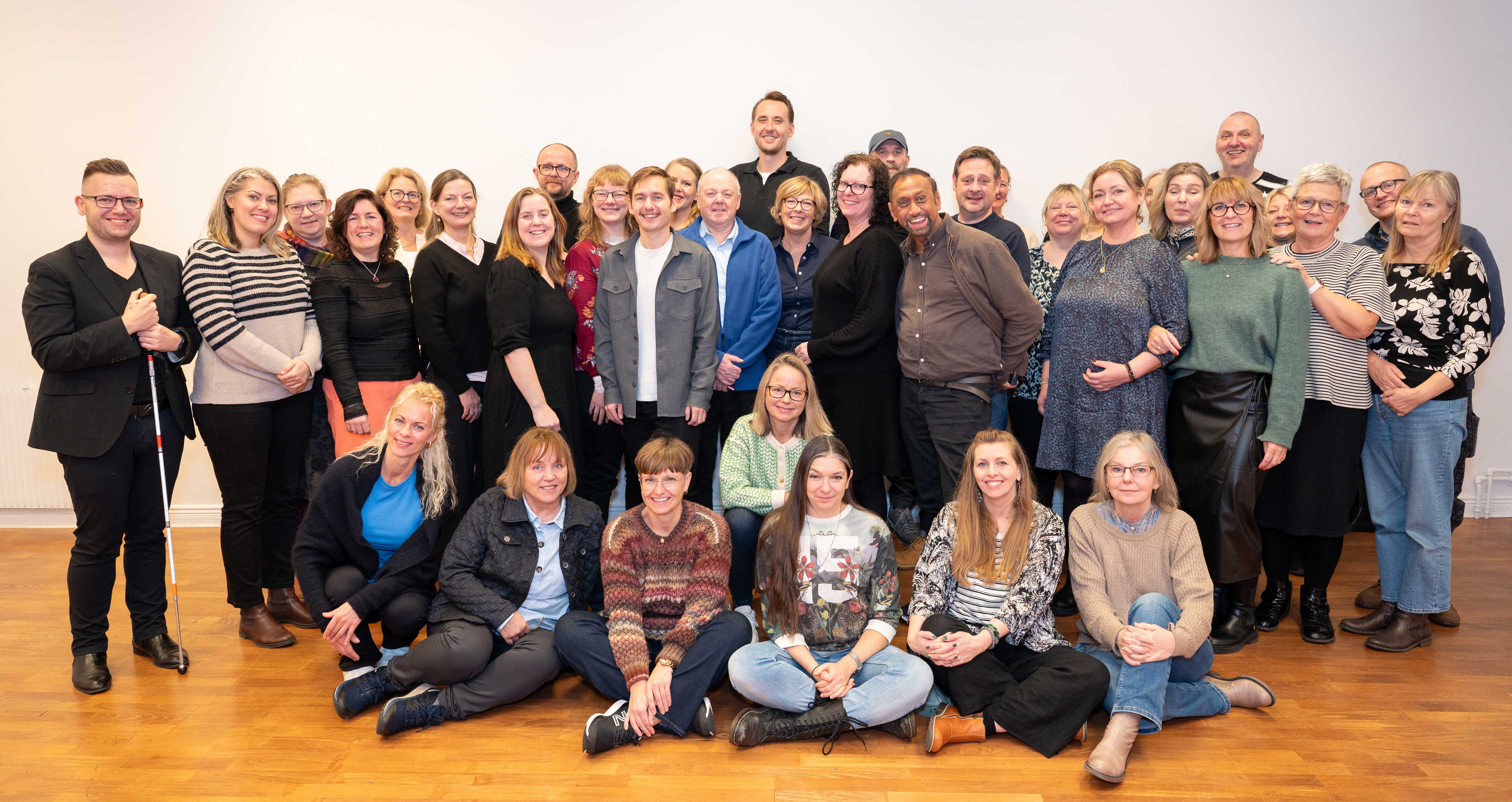
Photo: Sigve Nedredal
1.1 History and mission: “We are standing on the shoulders of pioneers”
The field of deafblindness is still young as an academic field, but over its relatively short existence, major developments have already taken place. From initial discussions centring mainly around imitation and affective attunement to today’s focus on linguistics and psychology, every stage of development builds on the previous work.
– We are standing on the shoulders of pioneers. I have been in the field since 1995, and the first pioneers I met were also standing on the shoulders of others.
Henriette Hermann Olesen, leading manager at the Centre of Communication and Special Needs in Northern Jutland, Denmark, opened the network seminar with a lecture on the history of the deafblind field.
– People with deafblindness form a small population in every country. Deafblindness is a unique and complex disability that arises from a wide range of syndromes or diagnoses. This necessitates broad collaboration, both with common and different focuses.
– We are standing on the shoulders of pioneers. I have been in the field since 1995, and the first pioneers I met were also standing on the shoulders of others.
Henriette Hermann Olesen, leading manager at the Centre of Communication and Special Needs in Northern Jutland, Denmark, opened the network seminar with a lecture on the history of the deafblind field.
– People with deafblindness form a small population in every country. Deafblindness is a unique and complex disability that arises from a wide range of syndromes or diagnoses. This necessitates broad collaboration, both with common and different focuses.
Dr Paul Hart, former Head of Operational Support, Practice Development and Quality at Sense Scotland, who has been in the field since the late 1980s, says initially, there was a great focus on how to develop communication and impart it to deafblind people, but this focus has shifted in later years.
– In the beginning, there was a sense that we needed to develop communication tools and provide them to people. However, what the field has learned from other disciplines is to determine how we can develop communication in partnership with people who are deafblind. This has led us to examine other fields, such as autism and language development, and adapt their theories.
The Nordic countries have long played a significant role in shaping deafblind education through decades of collaboration and innovation. From the beginning, people within the field saw the need for international networks in order to share knowledge. Since the population affected by this unique disability is small, a centralised approach to knowledge has always been important.
– At the same time, some form of decentralisation has also always been important in order not to lose the human aspect, and the unique needs of the people affected. Both centralisation and decentralisation have been prevalent since the beginning of the Nordic collaboration in this field, Henriette Hermann Olesen explains.
– In the beginning, there was a sense that we needed to develop communication tools and provide them to people. However, what the field has learned from other disciplines is to determine how we can develop communication in partnership with people who are deafblind. This has led us to examine other fields, such as autism and language development, and adapt their theories.
The Nordic countries have long played a significant role in shaping deafblind education through decades of collaboration and innovation. From the beginning, people within the field saw the need for international networks in order to share knowledge. Since the population affected by this unique disability is small, a centralised approach to knowledge has always been important.
– At the same time, some form of decentralisation has also always been important in order not to lose the human aspect, and the unique needs of the people affected. Both centralisation and decentralisation have been prevalent since the beginning of the Nordic collaboration in this field, Henriette Hermann Olesen explains.
Early beginnings
The beginnings of international collaboration on issues regarding deafblindness started in the 1950s, with correspondence between countries all over the world. In 1962, the first formal conference on the topic was held, focusing on the education of children affected by deafblindness. This started a trend throughout the 1960s, where the main focus for many international meetings was on education.
– In 1976, the International Association for the Education of the Deafblind (IAEDB) was formed. Over the years, the focus broadened to also encompass adults with deafblindness and the social aspects of living with deafblindness. In 1997, the name of IAEDB was changed to Deafblind International (DbI), Henriette Hermann Olesen says.
The Nordic countries have been active in this field from the beginning. In 1977, an expert group on deafblindness was formed, and the following years held important milestones for the development of the field in the Nordics. In 1978, the planning of Nordic education about deafblindness started under the Nordic Council of Culture.
– The argument for the need to work together was then the same as it is today: the need for both centralisation and decentralisation, diversity and commonalities, and the small population with this unique disability, Henriette Hermann Olesen explains.
The first Nordic definition of deafblindness was formulated in 1980. In 1981, The Nordic Staff Training Centre for the Deafblind Services (NUD) was initiated by the Nordic Council of Ministers. It was made permanent in 1985.
During the 1980s and 1990s, European collaboration within the deafblind field also became increasingly important for the work that is now done in the Nordic countries under the Nordic Welfare Centre umbrella. In 1989, the European network on communication with people with congenital deafblindness was founded. The European Network was coordinated and hosted by the Nordic Staff Training Centre for the Deafblind Services (NUD).
– Video analysis became a prominent tool for the network, and they produced video material on VHS. This was revolutionary. We gained a much deeper understanding of what was important to know about bodily expression in interaction and communication.
– In 1976, the International Association for the Education of the Deafblind (IAEDB) was formed. Over the years, the focus broadened to also encompass adults with deafblindness and the social aspects of living with deafblindness. In 1997, the name of IAEDB was changed to Deafblind International (DbI), Henriette Hermann Olesen says.
The Nordic countries have been active in this field from the beginning. In 1977, an expert group on deafblindness was formed, and the following years held important milestones for the development of the field in the Nordics. In 1978, the planning of Nordic education about deafblindness started under the Nordic Council of Culture.
– The argument for the need to work together was then the same as it is today: the need for both centralisation and decentralisation, diversity and commonalities, and the small population with this unique disability, Henriette Hermann Olesen explains.
The first Nordic definition of deafblindness was formulated in 1980. In 1981, The Nordic Staff Training Centre for the Deafblind Services (NUD) was initiated by the Nordic Council of Ministers. It was made permanent in 1985.
During the 1980s and 1990s, European collaboration within the deafblind field also became increasingly important for the work that is now done in the Nordic countries under the Nordic Welfare Centre umbrella. In 1989, the European network on communication with people with congenital deafblindness was founded. The European Network was coordinated and hosted by the Nordic Staff Training Centre for the Deafblind Services (NUD).
– Video analysis became a prominent tool for the network, and they produced video material on VHS. This was revolutionary. We gained a much deeper understanding of what was important to know about bodily expression in interaction and communication.
During this time, the deafblind research field went through a period of broadening through input from other disciplines. Henriette Hermann Olesen says the European network also started to hold conferences, bringing in experts in theoretical research in linguistics, communication and psychology, and interpreters, linguists, and psychologists joined the deafblind field.
– Knowledge from these fields was, to an ever-growing extent, transferred to the field of deafblindness.
– Knowledge from these fields was, to an ever-growing extent, transferred to the field of deafblindness.
Giving back to other fields
The Nordic Staff Training Centre for the Deafblind Services (NUD) ceased to exist after it merged with several Nordic organisations on January 1, 2009, to become the Nordic Centre for Welfare and Social Issues, which later was renamed the Nordic Welfare Centre. Some of the working groups formed within the NUD continue in today’s networks within the deafblind field of the Nordic Welfare Centre.
While having reached an ever more established position, the academic field of deafblindness is constantly evolving, and developing. During the last 10–15 years, a big focus has been on linguistics and language development.
– There are still shifts in this young field, and it is rapidly developing. Today we see the field moving towards a more psychology-based approach, Gøran Forsgren says.
Pauls Hart adds that the deafblind field is now starting to generate knowledge that can be used in other fields, which makes it an especially interesting time.
– There are still shifts in this young field, and it is rapidly developing. Today we see the field moving towards a more psychology-based approach, Gøran Forsgren says.
Pauls Hart adds that the deafblind field is now starting to generate knowledge that can be used in other fields, which makes it an especially interesting time.
– Research on deafblindness can reveal aspects of human cognition that we can now feed back into the field of developmental psychology. Deafblindness offers a unique perspective and can render original theories within psychology inaccurate or in need of refinement. Psychologists and linguists who join the deafblind field nowadays are usually quite surprised at the extent to which deafblindness research can contribute to other academic fields. It is an exciting time to be working within the deafblind field.