
As Finland prepares to dismantle the state monopoly of Veikkaus, the Åland Islands gambling company Paf will be one of the last online gambling monopolies in the EU. CEO Christer Fahlstedt says dismantling Veikkaus is the right decision, but he fears the Finnish public is not ready for all of the consequences of the reform.
The Åland Islands gambling monopoly Paf (short for Penningautomatföreningen) turns 60 in 2026. It was founded as a collaboration between the Finnish Red Cross, Save the Children and the public health organisation Folkhälsan.
In the beginning, the company mostly focused on gambling on the ferries operating between Finland and Sweden, but nowadays 80 per cent of its revenue comes from online gambling. Today, Paf has 150 employees in Åland and is one of the island’s largest employers.

– Despite the changing markets, our mission remains the same: to generate revenue for charity. We are an association, and the funds are distributed by a distribution council. Much of the so-called third sector in Åland is funded by Paf. This covers everything from sea rescue to much of the environmental, integration and youth work, says Christer Fahlstedt, CEO of Paf.
Until 2018, the Finnish gambling monopoly Veikkaus operated in Åland alongside Paf. But due to legal technicalities, this is no longer the case. When Veikkaus loses its monopoly status in 2027, Paf will become one of the two remaining online gambling monopolies in the EU, alongside Luxembourg. This is more of a curiosity than anything of practical significance.
– We are the only ones operating under the Åland licence. But it is an extremely small monopoly market. After all, only 30,000 people live in Åland.
The balancing act of dismantling a gambling monopoly
The Finnish gambling reform involves transitioning from the state-owned monopoly, Veikkaus, to a multi-licence system for online betting and casino games. Licensed private operators can officially begin operations and marketing in Finland from the first of July 2027. The idea behind the reform is to bring unregulated online gambling under national oversight, taxation and harm mitigation.
Christer Fahlstedt says dismantling a gambling monopoly is a balancing act. Too many restrictions on licensed online casinos will drive the public towards more harmful, unregulated gambling sites. Too few restrictions will flood public spaces with gambling advertising, leading to public outcry and potential political overreactions.
– Right now, it feels like we are on the Titanic, heading full steam ahead towards the iceberg that we can all see.
Fahlstedt fears that the Finnish public is not ready for the volume of gambling advertising that will follow the end of Veikkaus’s monopoly in the summer of 2027.
– Gambling is a product that most people do not like. And people like gambling advertisements even less. When the Swedish gambling monopoly was dismantled, for instance, it led to a radical increase in gambling ads on radio and television. I don’t think the Finnish public has fully understood how much the gambling advertising will increase.
The risk of knee-jerk reactions among politicians
Paf is likely to be one of the licensed companies operating alongside others in mainland Finland after the reform.
While Christer Fahlstedt is critical of the likely sheer volume of gambling advertising in the future and supports political initiatives aimed at limiting it, he maintains that Paf will buy advertising space as soon as it is legally permissible to do so.
– We have to do it. It is commercially necessary. From a public health perspective, advertising from licensed gambling companies can steer people towards legal and more responsible gambling. Otherwise, they simply won’t find us.
And herein lies the balancing act, according to Fahlstedt. Too few advertising opportunities for licensed actors will drive the public towards the unlicensed. Too many ads will cause a public outcry and a political desire to wash one’s hands of anything to do with gambling.
– People generally react negatively to gambling ads. Take the Netherlands as an example. There, gambling advertising exploded, leading to negative public opinion. It became a populist issue, and politicians moved towards bans, turning a blind eye to the fact that this drives people to unregulated online crypto-casinos. I am worried about politicians acting on impulse if the backlash against gambling ads becomes too strong.
Managing the balancing act is not enough
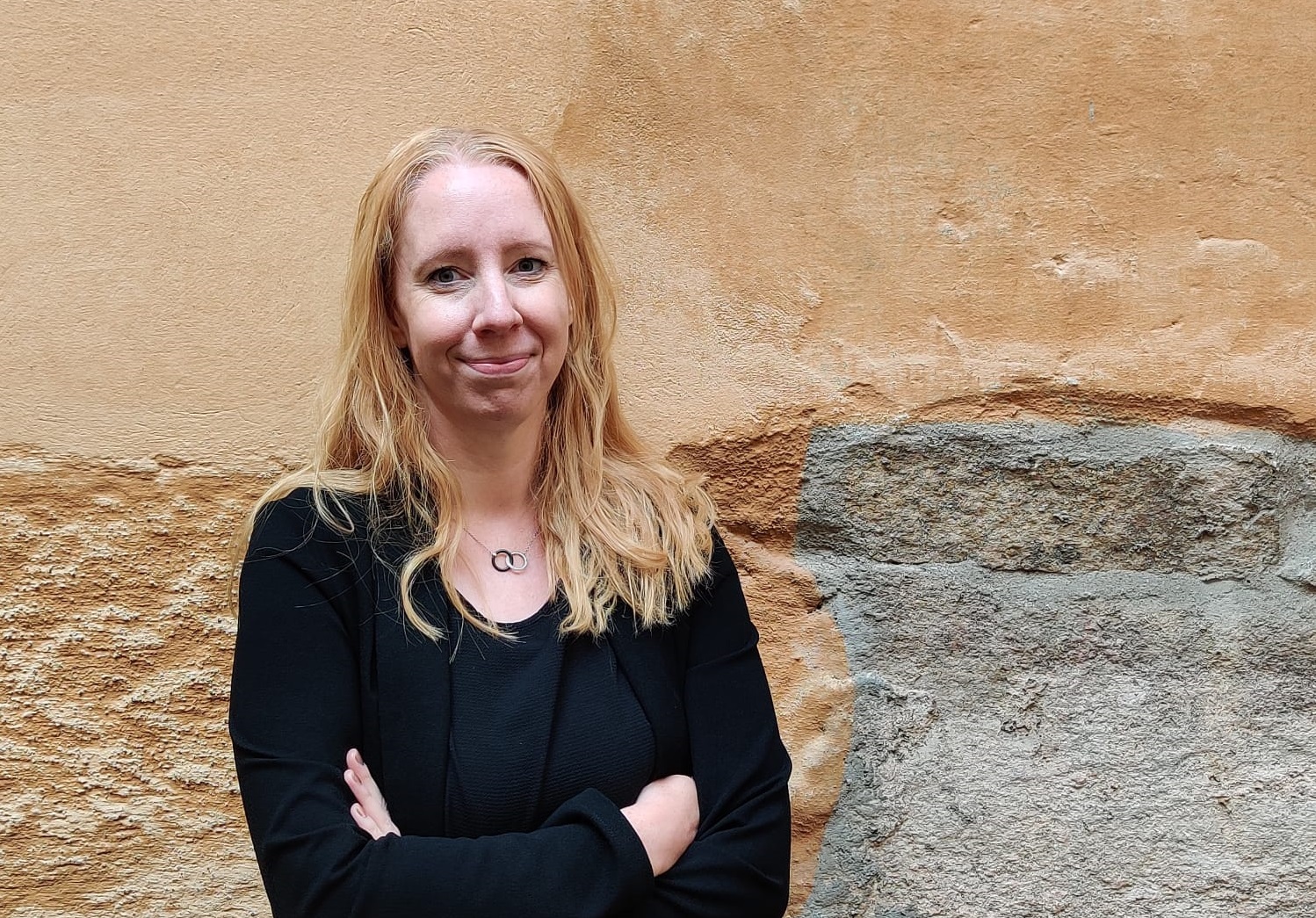
Virve Marionneau, Associate Professor at the Centre for Research on Addiction, Control and Governance at the University of Helsinki, says the balancing-act argument is common among gambling companies in Europe. Marionneau thinks it is an oversimplification of a more complex issue. Research shows that channelling gambling from the illegal casinos to a licensing system alone will not solve the problem of illegal gambling.
– It is true that actors in the unlicensed market are characterised by highly unethical practices. These need to be addressed with improved blocking and enforcement systems. However, a licensing system in itself will not solve the issue of illegal gambling. Even if around 50 new operators enter the Finnish market, thousands will remain in the unlicensed market.
Marionneau says research shows that if the only preventive measures against illegal gambling are channelling consumers to licensed casinos, the harm caused by gambling will not automatically decline. Extensive public health-oriented regulatory frameworks also need to be in place.
– If protections are not in place within the system, the new licensing system will do very little to prevent or even reduce harm overall. At best, it will just keep the same harms within the system, or even create more harm due to increased normalisation and ease of uptake of gambling.
A call for cool heads
Christer Fahlstedt is calling for ‘cool heads’ among policymakers to navigate the grey area between total prohibition and total deregulation. He draws a parallel to alcohol regulation: while we acknowledge that no amount of alcohol is strictly good for public health, history proves that total prohibition might fail to produce the best societal outcome.
– Everyone underestimates how big unregulated gambling is, and how fast it grows. We need protective measures here, and the authorities must be both creative and somewhat aggressive. Otherwise, we will lose this battle. There is a very clear trend in Europe towards regulating advertising for gambling, and we need to follow this trend.
According to Fahlstedt, approximately 1 per cent of gamblers account for 40–50 per cent of the total turnover of online gambling in Finland. He says this group is the one most in need of the relative safety net that licensed companies provide. But competing with unregulated companies is difficult, as the user experience at a regulated gambling company will always be inferior.
– If you gamble too much at Paf, it might lead to your being suspended. If you gamble too much at an unregulated gambling site, you might get thousands of euros in bonuses instead.
Contrasting perspectives on Finland’s new gambling law
Christer Fahlstedt remains optimistic that an open, regulated gambling market will work in Finland. He says it has been proven elsewhere in the EU, where gambling has not been turned into a populist issue, and decision-makers have set the right level of tax and regulation on legal gambling companies. Everyone needs to compromise.
At the same time, these companies need to create a value proposition for their customers that is not based solely on user experience.
– Many people appreciate that gambling takes place within a legal framework, knowing that their funds are protected and can even be recovered in the event of a bankruptcy.
Virve Marionneau at the University of Helsinki is sceptical that the new Finnish gambling law will reduce gambling harm. She says the law was prepared in such a hurry that it is far from optimal, and mostly serves the gambling industry and political interests.
– I agree that the unlicensed market is a problem and we need better tools to prevent access to and visibility of unlicensed actors. However, I don’t believe that attempting to compete with these actors is the way forward. This will just increase overall harm in the system. We should instead focus on building better tools to prevent the illegal market, similar to other harmful online content. EU-level collaboration would be necessary to achieve this at scale.
Virve Marionneau says the new law most notably lacks blocks on unlicensed actors, and the protection within the system will be significantly worse than that in the current monopoly system.
– For example, we will have no central limit-setting systems and advertising of the most harmful gambling products, such as online casinos, will be permitted under the new law. Under the current monopoly system, advertisements for online casino products are prohibited.
Related articles

Beers, bets and ballgames: Extended alcohol service and gambling hours during the FIFA World Cup in Norway

Finland moves further away from the Nordic alcohol model