
Cannabis use is often discussed as if it were a single and relatively stable behavior. However, in reality, people who use cannabis can differ substantially in what they use, how often they use it, the circumstances in which use occurs, and the experiences associated with it. Even within the same person, cannabis use may look different from one day, or one moment, to another. In this PopNAD article, Ana Paula Gonçalves Donate highlights findings from her PhD research on this very subject.
This complexity was the starting point for the research presented in my PhD.
The study asked:
What can we learn about this heterogeneity if we study not only how people differ from one another, but also how cannabis use and related experiences change within the same person in everyday life?
To investigate this, the research combined a survey with repeated assessments in daily life over 21 days among people who used cannabis regularly. These approaches captured different, but complementary, aspects of people’s experiences. The survey provided a broader picture of characteristics and patterns that differed between people, while the repeated assessments captured experiences, contexts and behaviors as they changed over time. A total of 197 people living in Denmark aged on average 30.7 years participated.
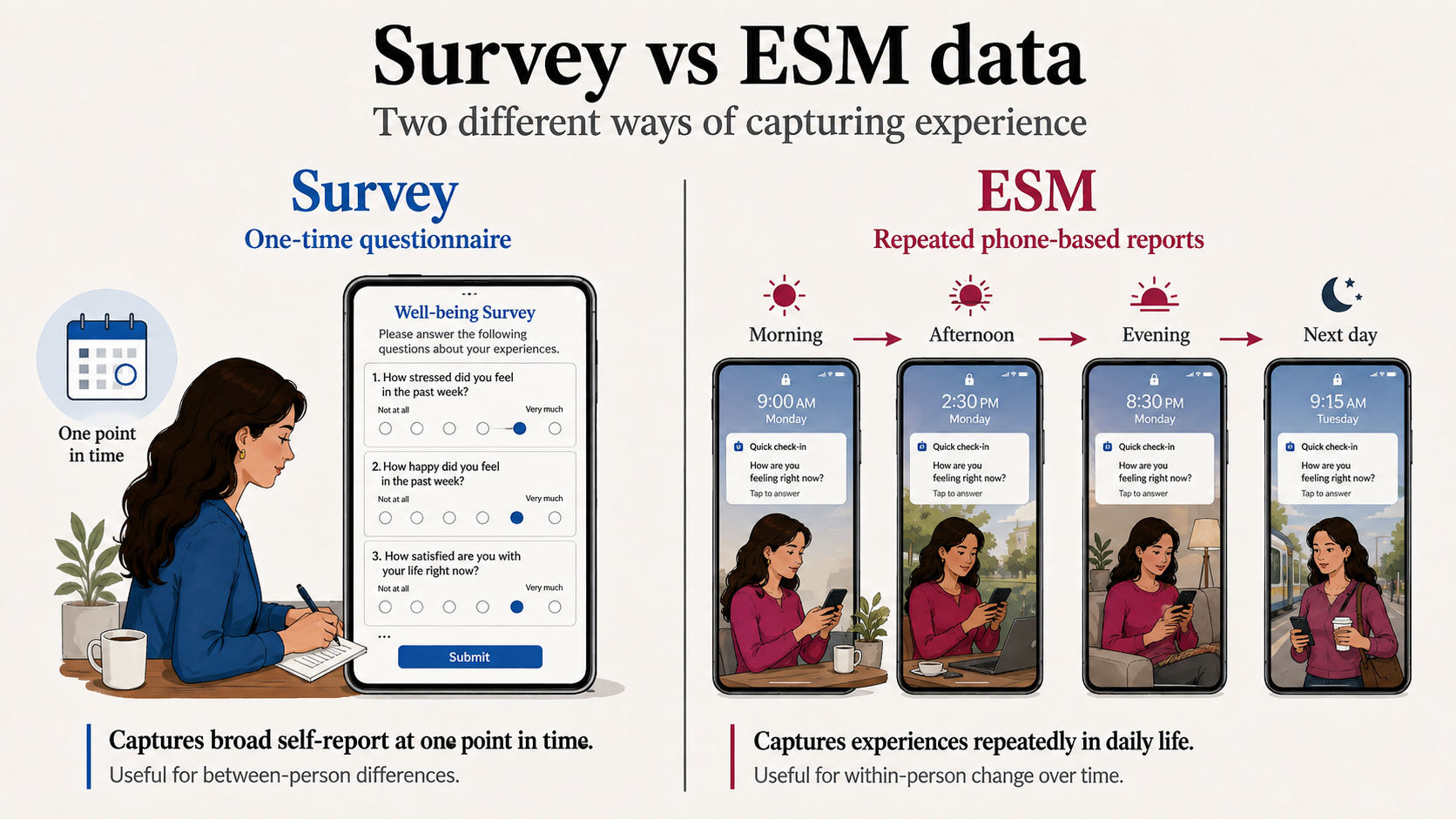
Put simply, the survey can be thought of as a photograph, while the daily-life assessments provide a series of frames from a film. The first gives a broader snapshot of how people differ from one another; the second helps us see how experiences and behaviours shift across moments and situations within the same person. Collecting information closer to when experiences occurred also reduced our reliance on retrospective recall.
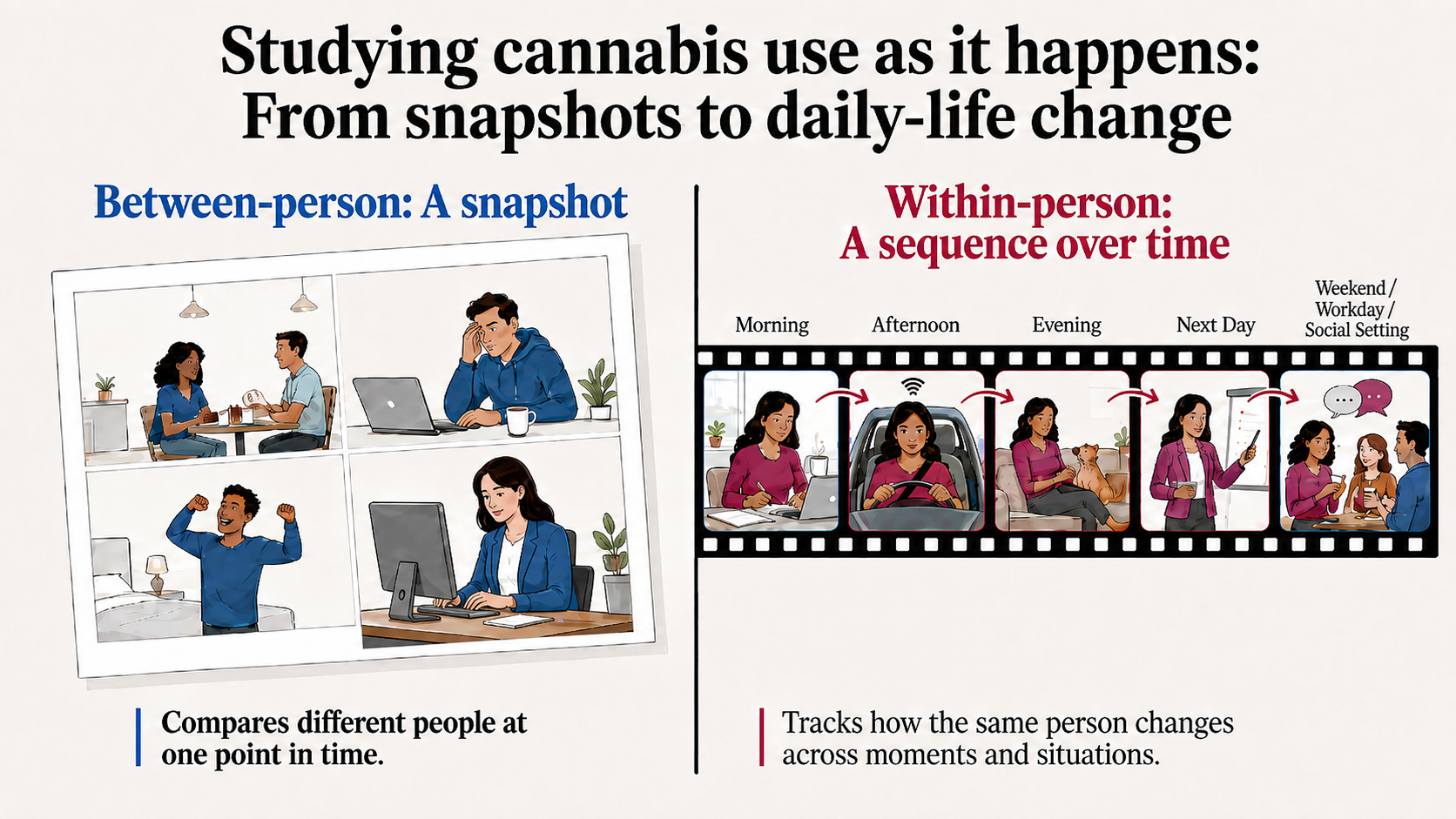
Together, these studies made it possible to examine cannabis use from several angles: how people differ from one another, how cannabis use and psychological experiences change within the same person over time, and whether different patterns of use and cannabis products are associated with different outcomes.
Understanding individual differences
Even among people who use cannabis regularly, there can be substantial differences in their experiences and in the problems associated with their use. One focus of the research was whether psychological and behavioural characteristics could help explain some of these differences.
The results showed that greater difficulty managing difficult emotions was associated with more frequent and severe cannabis-related problems, such as irritability and/or sleep problems. This association was stronger among people who reported using cannabis as a way of coping with difficult emotions or problems.
These findings suggest that how people manage difficult emotions may be relevant for understanding why cannabis-related problems can vary substantially even among people who use cannabis regularly. In other words, regular cannabis use does not necessarily imply the same level of cannabis-related problems for everyone.
Looking at cannabis use in everyday life
Differences between people are only one part of the picture. The same person may also experience cannabis use differently across moments, days and situations.
Over 21 days, participants completed three very brief assessments each day, allowing cannabis use and psychological experiences to be examined closer to when they occurred in everyday life.
The findings indicated that when people felt more positive than usual, they were slightly more likely to use cannabis before the next assessment, and they also reported feeling somewhat more positive shortly after use. This difference did not persist several hours later. By contrast, feeling more negative than usual was not generally related to cannabis use when the group was considered as a whole.
There was, however variation between people. Among those reporting greater difficulties regulating emotions, negative mood tended to be lower at assessments following cannabis use than at their own assessments without recent use. Because this study was observational, the findings do not show that cannabis caused the change in mood.
This illustrates an important point: what is true on average is not necessarily equally true for everyone. Studying daily life makes it possible to examine both the general pattern and some of the individual differences hidden behind it.
Cannabis is not a single exposure
Another source of heterogeneity is cannabis itself. People may use different cannabis products, and treating all cannabis use as equivalent may obscure differences between products that may be relevant to health outcomes.
For example, greater severity of cannabis use and related problems was associated with poorer sleep quality and more symptoms of anxiety and depression. Cannabis type provided additional information about sleep: people who reported using hash products, or multiple THC-dominant cannabis products, reported poorer sleep quality than those who used flower only.
These findings suggest that how problematic someone’s cannabis use is and what cannabis products they use may provide different pieces of information. Looking only at whether someone uses cannabis may therefore miss potentially important differences in patterns of use and products. Cannabis should not always be treated as a single, uniform exposure when studying its links with health. Because these findings were observational, they do not tell us whether particular cannabis products cause poorer sleep.
What this changes about how we study cannabis
Taken together, these studies suggest that cannabis use is difficult to understand as a single, stable behavior or exposure. People differ from one another, the same person’s experiences change across time and situations, and the cannabis products they use may also matter.
Although this research focused on cannabis, these distinctions are relevant to substance-use research more broadly. Considering different sources of variation can help move the field beyond the “average person” and toward a more dynamic understanding of how substance use unfolds in everyday life.
The article is written by
Ana Paula Gonçalves Donate, VIRTU Research Group, Mental Health Center Copenhagen, Copenhagen University Hospital, Denmark
at the request of PopNAD
Photo: Eric Dufour/Mostphotos
Related articles

Cannabis resin has become stronger – and psychiatric harms have increased alongside it
Voices from Vesterbro: Telling the history of a Nordic drug scene from within