Den här rapporten undersöker vilken roll organiserade och semi-organiserade fritidsaktiviteter spelar som en viktig faktor för att stärka ungas motståndskraft i krissituationer. Sambandet mellan fritid, välbefinnande och motståndskraft analyseras med covid-19-pandemin som fallstudie. Genom att undersöka konsekvenserna av olika åtgärder och restriktioner, liksom fritidssektorns respons och anpassningar, analyserar rapporten hur krisen påverkade ungas välbefinnande och motståndskraft.
Rapporten är skriven på engelska.
This report explores the role of organised and semi-organised leisure activities as a crucial resilience builder for young people during a crisis. The relationship between leisure, well-being, and resilience is examined with the COVID-19 pandemic as a case. Through an analysis of the impact of various policies and restrictions, as well as the response and adaptations in the leisure sector, the report investigates the effect of the crisis on the well-being and resilience of young people.
The report shows that the COVID-19 pandemic had a disproportionately negative effect on young people in the Nordic region, particularly due to reduced access to leisure activities. Vulnerable youth—such as those from low-income families, with disabilities, or pre-existing mental health conditions—were especially impacted due to limited access to digital or paid leisure alternatives.
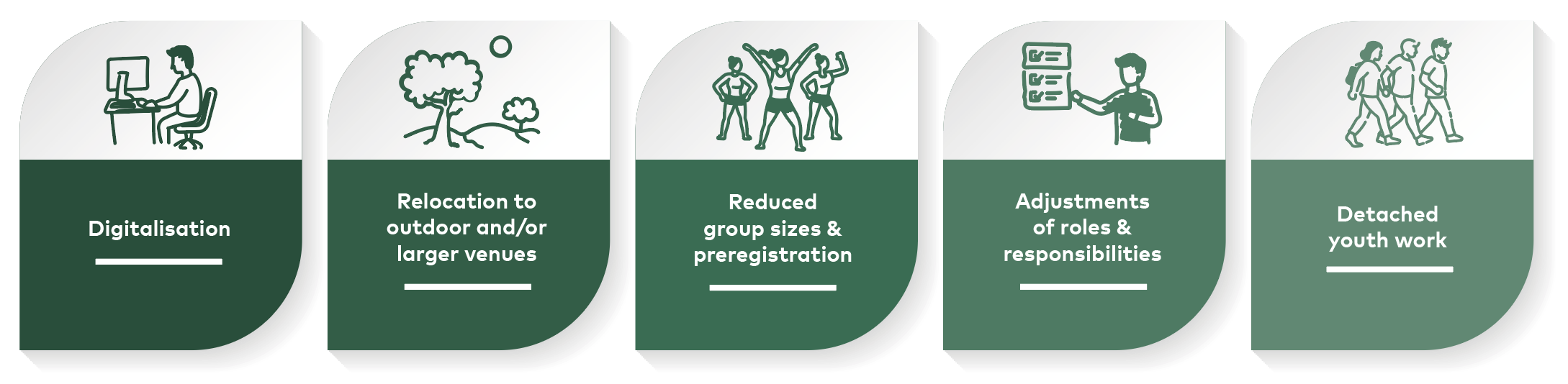
The report highlights leisure as a source of resilience. Core resilience factors—such as togetherness, inclusion, safe spaces, and supportive adults—were weakened during the pandemic, leading to increased loneliness and loss of social skills. Despite the challenges, the leisure sector adapted, often by going online and outdoors.
To better support youth in future crises, the authors of the report recommends:
- Including youth perspectives in crisis planning
- Recognising youth work as a public service
- Promoting evidence-based development of youth work