Article 12 as a cornerstone of children’s rights
Author: Sigurveig Thorhallsdottir
- States Parties shall assure to the child who is capable of forming his or her own views the right to express those views freely in all matters affecting the child, with due weight given to those views in accordance with the child’s age and maturity.
- To this end, the child shall, in particular, be provided with the opportunity to be heard in any judicial or administrative proceedings affecting the child, either directly or through a representative or an appropriate body, in a manner consistent with procedural rules of national law.Convention on the Rights of the Child
Empowering children's voices: The significance of Article 12
Article 12 of the UNCRC provides all children capable of forming their own views the right to express those views freely in all matters affecting them and puts the obligation on states to ensure that due weight is given to the views of children in accordance with their age and maturity. It is one of the general principles of the UNCRC and it must be considered when interpreting other provisions of the Convention. Article 12 marks a fundamental shift in how children are perceived, not merely as passive recipients of care and protection but as active participants in decisions that shape their lives. When effectively implemented, this right can contribute to better decision-making, as it promotes children’s empowerment and well-being and fosters their democratic participation. However, for this right to be fully realised, it requires more than just legal acknowledgement: it demands that children be given a real opportunity to express their views and have influence on matters that affect them.
Children’s voices must be heard, respected, and acted upon
Understanding Article 12 involves recognising that children’s voices must not only be heard but they also need to be respected and acted upon. This means providing accessible and inclusive platforms for children to express their opinions, ensuring they receive the necessary information to make informed choices, and integrating their views into decision-making processes at all levels. The degree of participation should be appropriate to their evolving capacities, acknowledging that children’s ability to understand and contribute to discussions grows over time.
Children also have the right to refuse to express their views; it is a right, not an obligation. States must ensure that children receive all necessary information and guidance to make an informed decision about whether they want to express their views based on their best interests.
Stronger than democratic rights and freedom of expression
The right to be heard goes beyond traditional democratic rights and freedom of expression by mandating that children’s opinions be taken seriously in decision-making processes. Unlike general democratic rights, which focus on adult participation, Article 12 emphasises listening to children and integrating their perspectives into policies that impact their lives. This fosters a more inclusive approach to child welfare and development.
Often referred to as ‘participation’
Article 12 of the UNCRC is often referred to as ‘participation’ because it grants children the right to actively participate in decisions that affect their lives. This participation means that children are not only heard, but their opinions are taken seriously and integrated into decision-making processes. This fosters a democratic culture where children learn to express themselves and influence the development of society.
Four general principles and the central role of Article 12
The UNCRC is built upon four general principles that should be considered in the interpretation and implementation of all other rights:
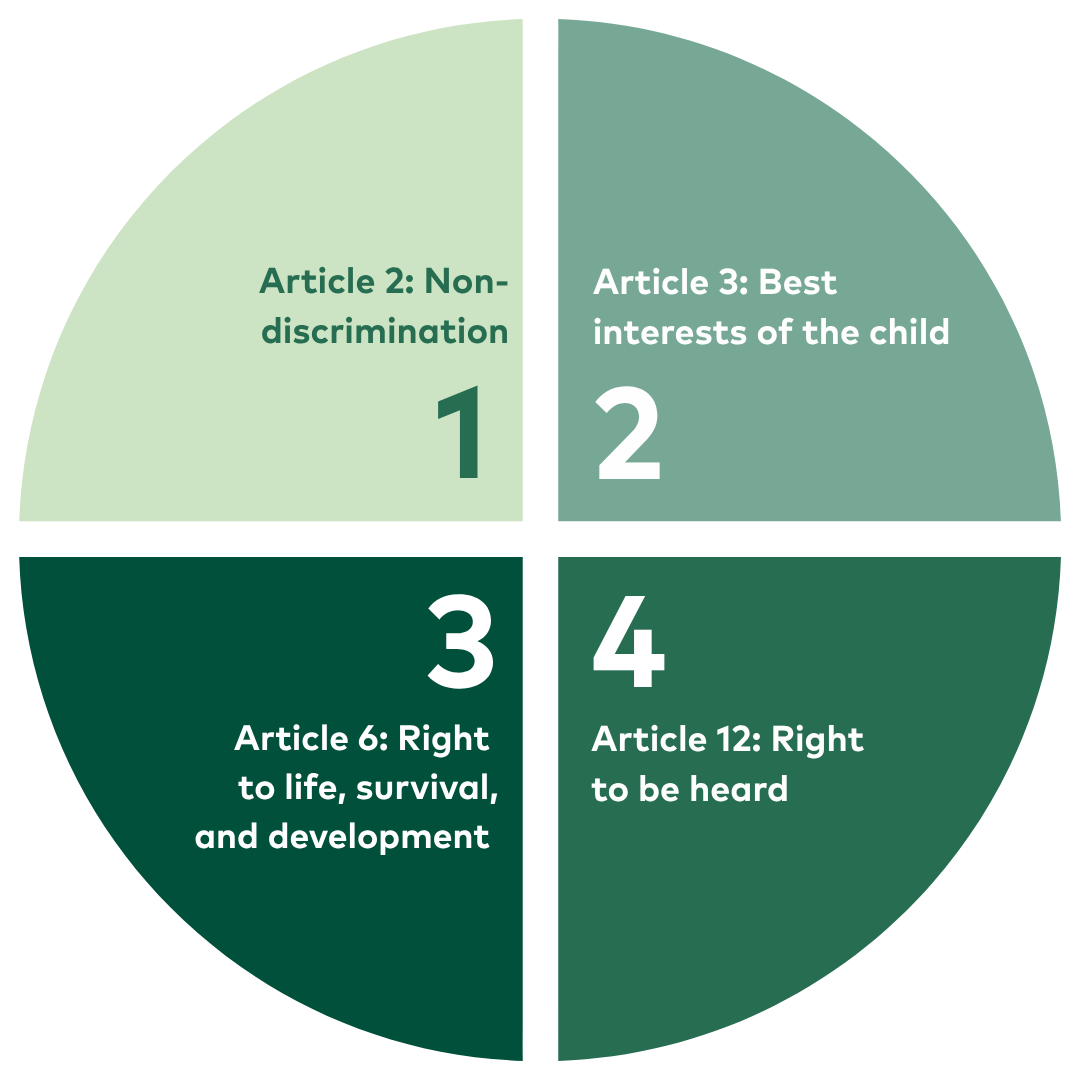
Among these, Article 12 plays a pivotal role in enabling children’s participation and ensuring their voices are heard. Without children‘s participation and the opportunity to express their opinions, the principles of non-discrimination, the best interests of the child, and the right to life, survival, and development cannot be fully realised. Children’s voices are crucial for understanding their needs and wishes, ensuring that decisions made are truly in their best interests.
Article 12 is both an individual right and a collective right. States must take measures to ensure that groups of children can express their views, even if assessing the age and maturity of each child within a group presents challenges.