Photo: Mostphotos
Keynote presentation
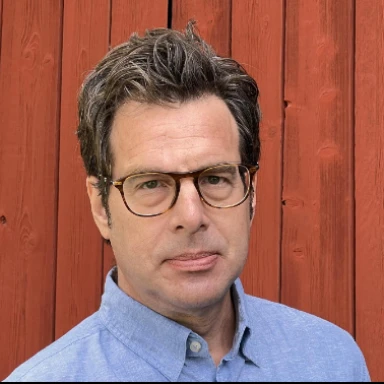
Professor Kenneth Nelson, University of Oxford: The longstanding challenges of the Nordic welfare model: Social policy and the green transition
Before digging into the topic of social policy and green transition, Professor Kenneth Nelson gave a short overview of crises that have short, mid and long-term impacts on society. This constituted an important backdrop to the afternoon programme of the Nordic Welfare Forum 2025, focusing on trust and crises. Decision makers must deal with different kind of crises simultaneously to preserve the Nordic welfare model and well-being for all citizens.
Focusing on the Nordic welfare model as part of the transition to more sustainable living, Kenneth Nelson did not single out trust in his keynote speech but noted that trust is an underlying factor in how the challenges related to global warming should be tackled.
Kenneth Nelson stressed that all Western countries need to intensify their climate initiatives, as the promises they have made so far will not be sufficient to keep global warming within the targets of the Paris Agreement. Most governments aim for economic growth, social equity, and ecological stability, and are therefore facing a challenging ‘eco-social-growth’ trilemma, as Nelson put it.
– The problem is that these goals tend to be contradictory. Economic growth is not compatible with ecological sustainability. However, slowing down economic growth could harm the poor. Many ecological objectives are also regressive in nature: they disadvantage poor people more than rich people.
To address this issue, many researchers tend to support radical reforms to the welfare state, replacing the current political system with free basic services, which Nelson describes as a Marxist argument.
– The problem is that these goals tend to be contradictory. Economic growth is not compatible with ecological sustainability. However, slowing down economic growth could harm the poor. Many ecological objectives are also regressive in nature: they disadvantage poor people more than rich people.
To address this issue, many researchers tend to support radical reforms to the welfare state, replacing the current political system with free basic services, which Nelson describes as a Marxist argument.
– I do not believe in that solution, as it is not practical. We will not be able to completely change the Nordic welfare state in the next thirty years. Another problem I have with that solution is that it does not take social insurance into account.
Instead, Nelson is reviewing our current policies to see if they can partially address the trilemma, focusing on three studies that might suggest possible solutions. He maintains that the Nordic countries have the potential to solve the trilemma without resorting to free basic services.
– I believe we need to raise carbon taxes and find ways to encourage greater willingness among people to pay them.
Statistics indicate that carbon taxes are regressive, disproportionately impacting poorer individuals. The higher the carbon tax in a society, the more people are driven into poverty. However, Kenneth Nelson claims that effective social insurance can help ease this burden on the less wealthy and counteract their risk of falling into poverty when carbon taxes need to be significantly increased in the future.
– I believe we need to raise carbon taxes and find ways to encourage greater willingness among people to pay them.
Statistics indicate that carbon taxes are regressive, disproportionately impacting poorer individuals. The higher the carbon tax in a society, the more people are driven into poverty. However, Kenneth Nelson claims that effective social insurance can help ease this burden on the less wealthy and counteract their risk of falling into poverty when carbon taxes need to be significantly increased in the future.
Given that social insurance and social assistance are cornerstones of the Nordic welfare model, the Nordics may be better prepared to tackle the challenges of global warming, Kenneth Nelson argues.
Eco-social values within a population may serve as a support reservoir for climate mitigation policies. This group of people cares about the environment and the poorest in society. When faced with a choice between prioritising ecological and social values, they tend to choose social values. However, strong social insurance can make that choice beneficial for the environment as well and increase their willingness to increase carbon taxation.
When considering the need for economic growth in different states, Kenneth Nelson argues that de-growth is not politically feasible and could also negatively affect people with low incomes. However, if properly designed, social insurance offers significant possibilities for redistributing national wealth.
– My main message is that we should not only talk about totally reorganising the welfare state to resolve the eco-social-growth trilemma. There is strong evidence that we can work with the policies we currently have in place. The Nordic countries are in a very good position because, when it comes to social security, it is both universal and generous.
When considering the need for economic growth in different states, Kenneth Nelson argues that de-growth is not politically feasible and could also negatively affect people with low incomes. However, if properly designed, social insurance offers significant possibilities for redistributing national wealth.
– My main message is that we should not only talk about totally reorganising the welfare state to resolve the eco-social-growth trilemma. There is strong evidence that we can work with the policies we currently have in place. The Nordic countries are in a very good position because, when it comes to social security, it is both universal and generous.